 Skip to content

39-18 Moses Cleaveland’s “Capitol Town”
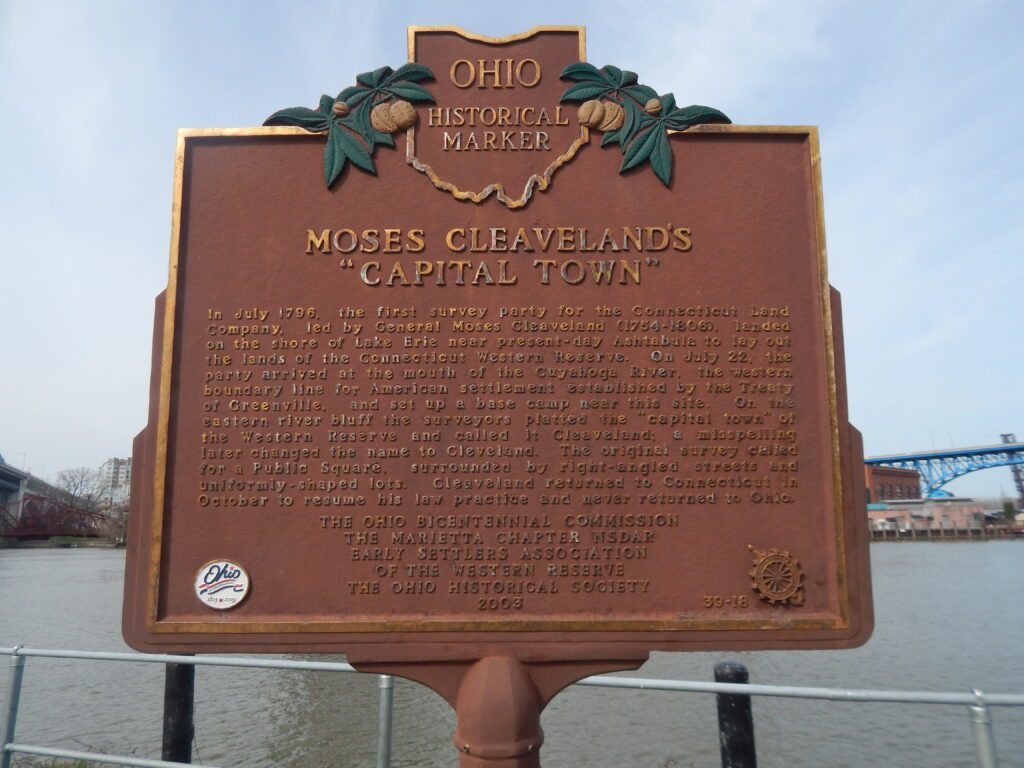
In July 1796, the first survey party for the Connecticut Land Company, led by General Moses Cleaveland (1754-1806), landed on the shore of Lake Erie near present-day Ashtabula to lay out the lands of the Connecticut Western Reserve. On July 22, the party arrived at the mouth of the Cuyahoga River, the western boundary line […]
38-18 John D. Rockefeller, 1839-1937 / The Standard Oil Company
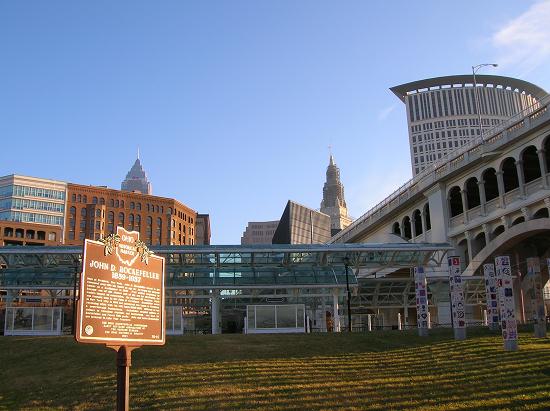
Born at Richford, New York, John D. Rockefeller moved to the Cleveland area with his family at age 14. He began his business career as a bookkeeper in 1855. From modest beginnings he became one of the richest men of his era by developing the world’s largest oil corporation, the Standard Oil Company, which was […]
37-18 Cleveland Grays
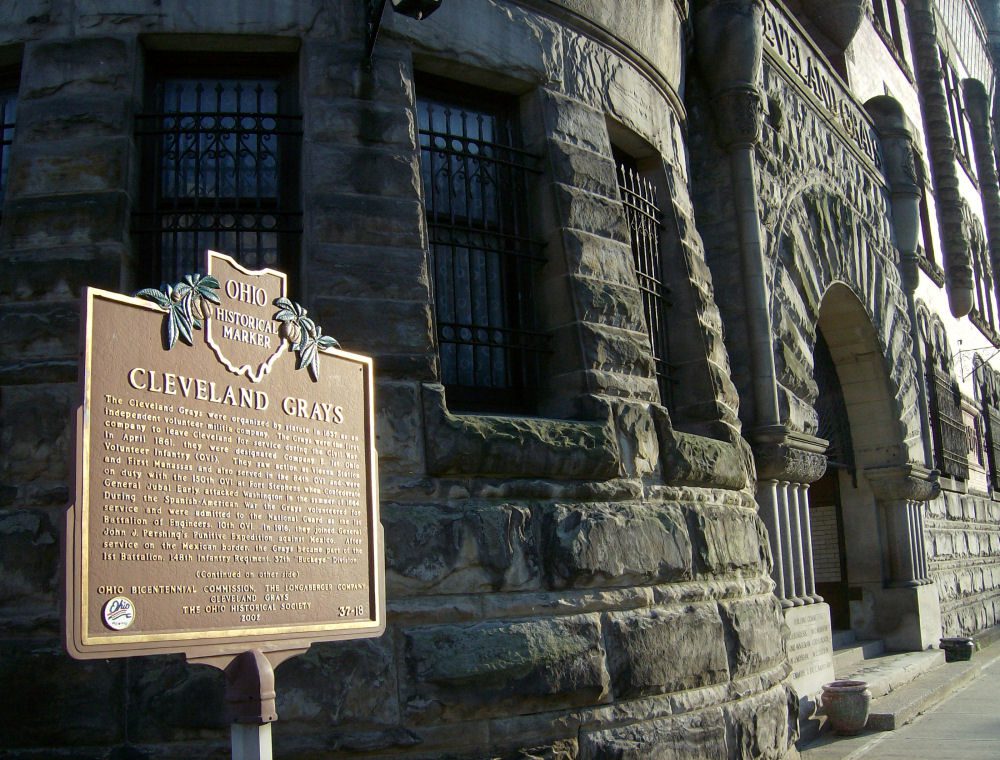
The Cleveland Grays were organized by statute in 1837 as an independent volunteer militia company. The Grays were the first company to leave Cleveland for service during the Civil War. In April 1861, they were designated Company E, 1st Ohio Volunteer Infantry (OVI). They saw action at Vienna Station and First Manassas and also served […]
36-18 The Village of Glenwillow
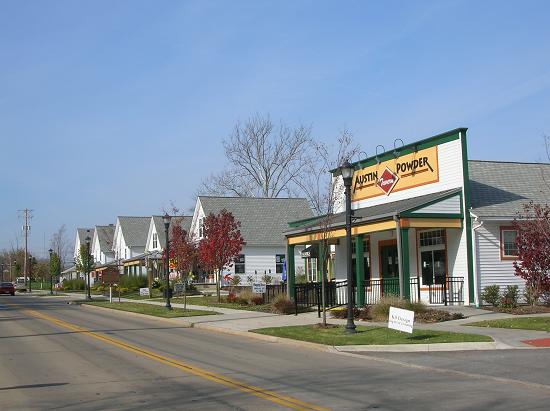
The Village of Glenwillow was developed and has survived over the last century as a rural enclave whose character has been shaped by the Austin Powder Company. Glenwillow began as a company town of the Austin Powder Company, which relocated its explosives factory from Cleveland in 1892. The Falls Junction Depot was originally built in […]
35-18 The Chagrin River’s “High Falls”
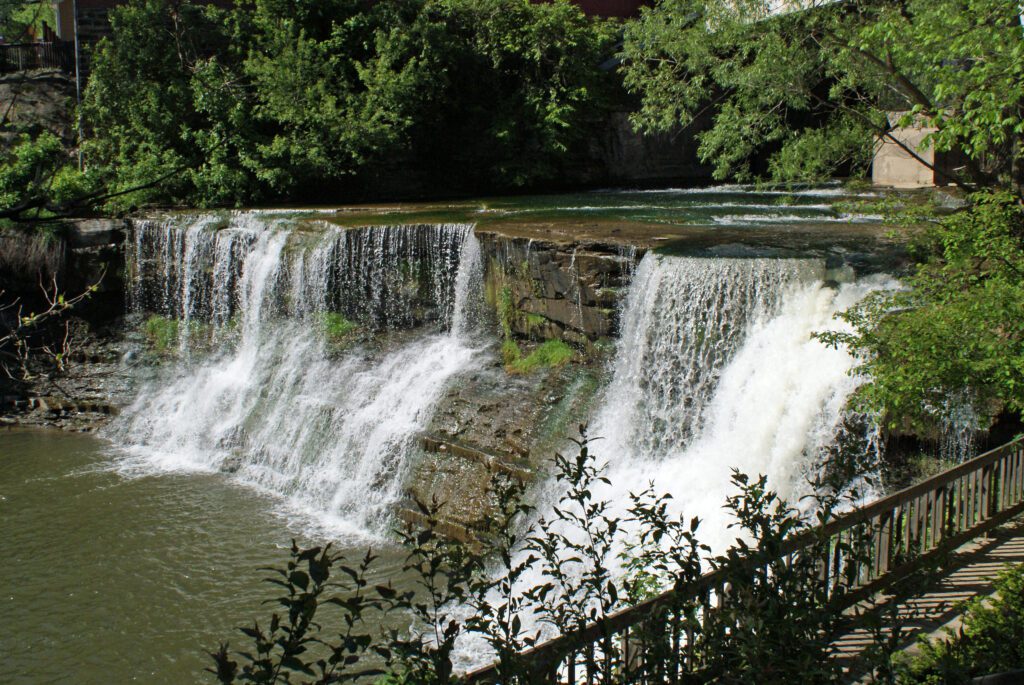
The Chagrin River was named for Francois Seguin, a Frenchman who traded with Native Americans in Northeast Ohio circa 1742. The “High Falls” of the Chagrin River primarily attracted settlers from New England (circa 1833) seeking a location with ample waterpower. By the mid-nineteenth century an axe factory, a foundry, 2 flour mills, 4 woolen […]
34-18 The Michelson-Morley Experiment
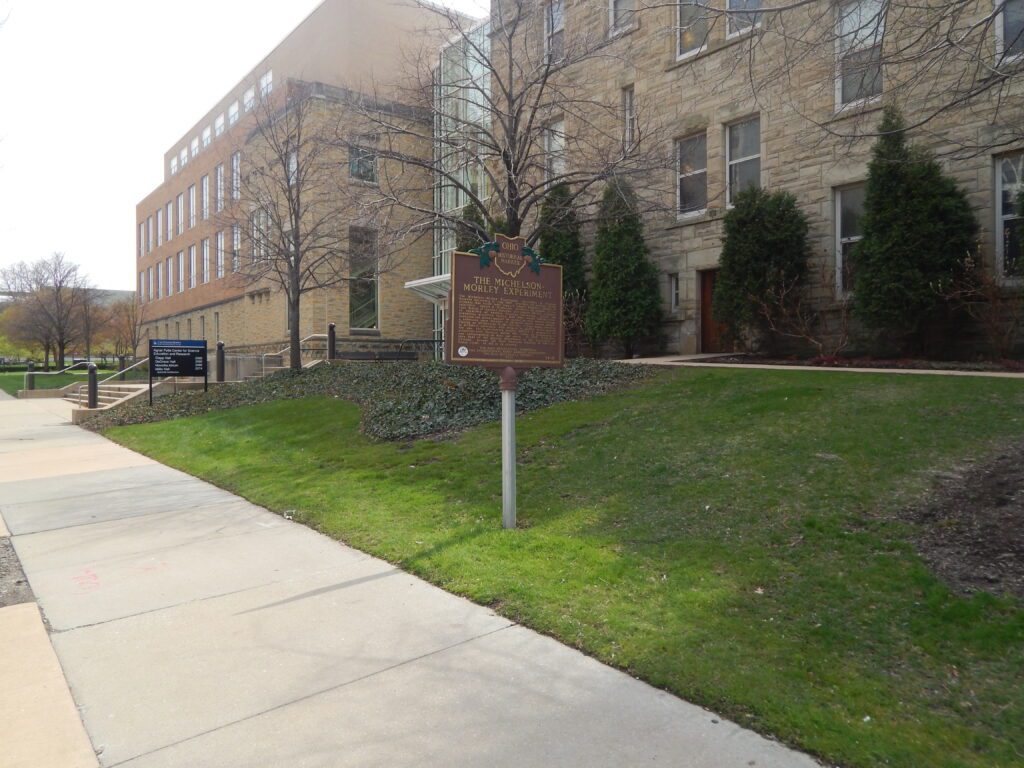
The Michelson-Morley Experiment, conducted at Western Reserve University in July 1887, provides the earliest direct evidence that would later support Albert Einstein’s theory of relativity. Albert A. Michelson, professor of physics at the Case School of Applied Sciences, and Edward Morley, professor of chemistry at Western Reserve University, tested the prevailing scientific theory that light […]
33-18 Cataract Falls
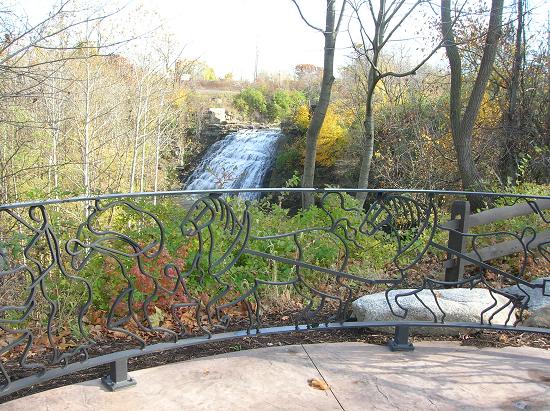
Formed by erosion of Cleveland shale and cascading 48 feet, making it the tallest waterfall in the county, the Cataract Falls of Mill Creek powered the gristmill and sawmill built by William Wheeler Williams and Major Wyatt in 1799. The mills, commissioned by the Connecticut Land Company to encourage settlement of the Western Reserve, attracted […]
32-18 Cleveland Theater District

The Theater District, bound by Chester Avenue, Prospect Avenue, East 18th, East 9th and East 12th Streets, came into being at the turn of the 20th century, when Cleveland emerged as a thriving metropolis. Built between 1890-1928, the area hosted a variety of fine retail stores, theaters, prestigious clubs, restaurants, and distinct office buildings. The […]
31-18 Theodore Elijah Burton 1851-1929

Born in Jefferson, Ohio, Theodore E. Burton graduated from Oberlin College and became a prominent Cleveland attorney. He was elected to Congress in 1888 and served from 1889-91, 1895-1909, and 1921-28. He was elected U.S. Senator in 1908 and 1928 and was a leading contender for the U.S. Presidency in 1916. Due to his work […]
30-18 Crile Hospital
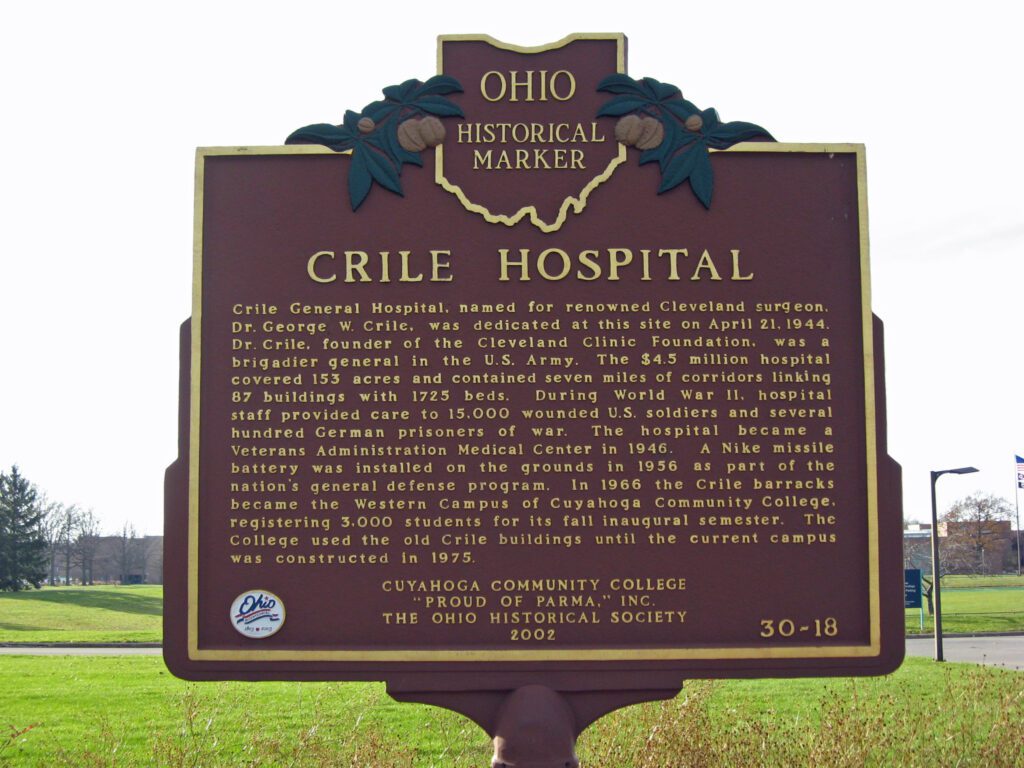
Crile General Hospital, named for renowned Cleveland surgeon, Dr. George W. Crile, was dedicated at this site on April 21, 1944. Dr. Crile, founder of the Cleveland Clinic Foundation, was a brigadier general in the U.S. Army. The $4.5 million hospital covered 153 acres and contained seven miles of corridors linking 87 buildings with 1725 […]