 Skip to content

7-19 Annie Oakley
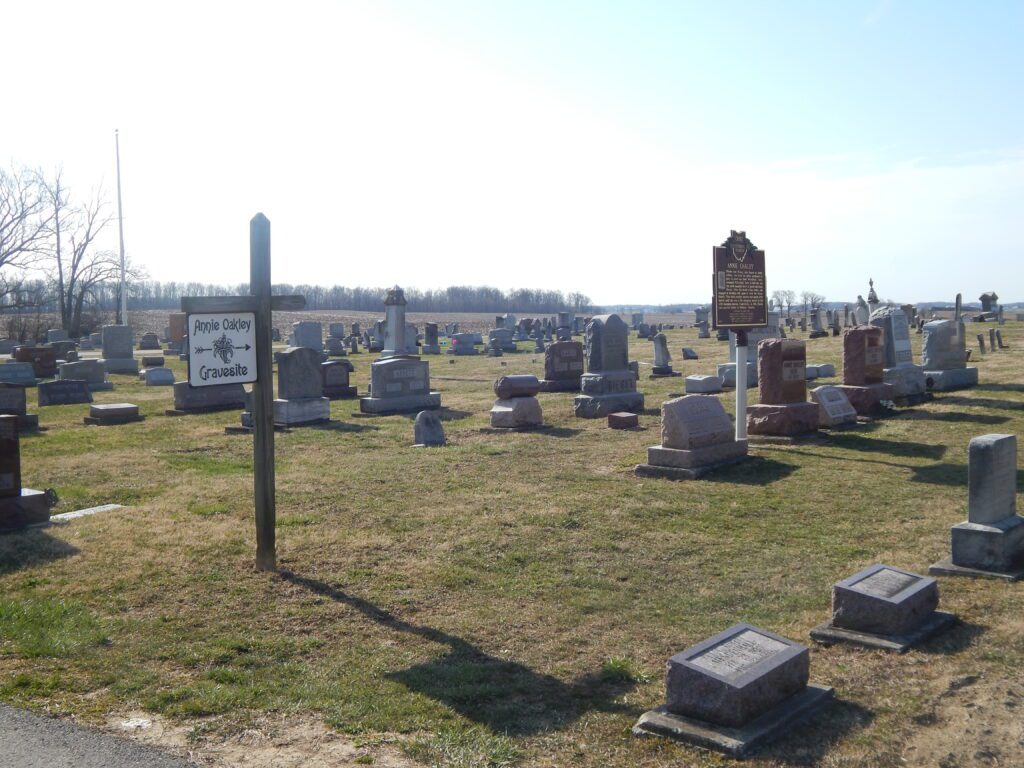
Phoebe Ann Mosey, also known as Annie Oakley, was born six miles northeast of here in what was then Woodland, later renamed Willowdell. Born in 1860, she was the sixth daughter born to Jacob and Susan Mosey. After the death of her father, she engaged in shooting wild game to feed the Mosey family. This […]
6-19 Tecumseh / Shawnee Prophet’s Town
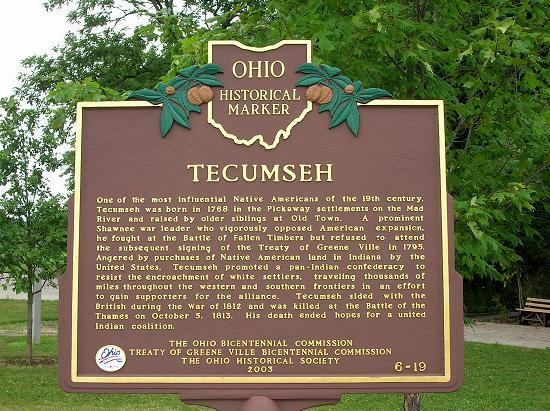
One of the most influential Native Americans of the 19th century, Tecumseh was born in 1768 in the Pickaway settlements on the Mad River and raised by older siblings at Old Town. A prominent Shawnee war leader who vigorously opposed American expansion, he fought at the Battle of Fallen Timbers but refused to attend the […]
5-19 Fort Jefferson / St. Clair’s Defeat

During the Indian Wars of 1790-1795, the United States built a chain of forts in the contested area of what is today western Ohio. These forts were built as a result of various tribes of the region attacking the encroaching American population as they moved north of the Ohio River. In October 1791, General Arthur […]
4-19 Treaty of Greene Ville 1795
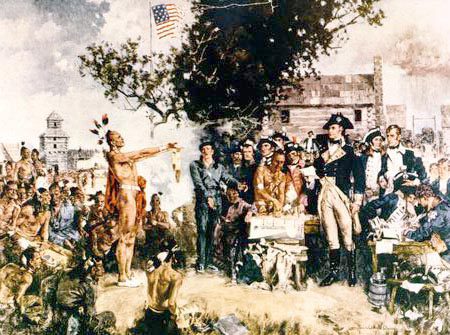
Following General Anthony Wayne’s victory at Fallen Timbers, members of the western tribes assembled at Fort Greene Ville to settle on terms of peace. Representatives of the Wyandot, Delaware, Shawnee, Ottawas, Chippewa, Ottawa, Patawatimi, Miami, Eel River, Wea, Piankeshaw, Kickapoo, and Kaskaskia signed the treaty on August 3, and agreed to cede claims to lands […]
2-19 Annie Oakley, 1860-1926
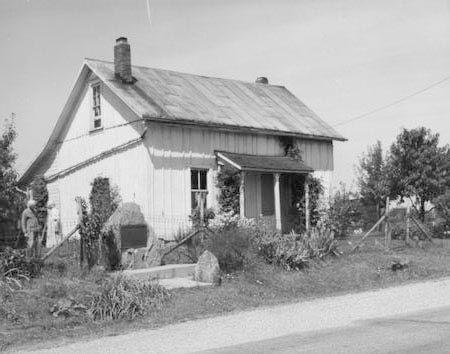
One of America’s best-known sport shooters and entertainers of the late 1800s, Annie Oakley was born Phoebe Ann Mosey (or Mozee) north of Versailles in Darke County in 1860. She achieved local fame for her shooting ability as a hunter while still in her teens. By 1885 Oakley was a star performer in Buffalo Bill’s […]
146-18 Cory United Methodist Church / Host to Civil Rights Leaders

Cory United Methodist Church is an icon of Cleveland’s civil rights movement. As one of the city’s largest Black-owned churches during the 1960s, Cory hosted events for national, local, and grassroots organizations such as the Fair Employment Practices Committee, NAACP Cleveland Branch, Cleveland Chapter of the Congress of Racial Equality (CORE), and United Freedom Movement. […]
145-18 Curtis-Preyer Stone House 1819-1835 / Lake View Wine Farm 1864-1892

The Curtis-Preyer Stone House takes its name from two families associated with its early history. Richard and Clarissa Dille Curtis purchased 70 acres in the Connecticut Western Reserve from veteran Elias Lee in 1819. The Euclid Township “Turkey Knob” settlement soon thrived around Dugway Brook, springs sites, and an American Indian crossroads. The Curtis, Dille, […]
144-18 Wings Over Jordan Choir / Wings Over Jordan Choir
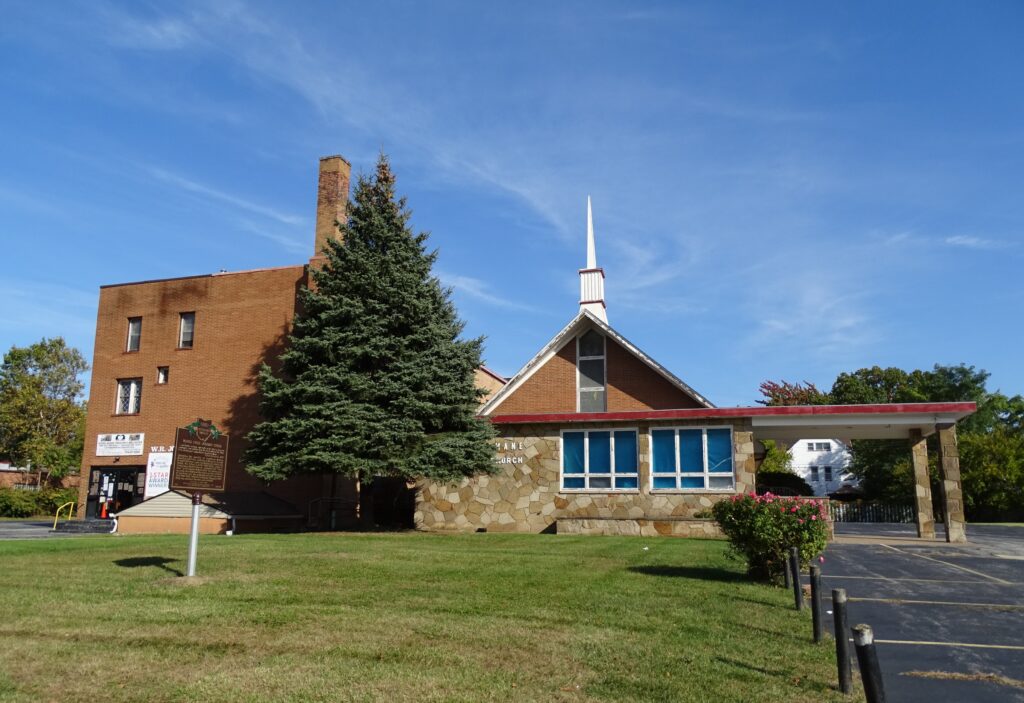
“…on Sunday morning, especially in the African American community, you could go down the street and hear The Wings Over Jordan just coming from everybody’s house….” Glenn Brackens, 2017. Upholding the sanctity of traditional African American spirituals, believing in the power of radio to uplift listeners, and recognizing his choir’s rich talent, Rev. Glenn T. […]
143-18 A Modern-Day Exodus / A Modern-Day Exodus

Here in 1963 congregants of Beth Israel-The West Temple, led by Louis Rosenblum, Herb Caron, and Rabbi Daniel Litt, founded the Cleveland Committee (later Council) on Soviet Anti-Semitism, the first American organization created to advocate for freedom for Soviet Jews. In 1970 this work led to the formation of the Union of Councils for Soviet […]
142-18 St. Clair Avenue Public Baths Edward J. Kovacic Recreation Center / Public Bath House Movement in Cleveland
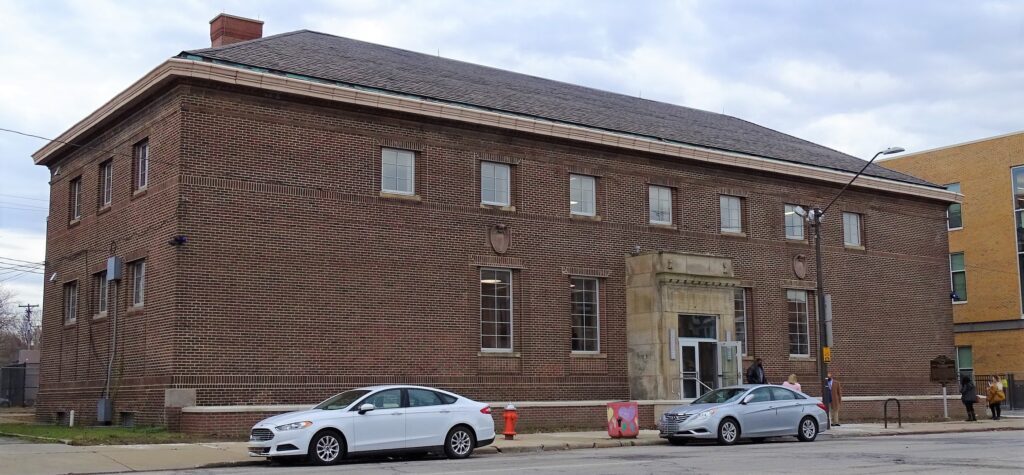
City architect Frederic H. Betz designed the St. Clair Avenue Public Bath House and it was constructed in 1919-1920 at a cost of $320,000. The facility included a large gymnasium, swimming pool, and laundry, in addition to showers. City Council dedicated the newly completed building to the late, beloved Cleveland Indians shortstop Raymond Chapman in […]