 Skip to content

46-25 Stoner House

The Stoner House, built circa 1852 on a natural spring thought to have medicinal properties, served as an inn, tavern, and spa, and as a hiding place for runaway slaves. George Stoner, owner and operator, drove the stagecoach from Columbus to Westerville transporting passengers who spent the night in this building. Runaway slaves were brought […]
45-25 Columbus Depot
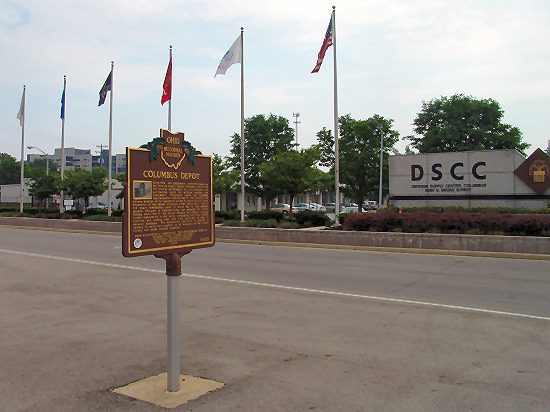
Since 1918, this installation, currently known as the Defense Supply Center, Columbus, has served the federal government as a procurement and distribution point for military supplies and equipment. Originally named the Columbus Quartermaster Reserve Depot, this location was chosen because of its immediate access to three railroad lines. Expansion of the center continued after World […]
44-25 Orange Johnson House

The original pioneer structure of this house was built by Arora Buttles in 1811. It was purchased by Orange and Achsa Johnson in 1816. Orange Johnson came from Connecticut as a comb maker; he became a farmer, landowner, turnpike commissioner, paymaster for the militia, banker, and railroad stockholder. In 1819 the Federal style addition was […]
43-25 The National Road / The National Road
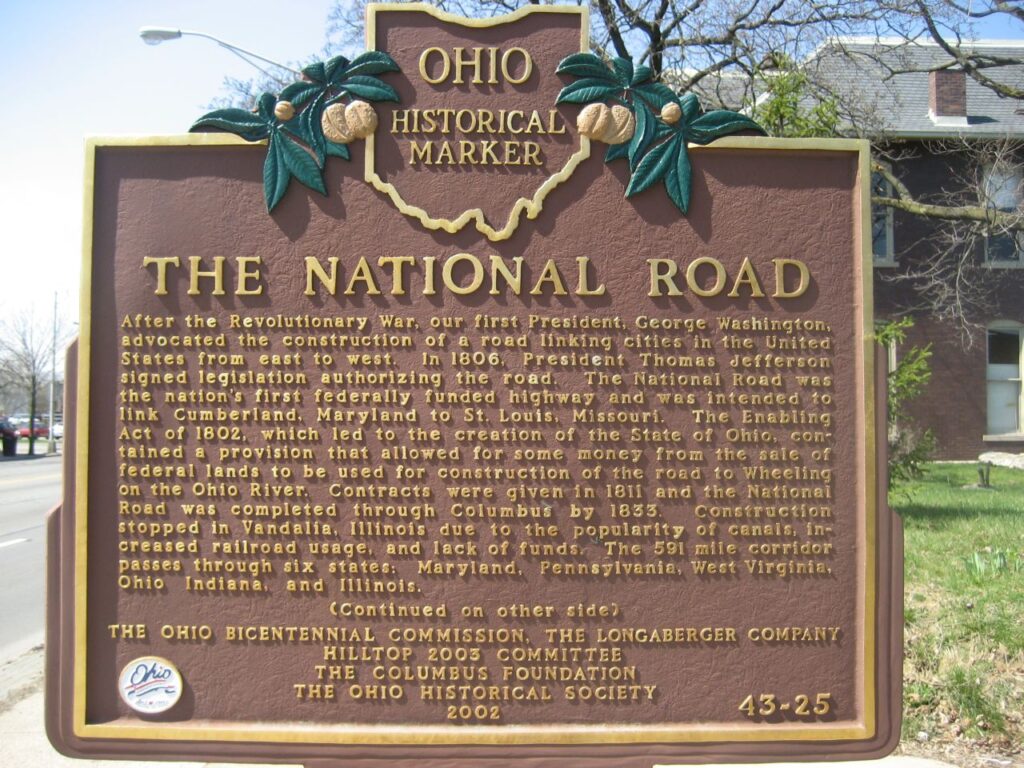
After the Revolutionary War, our first President, George Washington, advocated the construction of a road linking cities in the United States from east to west. In 1806, President Thomas Jefferson signed legislation authorizing the road. The National Road was the nation’s first federally funded highway and was intended to link Cumberland, Maryland to St. Louis, […]
42-25 The Irish in Columbus

Thousands of Irish immigrants came to Columbus to seek personal and religious freedom. With the “Great Hunger” in Ireland and the completion of the Ohio and Erie Canal and the National Road, immigration to Columbus increased in the mid nineteenth century. They initially settled in the north side of the city in the swamp flats, […]
41-25 Green Lawn Cemetery

Landscape architect Howard Daniels designed the original portion of Green Lawn Cemetery in 1848. Noted Columbus architect Frank Packard designed Green Lawn’s Chapel mausoleum, the Hayden family mausoleum, and the Packard mausoleum. Spanning over 360 acres, the cemetery’s wooded setting provides a habitat for a variety of birds and other wildlife. The Chapel contains stunning […]
40-25 Ohio and Erie Canal in Groveport / Scioto Valley Interurban
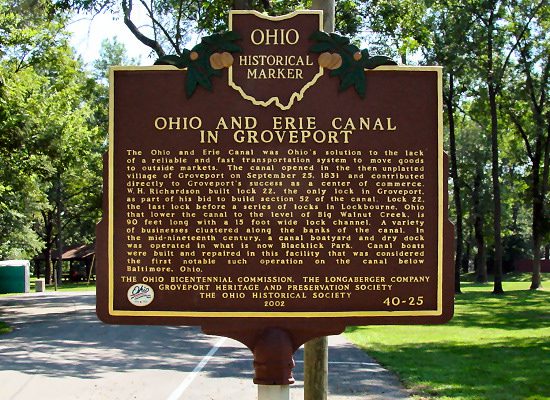
The Ohio and Erie Canal was Ohio’s solution to the lack of a reliable and fast transportation system to move goods to outside markets. The canal opened in the then unplatted village of Groveport on September 25, 1831 and contributed directly to Groveport’s success as a center of commerce. W.H. Richardson built lock 22, the […]
39-25 The Founding of Worthington / Worthington, A Planned Community

The Scioto Company, led by James Kilbourn (Kilbourne) of Granby and Berlin, Connecticut, founded Worthington in 1803, the year that Ohio became a state. The Scioto Company was organized as a land company in 1802 with 38 original proprietors from Connecticut and Massachusetts. They purchased 16,000 acres of land along the Olentangy River for $1.25 […]
38-25 Old Ohio Union
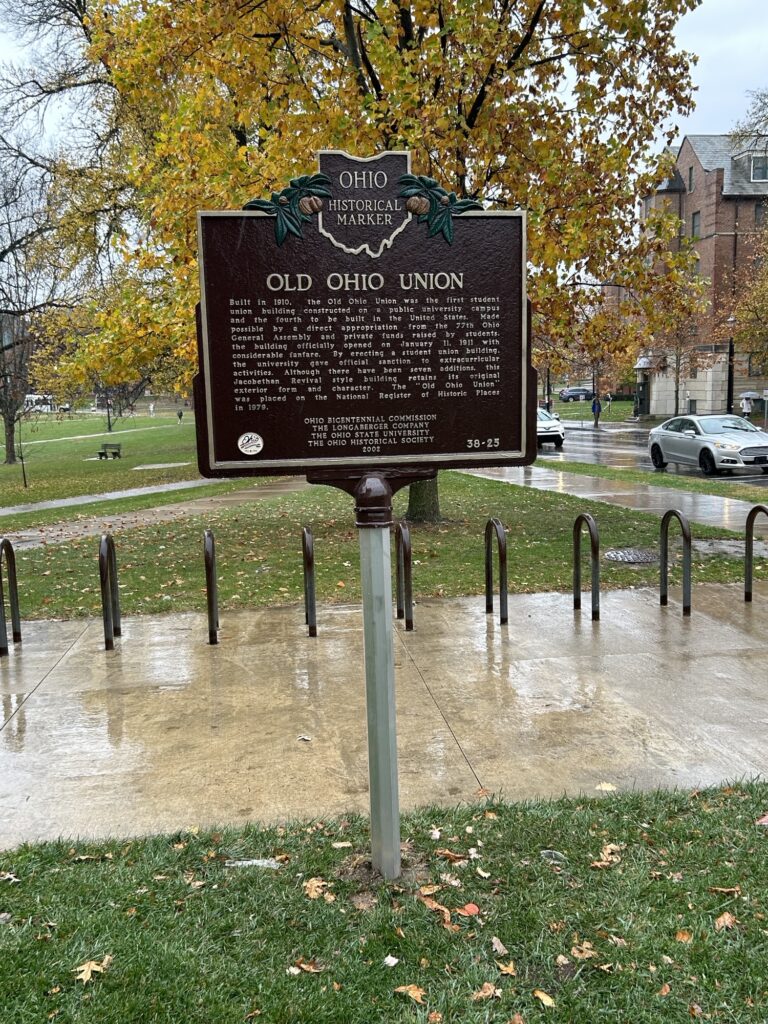
Built in 1910, the old Ohio Union was the first student union building constructed on a public university campus and the fourth to be built in the United States. Made possible by a direct appropriation from the 77th Ohio General Assembly and private funds raised by students, the building officially opened on January 11, 1911 […]
37-25 Orders Road School / The Orders Family
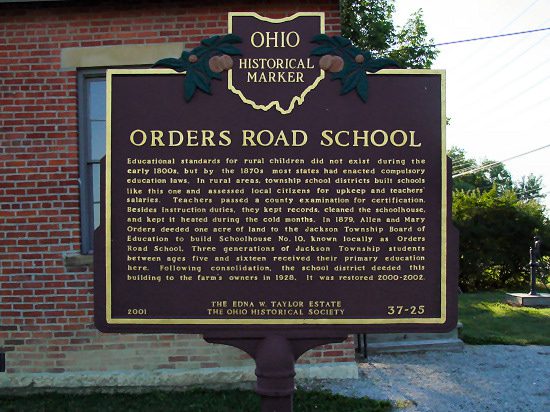
Educational standards for rural children did not exist during the early 1800s, but by the 1870s most states had enacted compulsory education laws. In rural areas, township school districts built schools like this one and assessed local citizens for upkeep and teacher’s salaries. Teachers passed a county examination for certification. Besides instruction duties, they kept […]