 Skip to content

111-25 Southwood Elementary School
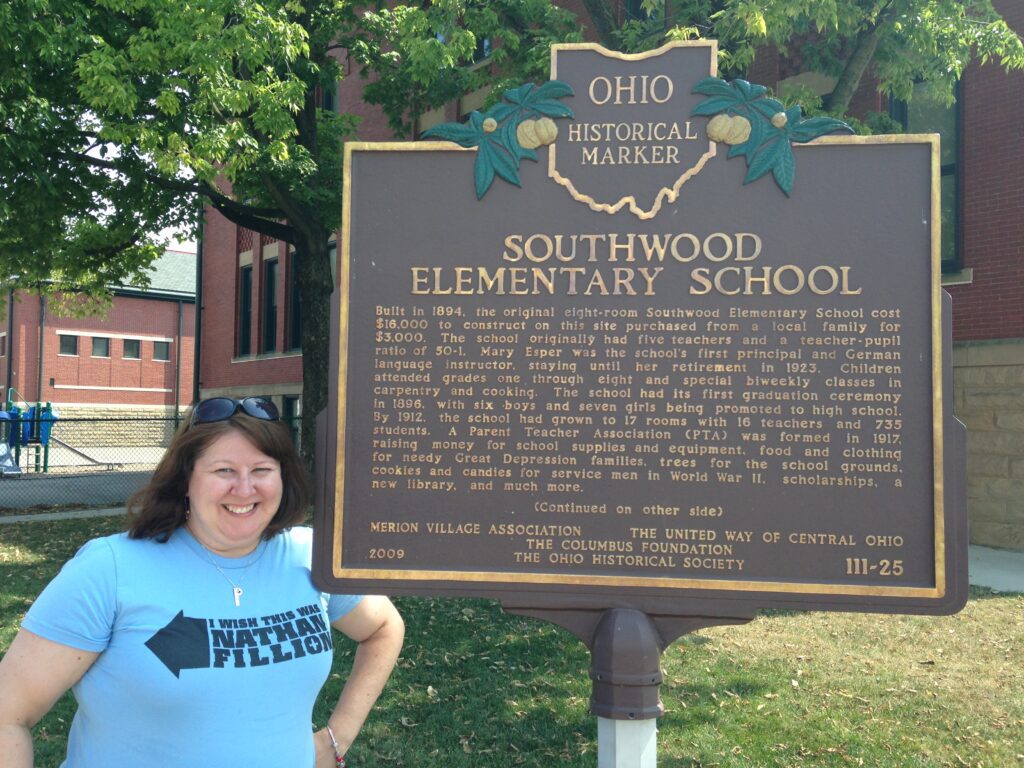
Built in 1894, the original eight-room Southwood Elementary School cost $16,000 to construct on this site purchased from a local family for $3,000. The school originally had five teachers and a teacher-pupil ratio of 50-1. Mary Esper was the school’s first principal and German language instructor, staying until her retirement in 1923. Children attended grades […]
110-25 Hanford Village

Hanford Village was founded in the early 1900s just east of Columbus proper with its own mayor, police force, fire department, businesses, and park. After World War II, a subdivision of Hanford became a segregated community for returning African American veterans to settle using the G.I. Bill. Hanford then became one of the few places […]
109-25 Campbell Memorial Park / The Adena Culture
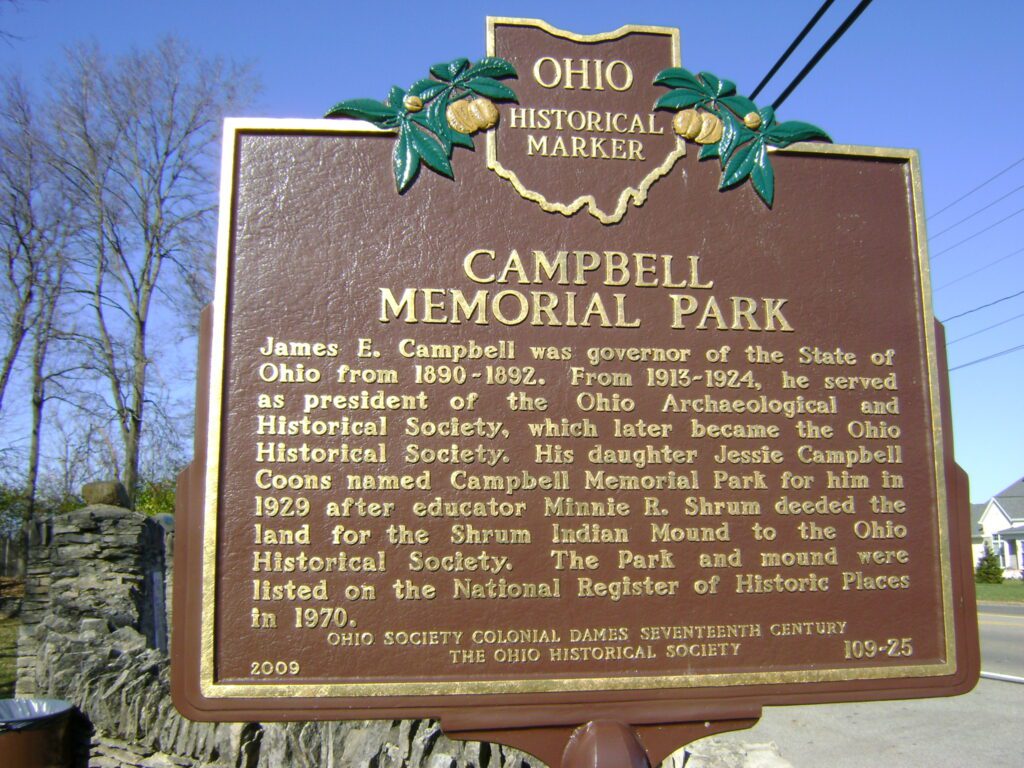
James E. Campbell was governor of the State of Ohio from 1890-1892. From 1913-1924, he served as president of the Ohio Archaeological and Historical Society, which later became the Ohio Historical Society. His daughter Jessie Campbell Coons named Campbell Memorial Park for him in 1929 after educator Minnie R. Shrum deeded the land for the […]
108-25 The Interurban Depot
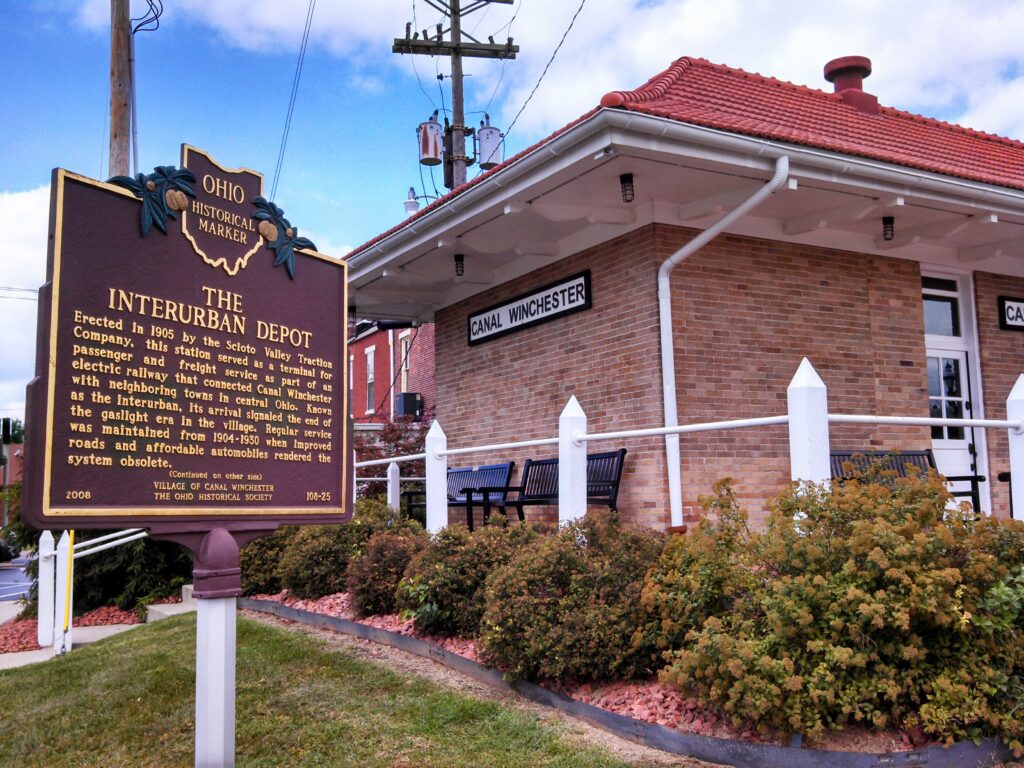
Erected in 1905 by the Scioto Valley Traction Company, this station served as a terminal for passenger and freight service as part of an electric railway that connected Canal Winchester with neighboring towns in central Ohio. Known as the interurban, its arrival signaled the end of the gaslight era in the village. Regular service was […]
107-25 Schiller Park
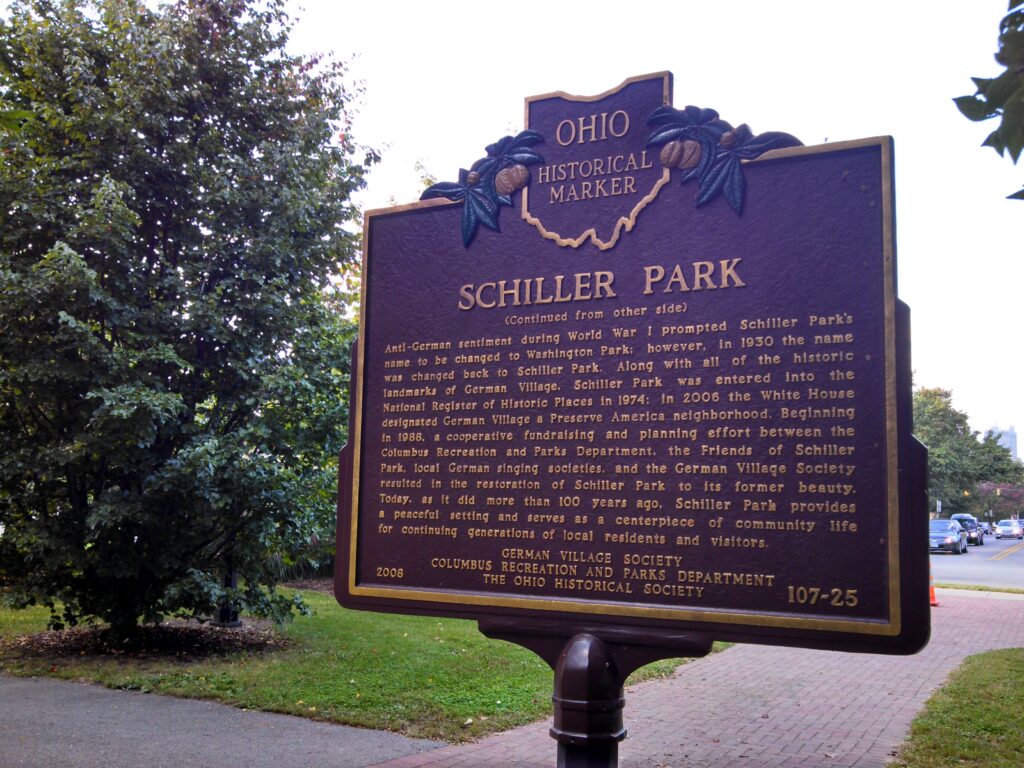
Long a gathering place for residents of Columbus, this area, which became known as Schiller Park, hosted German songfests, Fourth of July festivities, the 1864 and 1865 Ohio State Fairs, and the 1871 peace celebration commemorating the end of the Franco-Prussian War. In 1867, the City of Columbus purchased 23 acres of this area, then […]
106-25 Toledo and Ohio Central Railroad Station / Macklin Hotel
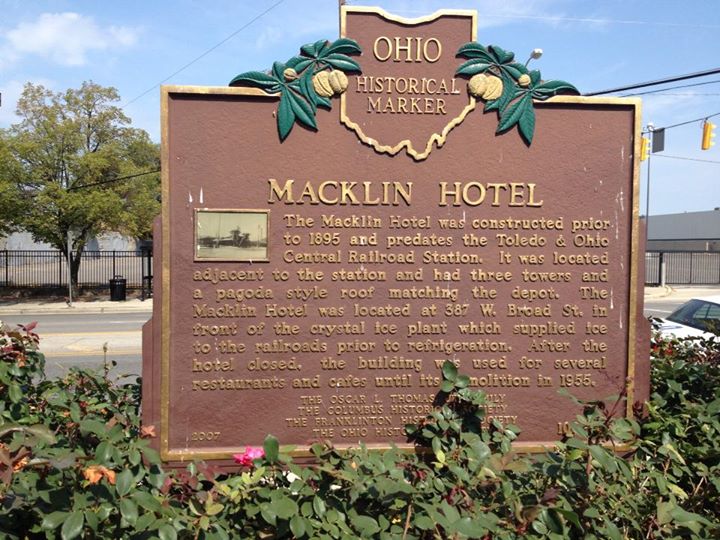
The only remaining Columbus railroad station, The Toledo & Ohio Central (T&OC) Railroad Station was constructed in 1895 and was the departure point for William McKinley when he left for Washington D.C to be sworn in as president. Designed by noted Columbus architects Joseph Warren Yost & Frank L. Packard, the pagoda style roof and […]
105-25 American Federation of Labor Since 1881 / United Mine Workers of America
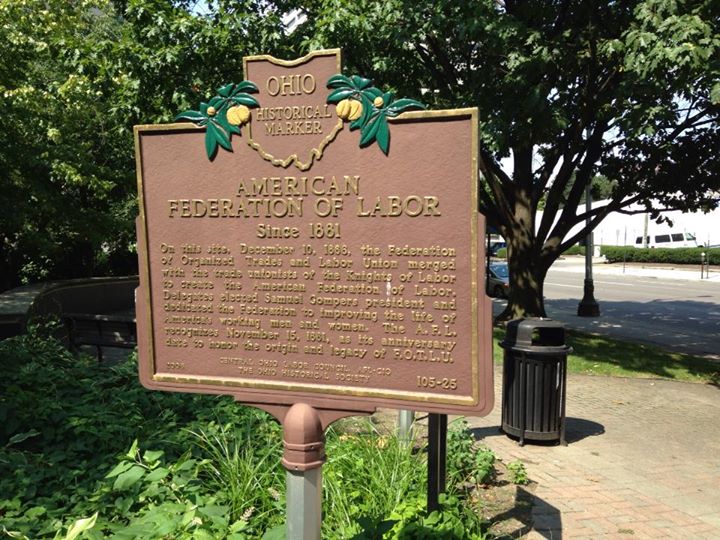
One this site, December 10, 1886, the Federation of Organized Trades and Labor Union merged with the trade unionists of the Knights of Labor to create the American Federation of Labor. Delegates elected Samuel Gompers president and dedicated the Federation to improving the life of America’s working men and women. The A.F.L. recognizes November 15, […]
104-25 Site of First Wendy’s Restaurant
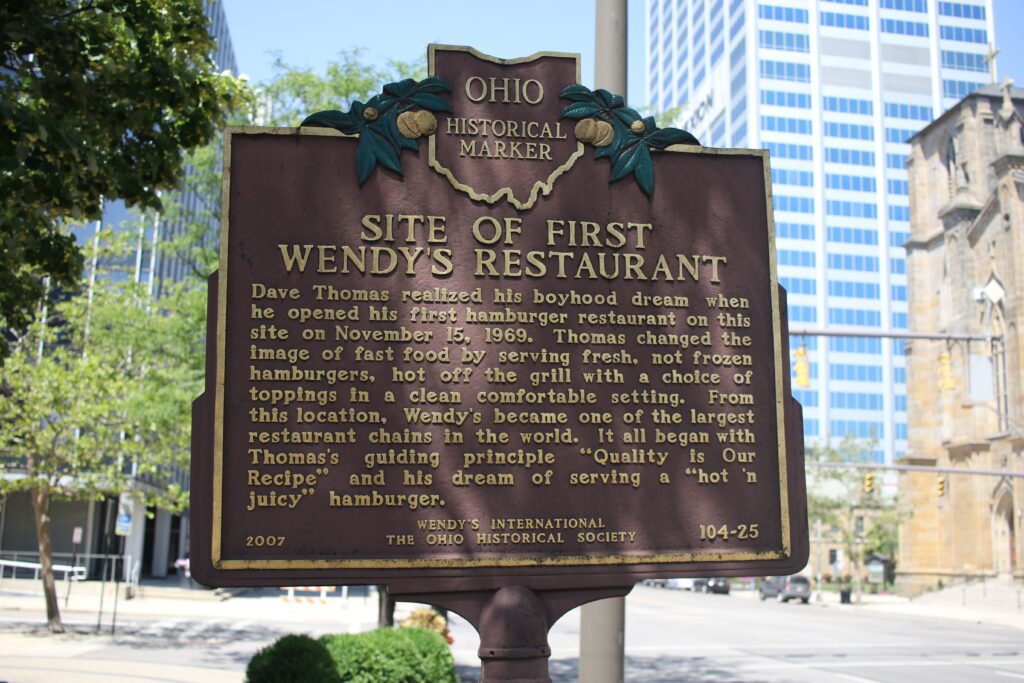
Dave Thomas realized his boyhood dream when he opened his first hamburger restaurant on this site on November 15, 1969. Thomas changed the image of fast food by serving fresh, not frozen hamburgers, hot off the grill with a choice of toppings in a clean comfortable setting. From this location, Wendy’s became one of the […]
103-25 The Lincoln Theatre
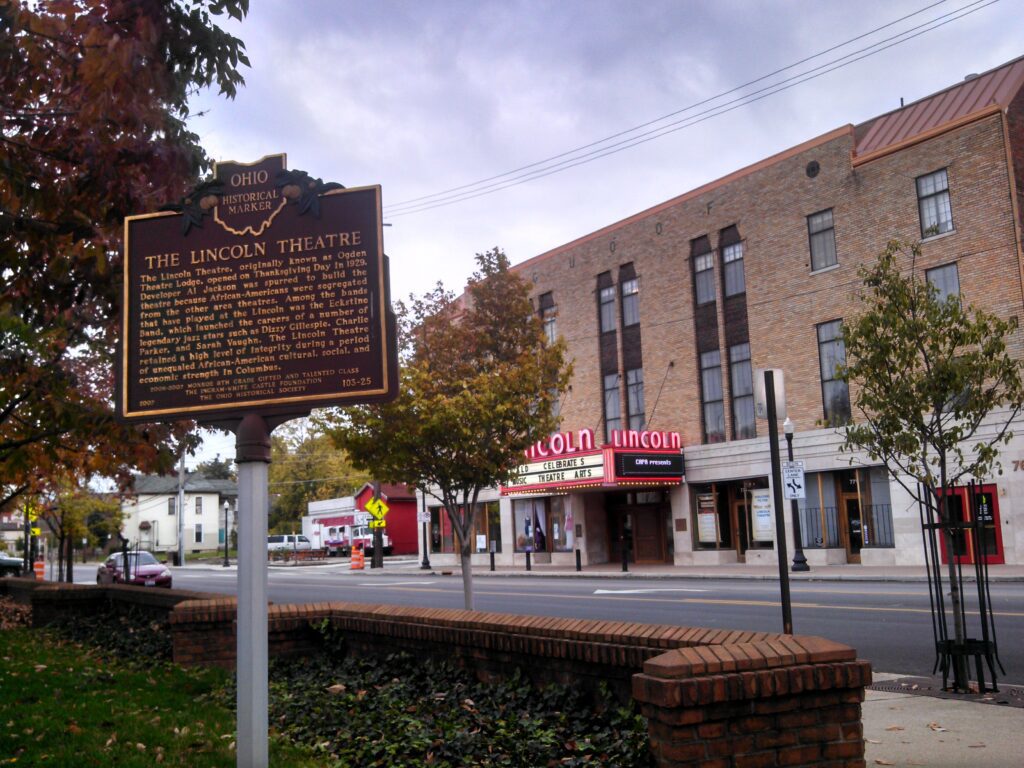
The Lincoln Theatre, originally known as Ogden Theatre Lodge, opened on Thanksgiving Day in 1929. Developer Al Jackson was spurred to build the theatre because African-Americans were segregated from the other area theatres. Among the bands that have played at the Lincoln was the Eckstine Band, which launched the careers of a number of legendary […]
102-25 Mount Vernon Avenue
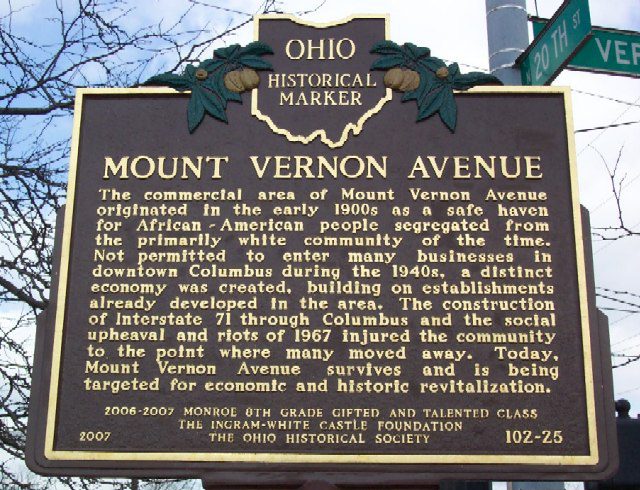
The commercial area of Mount Vernon Avenue originated in the early 1900s as a safe haven for African-American people segregated from the primarily white community of the time. Not permitted to enter many businesses in downtown Columbus during the 1940s, a distinct economy was created, building on establishments already developed in the area. The construction […]