 Skip to content

20-29 Martin Robison Delany
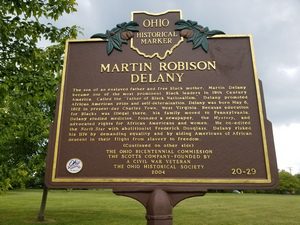
The son of an enslaved father and free Black mother, Martin Delany became one of the most prominent Black leaders in 19th Century America. Called the “Father of Black Nationalism,” Delany promoted African American pride and self-determination. Delany was born May 6, 1812 in present-day Charles Town, West Virginia. Because education for Blacks was illegal […]
19-29 Helen Hooven Santmyer
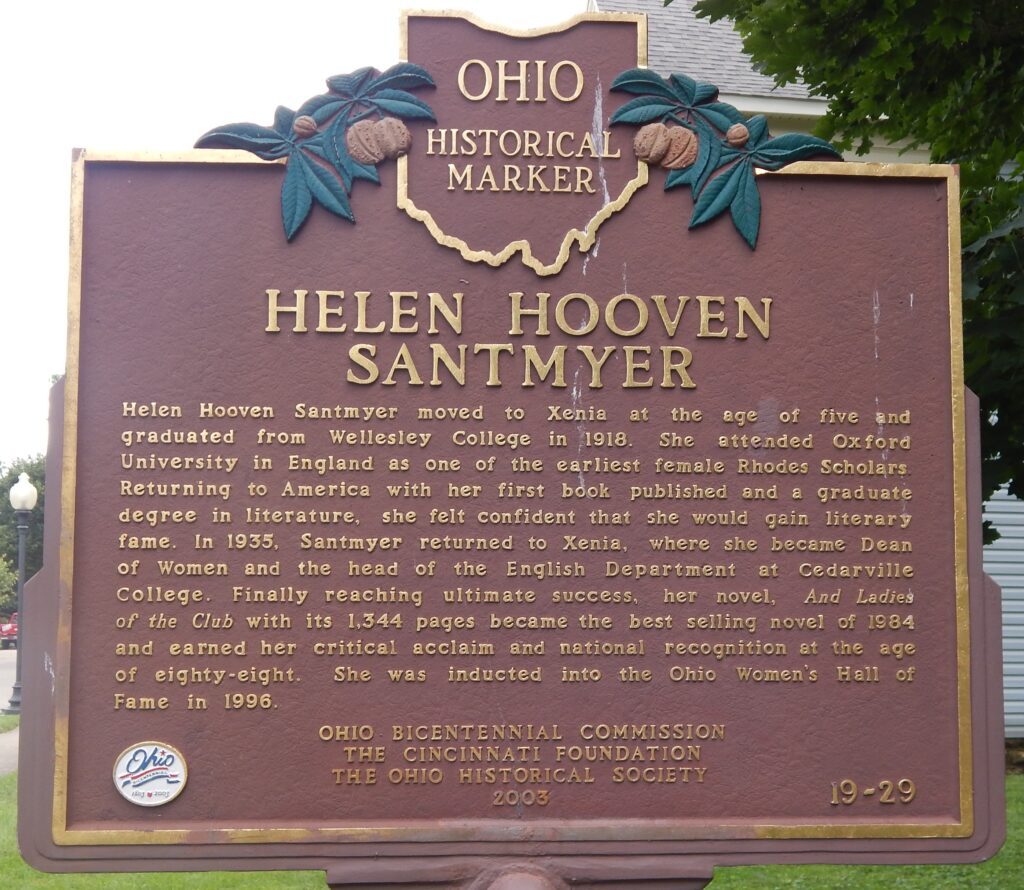
Helen Hooven Santmyer moved to Xenia at the age of five and graduated from Wellesley College in 1918. She attended Oxford University in England as one of the earliest female Rhodes Scholars. Returning to America with her first book published and a graduate degree in literature, she felt confident that she would gain literary fame. […]
18-29 Brigadier General Benjamin Oliver Davis Sr.
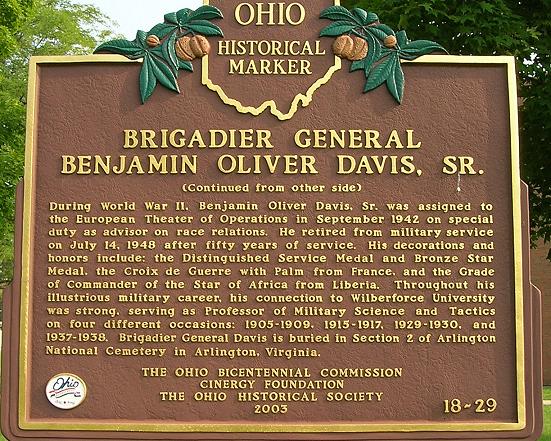
Benjamin Oliver Davis, Sr. (July 1, 1877 – November 26, 1970), the nation’s first African American general in the Regular Army, was born in Washington, D.C. Davis first served as a temporary first lieutenant of the 8th U.S. Volunteer Infantry during the Spanish-American War. Following that conflict, he enlisted as a private in the 9th […]
17-29 Hallie Quinn Brown
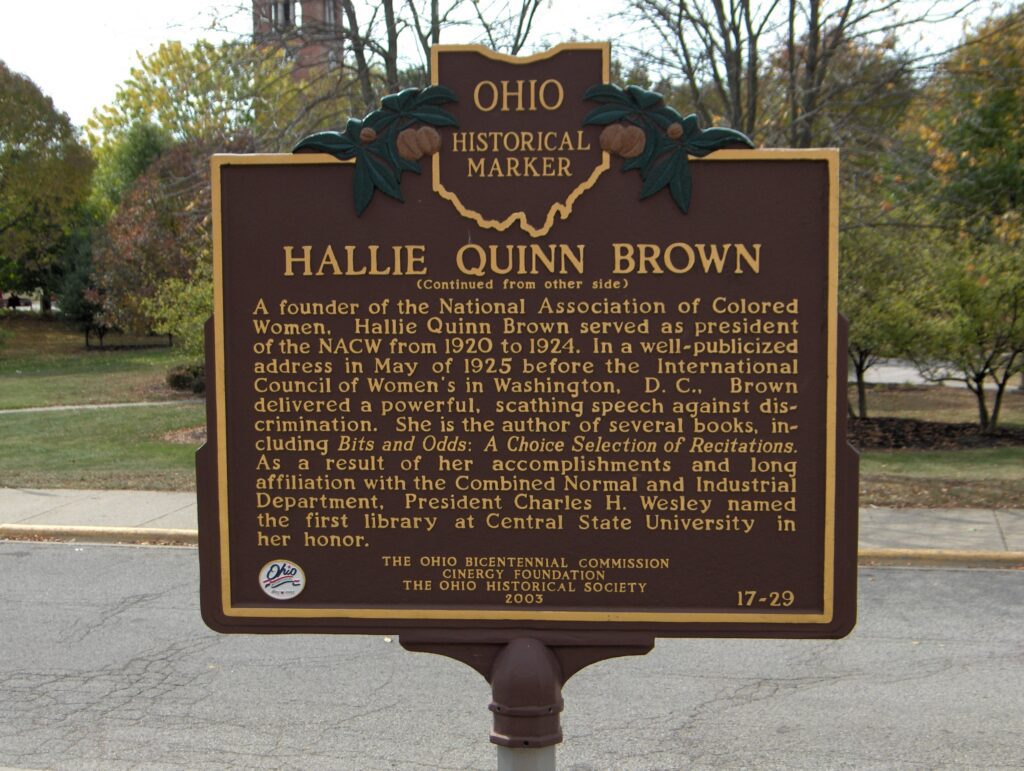
Hallie Quinn Brown (c. 1850) was born in Pittsburgh, Pennsylvania to former slaves. She and her family moved to Wilberforce, Ohio in 1870, where she received a Bachelor of Science degree from Wilberforce University in 1873. Brown taught school in the South until her appointment as professor of elocution at Wilberforce University in 1893. A […]
16-29 Central State University
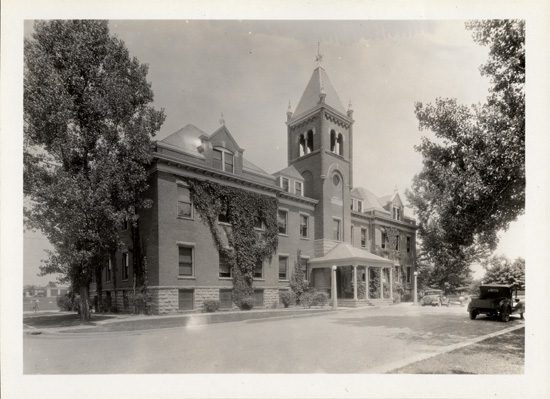
Central State University originated on March 19, 1887, when the Ohio General Assembly passed an act establishing a Combined Normal and Industrial (CN&I) Department at Wilberforce University. Through various transitional changes, it emerged as an independent, state university. In 1941, the General Assembly expanded the CN&I, which offered two-year courses, into the College of Education […]
15-29 Antioch College
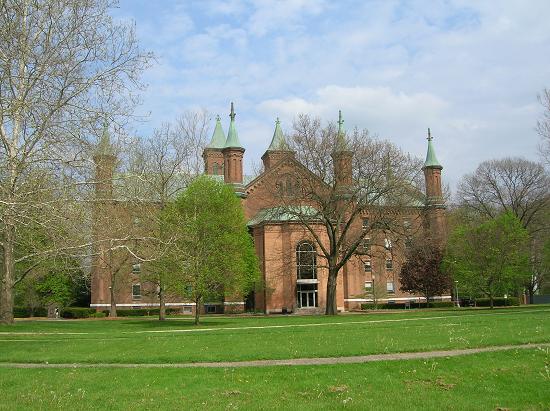
Chartered in 1852 by the Christian Church and later a Unitarian institution, Antioch College opened with educational pioneer Horace Mann as its first president. One of the earliest co-educational colleges in the United States, from its inception Antioch promoted humanistic and egalitarian values. In 1920 Arthur E. Morgan became president and initiated a widely emulated […]
13-29 Huffman Prairie Flying Field
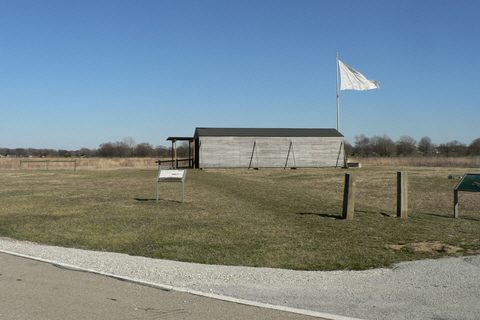
Huffman Prairie Flying Field, a unit of the Dayton Heritage National Historical Park, is the site where Wilbur and Orville Wright flew and perfected the world’s first practical airplane, the 1905 Wright Flyer III, after their first flights in Kitty Hawk, North Carolina in 1903. The Wright brothers mastered the principles of controlled, powered flight […]
12-29 George Barrett Cement House – Poor Man’s Home, Rich Man’s Palace
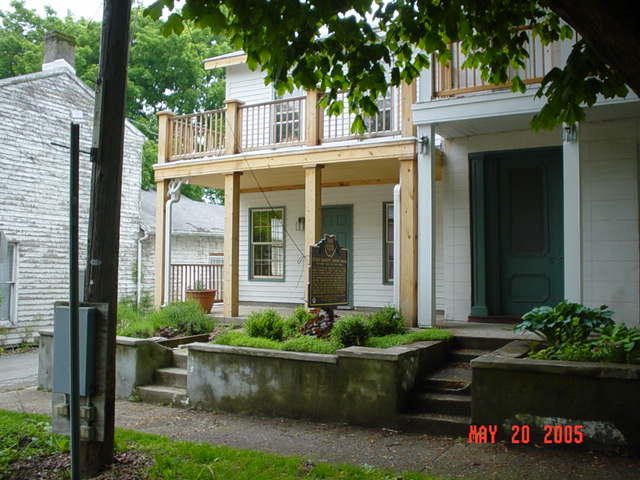
After his home was destroyed by fire, George Barrett decided to build a home that would survive another disaster. An article Barrett read by O.S. Fowler in New York described a new building material that used gravel, sand, and lime. Cement was a less expensive and more time efficient construction material than brick. Unable to […]
11-29 Collins School

In 1854, Samuel and Rebecca McClellan Collins deeded 1.28 acres to Beavercreek Township, Greene County, for the purpose of building a schoolhouse. The first two schoolhouses were constructed of stone with fireplaces for heat. Collins neighborhood children in first through eighth grade were educated in the present red brick building until 1944, when decreased enrollment […]
10-29 Galloway Log House / Xenia Tornado-April 3, 1974
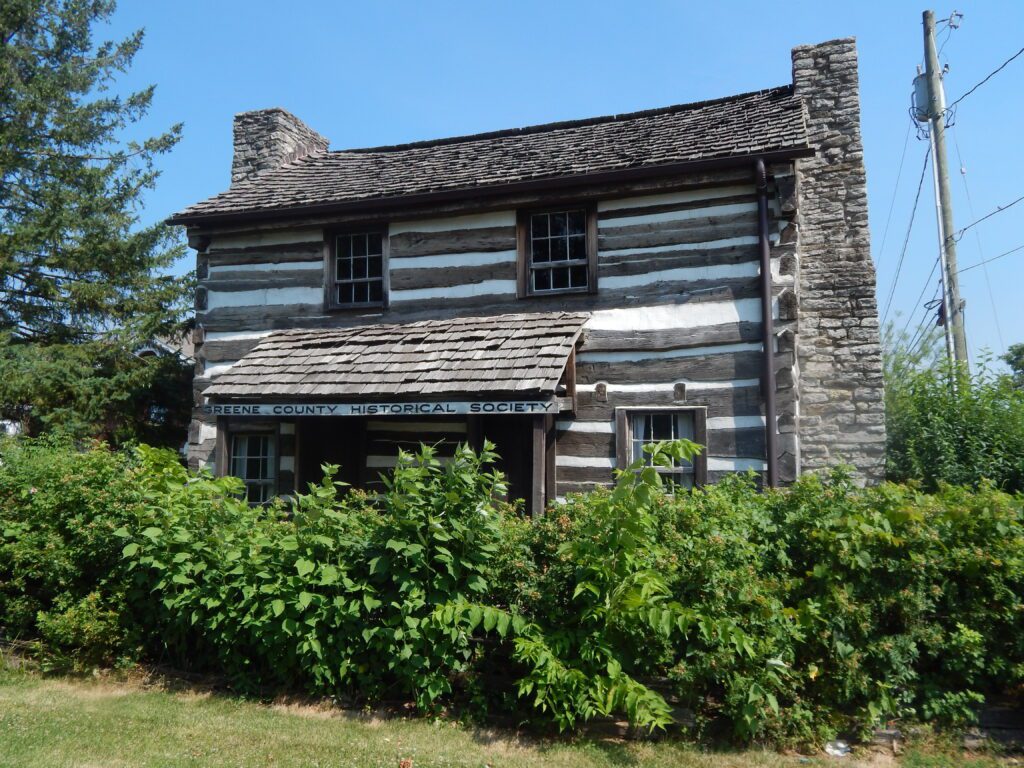
James Sr. and Rebecca (Junkin) Galloway moved with their family to Greene County from Kentucky in 1798, constructing their first home, a small log cabin. Galloway built the present structure around 1799 near the bend in the Little Miami River near what is now Goes Station on U.S. 68. In 1936, the Greene County Historical […]