

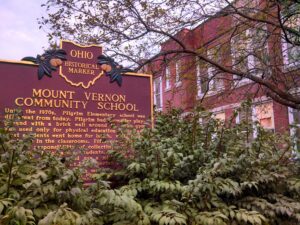
, OH
Pilgrim Elementary School, now East Pilgrim, was the community school for the Mount Vernon area and was a focal point for community activities. The Parent Teacher Association was active with members of the community and the school was used as a meeting place. The 1977 Ohio Supreme Court case of Penick v. The Columbus School Board ended the segregation of schools in Columbus. Students from Pilgrim were bussed to other schools in the district.
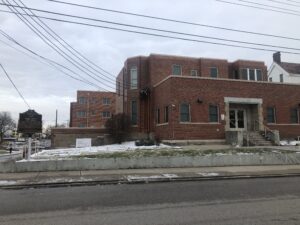
, OH
Walnut Hills has been home to a significant middle- and working-class Black community since the 1850s. In 1931, African American entrepreneur Horace Sudduth bought 1004 Chapel Street and then the row of buildings across Monfort, naming them the Manse Hotel and Annex. Throughout the 1940s, hotel dinner parties could move to the Federation of Colored Women’s Clubs house next door for dancing. A large addition to the Manse in 1950 created its own ballroom, 24-hour coffee shop, upgraded Sweetbriar Restaurant, and more guest rooms. It appeared in the Negro Motorist’s Green Book between 1940-1963, providing local, transient, and residential guests both catered meetings and top entertainment during the last decades of segregation. It closed in the late 1960s when the economic need for a first-class segregated hotel disappeared in the age of Black Power.
, OH
The Cincinnati Club, a prominent Jewish social club founded in 1889, opened their clubhouse at 2840 Melrose Avenue in 1894. A.E. Elzner designed the brick and stone building in the Norman-Gothic style. It featured massive round towers, wide porches, a ballroom, billiard rooms, bowling alley, as well as ornate club rooms. The Cincinnati Club hosted lavish events that celebrated Jewish identity and community. As the Jewish population migrated north and east of Walnut Hills, the club dissolved. In 1922, the vacant clubhouse was purchased by the Disabled American Veterans of the World War (DAV). The DAV Clubhouse provided recreation, resources, and shelter to disabled veterans for over twenty years. The organization, founded in Cincinnati in 1920, led to the establishment of the Veterans Administration and improved support for wounded veterans nationwide.
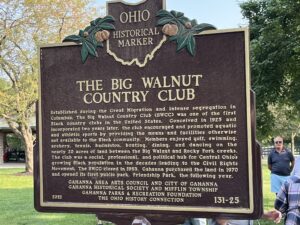
, OH
Established during the Great Migration and intense segregation in Columbus, The Big Walnut Country Club (BWCC) was one of the first Black country clubs in the United States. Conceived in 1925 and incorporated two years later, the club encouraged and promoted aquatic and athletic sports by providing the means and facilities otherwise not available to the Black community. Members enjoyed golf, swimming, archery, tennis, badminton, boating, dining, and dancing on the nearly 20 acres of land between the Big Walnut and Rocky Fork creeks. The club was a social, professional, and political hub for Central Ohio’s growing Black population in the decades leading to the Civil Rights Movement. The BWCC closed in 1963. Gahanna purchased the land in 1970 and opened its first public park, Friendship Park, the following year.

, OH
The building at 1380 E. 6th Street, designed by Walker and Weeks, served as the Cleveland Board of Education 1931-2013. During the 1950s and 1960s, the segregation of Cleveland Public Schools was the center of the city’s civil rights movement. Parents, like Daisy Craggett and Eddie Gill, protested relay classes and intact busing. The United Freedom Movement, a coalition of 50 civic, religious, and parent organizations, initiated demonstrations, sit-ins, and pickets, to galvanize the fight for education equality. On April 7, 1964, Reverend Bruce Klunder, vice president of Cleveland’s Congress of Racial Equality, was accidentally killed by a bulldozer at the future Stephen E. Howe Elementary School while he lay in a construction ditch to protest school re-segregation. His death ignited an April 20 boycott in which 85-95% of Cleveland’s Black students participated. (Continued on other side)