The Rubi Girls originated in 1984 when a group of friends began performing comedy drag routines for Dayton’s LGBTQ+ community. The troupe took their name from Rubicon Street where they first met, lived, and performed. During the height of the HIV/AIDS crisis, The Rubi Girls decided to use their talents to raise funds for the community. They began by donating performance proceeds to the Ohio AIDS Coalition and volunteering as performers and facilitators at the Ohio AIDS Coalition Healing Weekend Retreats. By the 1990s, The Rubi Girls expanded their fundraising efforts to include such annual benefit galas as Kweenz with Kause, Masquerage, and The Show Must Go On. For almost four decades, the Rubi Girls have shared their comedy while raising millions of dollars for local and regional HIV/AIDS and LGBTQ+ charities.
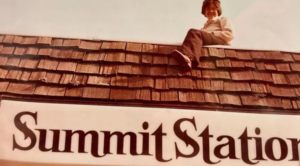
2210 Summit Street once housed one of Ohio’s longest-running lesbian bars. In 1970, a lesbian bartender at Jack’s A Go Go recognized that while Columbus had bars for gay men, it needed one geared toward lesbian clientele. Patrons knew the bar as “Jack’s,” Logan’s Off Broadway, and Summit Station. Staff welcomed women from small towns, women working in trades, women of color, butch/femme lesbians, and transgender people. Regulars recall that stepping through the door felt like finally entering a place of true belonging. Women could dance, “get together,” break up, sing karaoke, party with friends, and celebrate birthdays and holidays. Summit Station remained a safe public space, despite ongoing police harassment of its gender non-conforming regulars. A sign posted outside declared: “Ladies Night, Every Night. Men $5.” (Continued on other side)
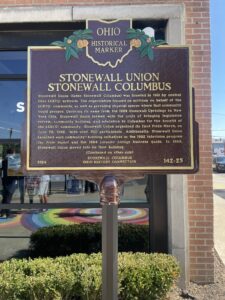
Stonewall Union (later Stonewall Columbus) was founded in 1981 by central Ohio LGBTQ+ activists. The organization focused on activism on behalf of the LGBTQ+ community, as well as providing physical spaces where that community could prosper. Deriving its name from the 1969 Stonewall Uprisings in New York City, Stonewall Union formed with the goals of bringing legislative reform, community building, and education to Columbus for the benefit of the LGBTQ+ community. Stonewall Union organized its first Pride March, on June 26, 1982, with over 500 participants. Additionally, Stonewall Union launched such community-building initiatives as the 1982 television program Gay Pride Report and the 1984 Lavender Listings business guide. In 1985, Stonewall Union moved into its first building. (Continued on other side)