 Skip to content

6-66 Ohio and Erie Canal
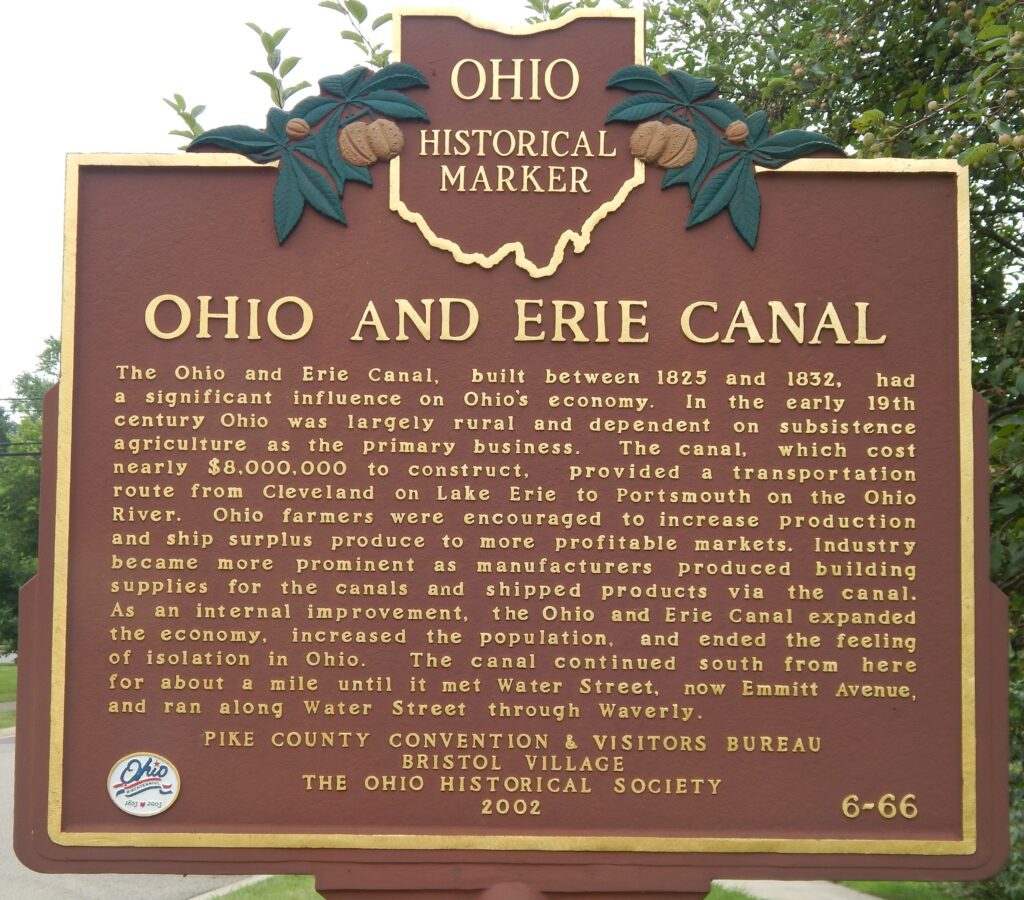
The Ohio and Erie Canal, built between 1825 and 1832, had a significant influence on Ohio’s economy. In the early 19th century Ohio was largely rural and dependent on subsistence agriculture as the primary business. The canal, which cost nearly $8,000,000 to construct, provided a transportation route from Cleveland on Lake Erie to Portsmouth on […]
5-66 German Evangelical Church / Pike Heritage Foundation Museum
Construction of Waverly’s third church, built with locally produced brick, began in 1859 and was completed in 1860. The original deed, recorded on October 31, 1859, listed the value of the lot as $180. With the merger of the Evangelical Synod of North America with the Reformed Church in 1934, the name changed to Evangelical […]
4-66 The Emmitt House / James Emmitt (1806-1893)
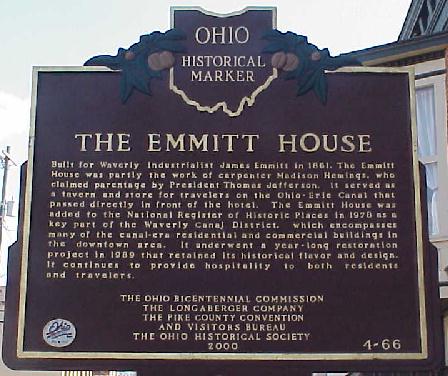
Built for Waverly industrialist James Emmitt in 1861, The Emmitt House was partly the work of carpenter Madison Hemings, who claimed parentage by President Thomas Jefferson. It served as a tavern and store for travelers on the Ohio-Erie Canal that passed directly in front of the hotel. The Emmitt House was added to the National […]
19-67 The Chillicothe Turnpike
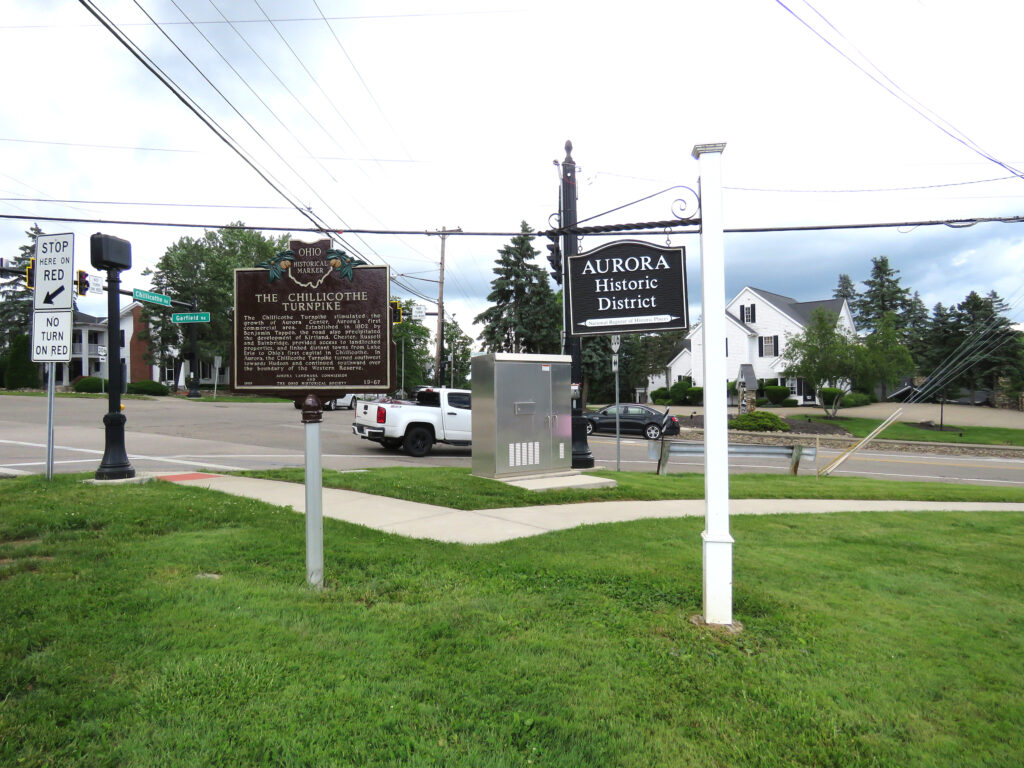
The Chillicothe Turnpike stimulated the growth of Aurora Center, Aurora’s first commercial area. Established in 1802 by Benjamin Tappan, the road also precipitated the development of Kirtland, Chester, Russell and Bainbridge, provided access to landlocked properties, and linked distant towns from Lake Erie to Ohio’s first capital in Chillicothe. In Aurora, the Chillicothe Turnpike turned […]
2-66 Pike County Courthouse

The Pike County Courthouse was at Piketon from 1815-1861 when county residents voted to move the county seat to Waverly. The Waverly Public Square was donated to the county by the Meschech Downing family in September, 1861. A committee was appointed to oversee the courthouse construction and the completed structure was deeded to the county […]
1-66 Canal Park

The Ohio-Erie Canal, the most important development in the county’s early years, was started July 4, 1825 near Newark. The canal passed through Waverly along US 23 and portions of it can still be seen in Waverly today. Only four feet deep and bordered by tow paths with eight feet clearance, the 309 mile canal […]
11-65 Major General William Sooy Smith
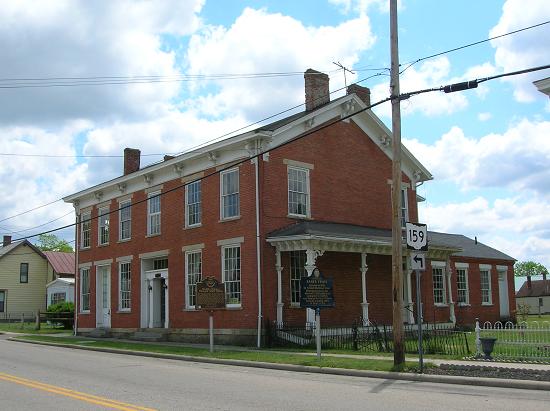
Major General William Sooy Smith was born in Tarlton on July 22, 1830. He attended Ohio University and supported himself throughout his college undergraduate career, graduating in 1849. He then entered the United States Military Academy at West Point to pursue engineering and graduated 6th in the class of 1853. In 1857, Smith established the […]
10-65 Chief Logan

Tah-gah-jute, the Mingo chief named Logan, was a native of Pennsylvania. Logan moved to Ohio in 1770, and settled at the Pickaway Plains. Logan and his father, Shikellimus, had long supported friendships between Native Americans and white men; however, in the spring of 1774, his tribesmen and family were murdered at Yellow Creek, along the […]
9-65 Caleb Atwater / Caleb Atwater
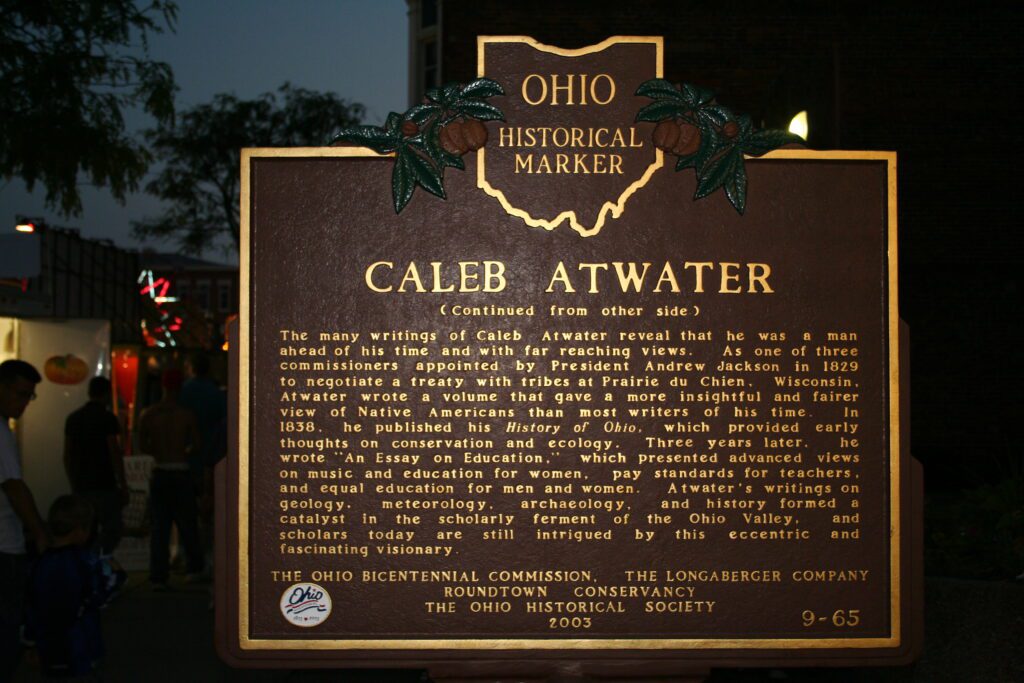
Born in North Adams, Massachusetts on December 23, 1778, Caleb Atwater graduated from Williams College in 1804. He moved to Circleville in about 1814 where he organized the city’s first school board and served as postmaster and prosecuting attorney. His life and work as a teacher, minister, lawyer, legislator, and scholar greatly influenced early 19th-century […]
8-65 Political Meeting at Second Baptist Church
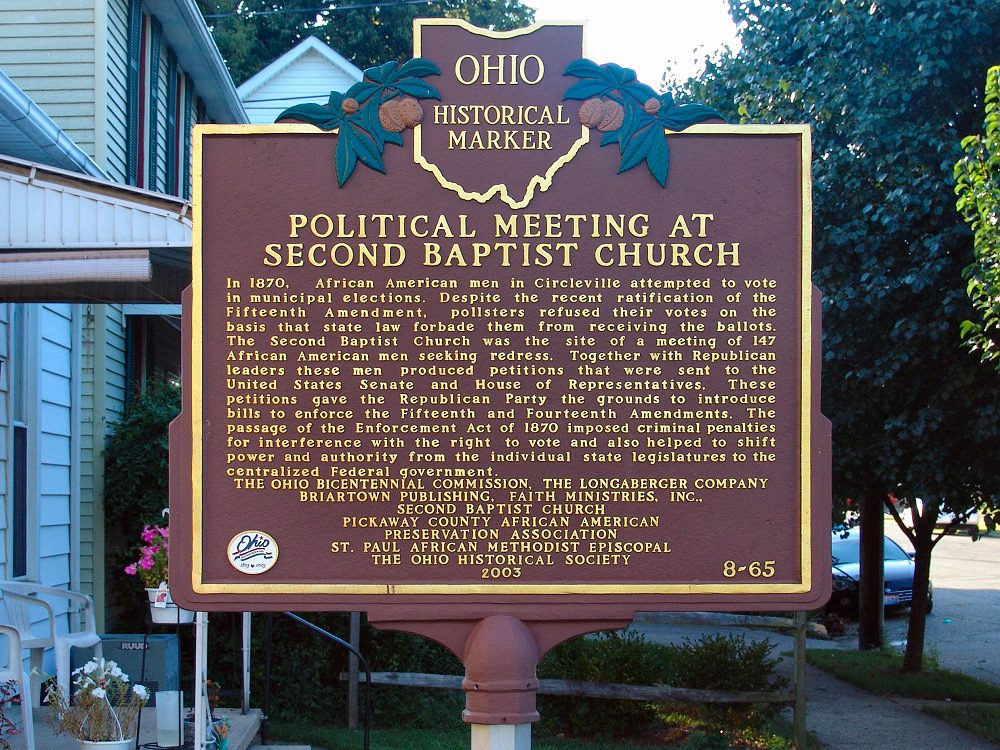
In 1870, African American men in Circleville attempted to vote in municipal elections. Despite the recent ratification of the Fifteenth Amendment, pollsters refused their votes on the basis that state law forbade them from receiving the ballots. The Second Baptist Church was the site of a meeting of 147 African American men seeking redress. Together […]