 Skip to content

1-12 Davey Moore Park
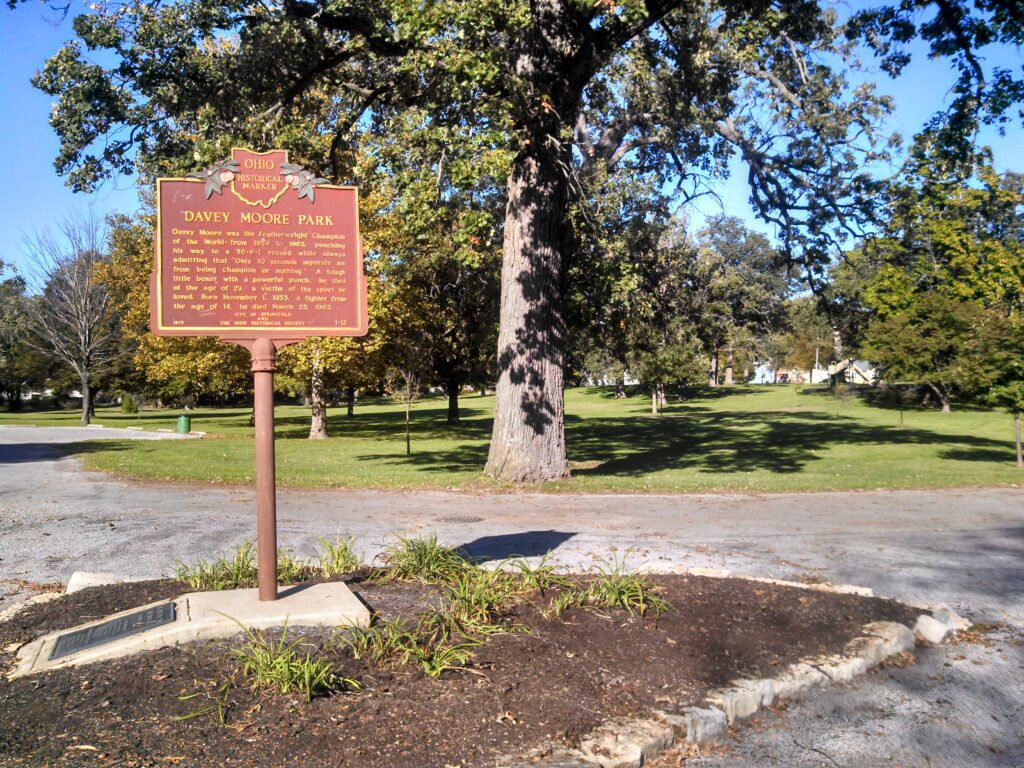
Davey Moore was the Featherweight Champion of the World from 1959 to 1963, punching his way to a 56-6-1 record while always admitting that “Only 10 seconds separate me from being champion or nothing.” A tough little boxer with a powerful punch, he died at the age of 29, a victim of the sport he […]
35-11 President Lincoln’s Funeral Train in Urbana
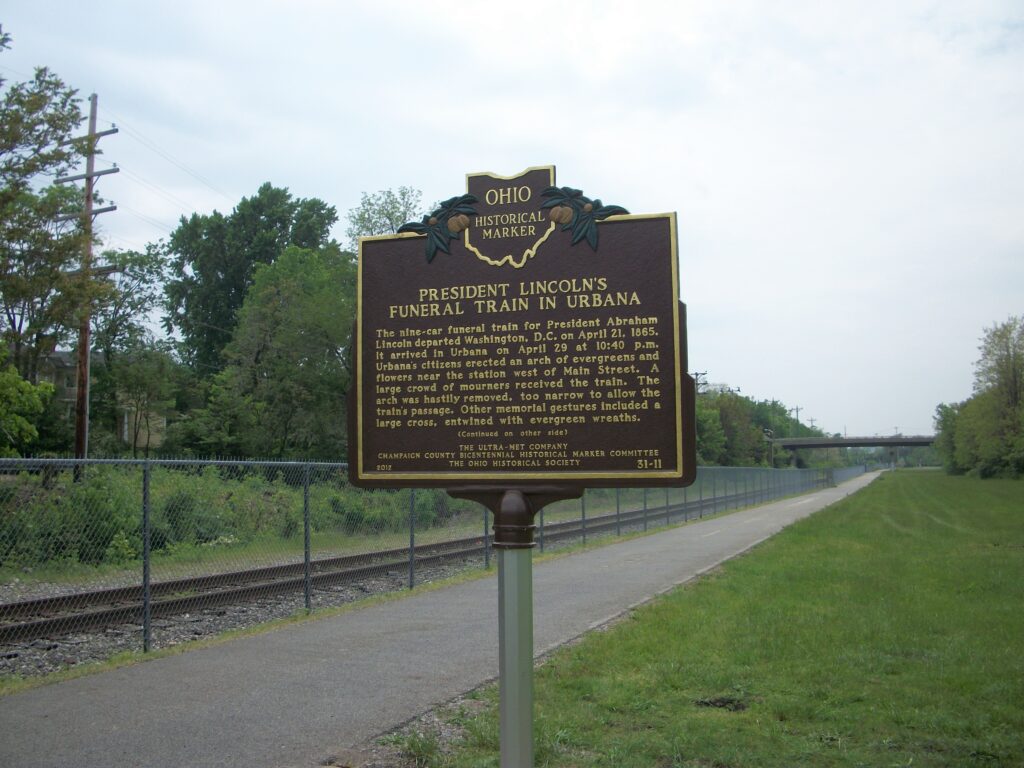
The nine-car funeral train for President Abraham Lincoln departed Washington, D.C. on April 21, 1865. It arrived in Urbana on April 29 at 10:40 p.m. Urbana’s citizens erected an arch of evergreens and flowers near the station west of Main Street. A large crowd of mourners received the train. The arch was hastily removed, too […]
34-11 Old Grave Yard / War Council of 1812
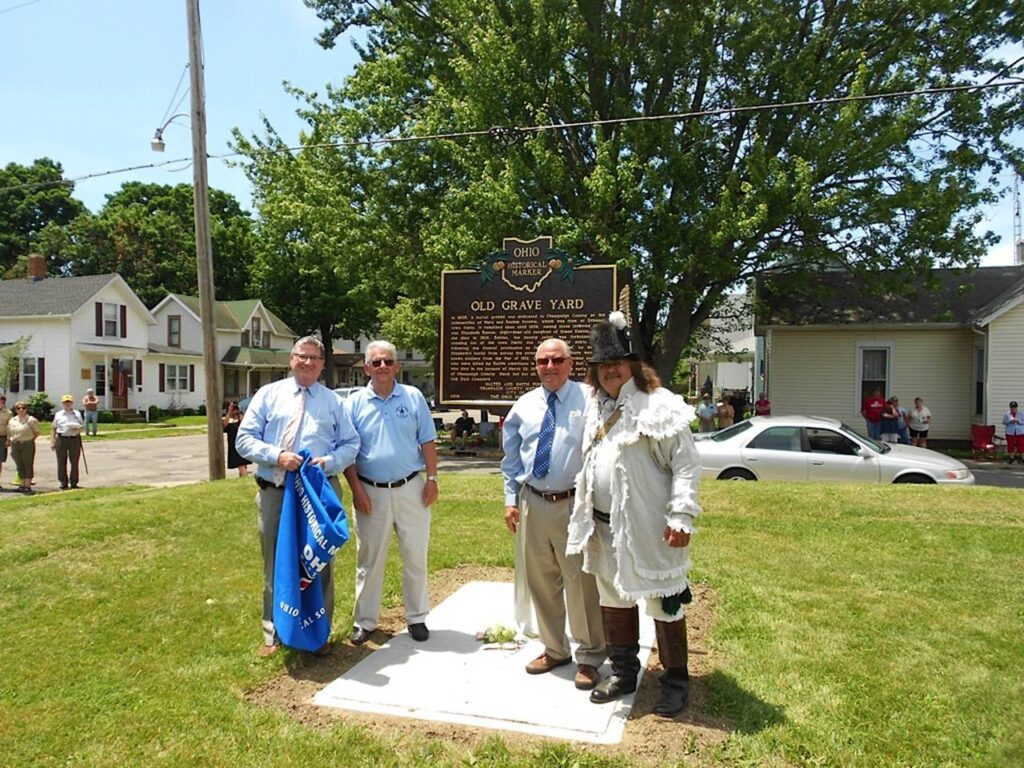
In 1805, a burial ground was dedicated to Champaign County at the intersection of Ward and Kenton Streets, which was then at Urbana’s town limits. It remained open until 1856. Among those interred there was Elizabeth Kenton, eight-year-old daughter of Simon Kenton. When she died in 1810, Kenton, the county jailer, was forbidden from crossing […]
33-11 Warren Sibley Cushman 1845-1926
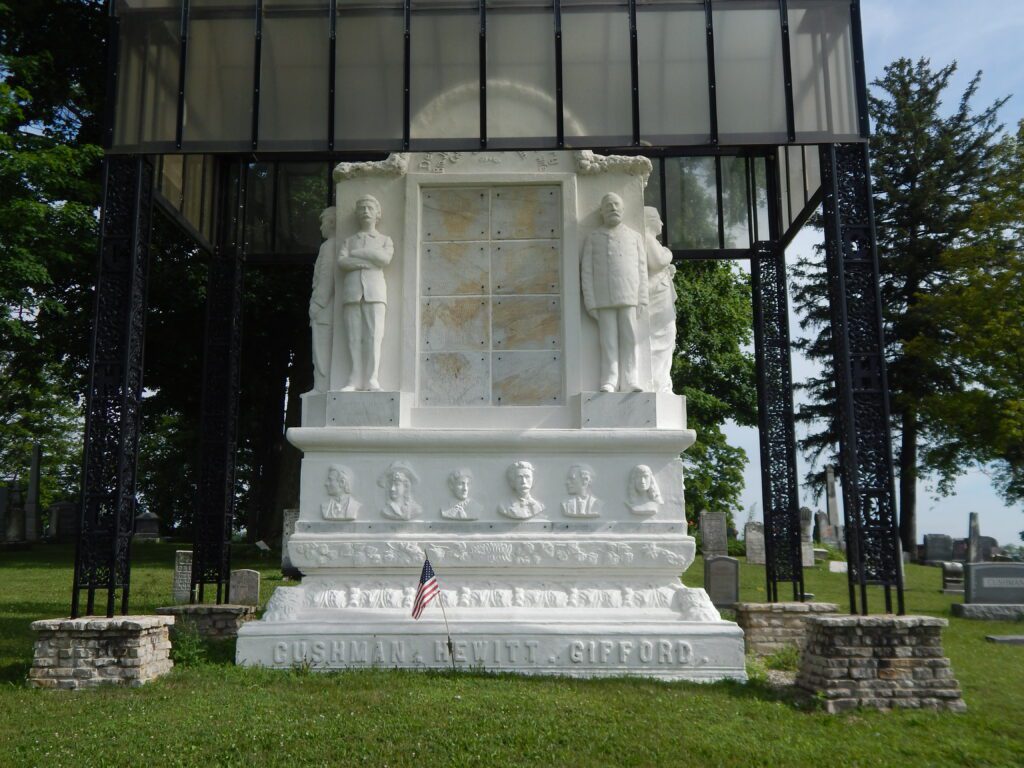
Warren Cushman was a respected painter, sculptor, photographer, musician, and inventor. He created the towering Cushman monument in Woodstock’s Rush Township cemetery and is believed to have shown his painting “Spanish Dancing Girls” at the 1893 World’s Columbian Exposition in Chicago. Warren was born to Franklin and Susan (Gifford) Cushman on January 17, 1845 in […]
32-11 The Underground Railroad In Champaign County / Lewis Adams
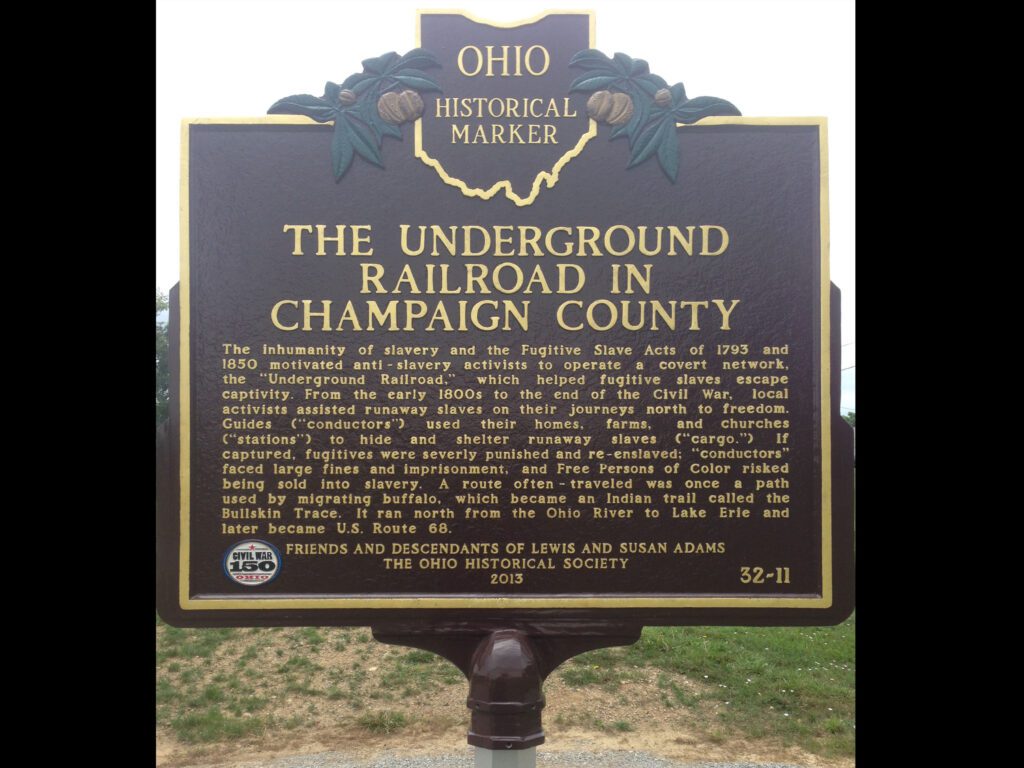
The inhumanity of slavery and the Fugitive Slave Acts of 1793 and 1850 motivated anti-slavery activists to operate a covert network, the “Underground Railroad,” which helped fugitive slaves escape captivity. From the early 1800s to the end of the Civil War, local activists assisted runaway slaves on their journeys north to freedom. Guides (“conductors”) used […]
31-11 Universalist Church
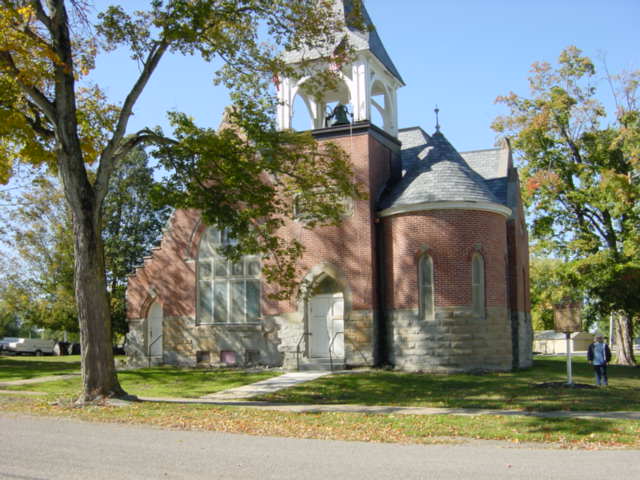
Rev. George Messenger and his congregation built the first Universalist Church on this site. It was dedicated during a state convention of Universalists in Woodstock in June 1844. In 1893, Rev. John A. Carpenter was instrumental in erecting a new building — the one before you. It was dedicated Easter Sunday, April 14, 1895. The […]
30-11 Pennsylvania Railroad Depot
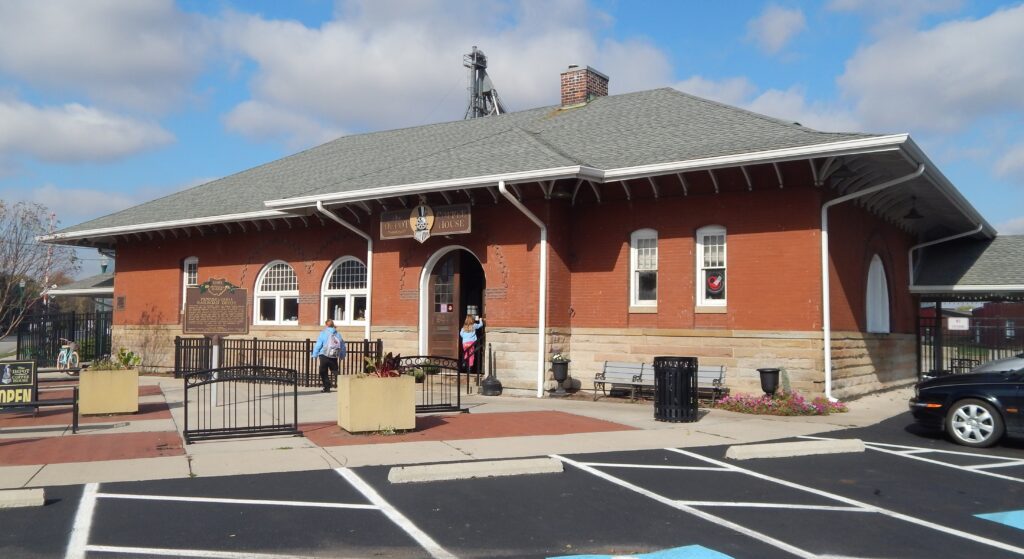
Construction of the Columbus, Piqua, and Indiana Central Railroad started in 1850 and was finished in 1854. Later referred to as the “Panhandle Railroad,” it ran from Columbus to Bradford. During the Civil War, the line carried supplies and troops and it was extended from Bradford to Richmond, Indiana. President Lincoln’s funeral train traveled the […]
29-11 Billy “Single” Clifford / Clifford Theater

Clyde Shyrigh, better known as Billy Clifford, was born in this house on January 24, 1869, to Levi and Sarah Shyrigh. Coming from a musical family, he developed an early interest in music and practiced with the family in the barn behind the house. At the age of ten, Clifford joined the circus when it […]
28-11 Lincoln Funeral Train (Cable)
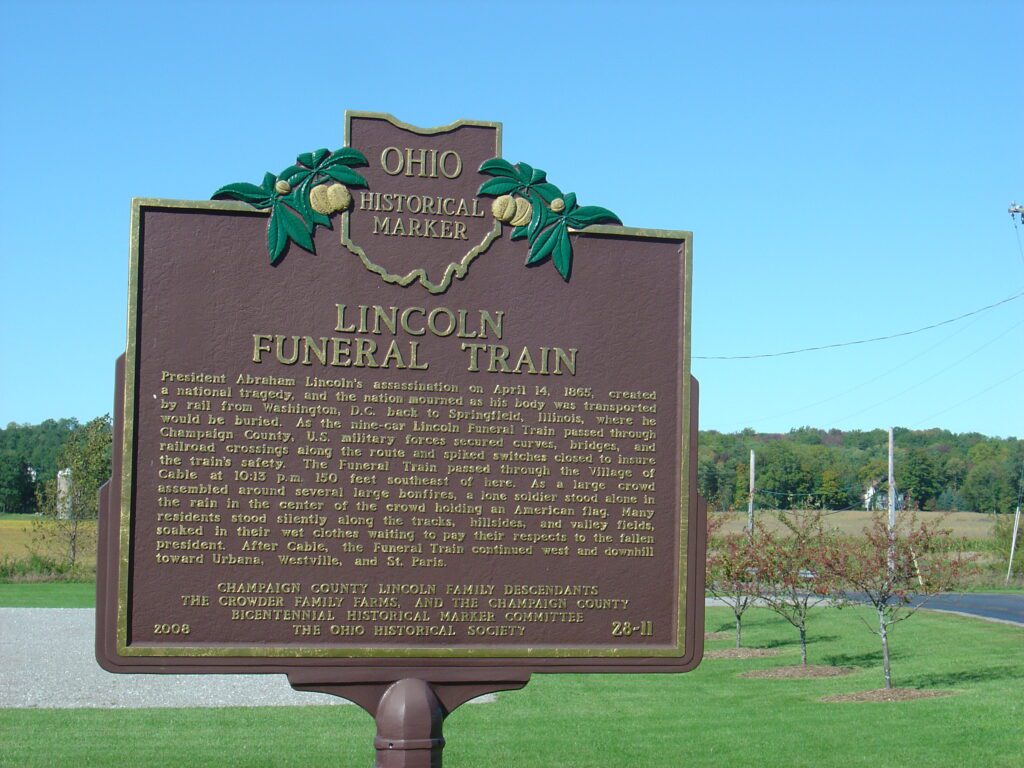
President Abraham Lincoln’s assassination on April 14, 1865, created a national tragedy, and the nation mourned as his body was transported by rail from Washington, D.C. back to Springfield, Illinois, where he would be buried. As the nine-car Lincoln Funeral Train passed through Champaign County, U.S. military forces secured curves, bridges, and railroad crossings along […]
27-11 Mad River and Lake Erie Railroad
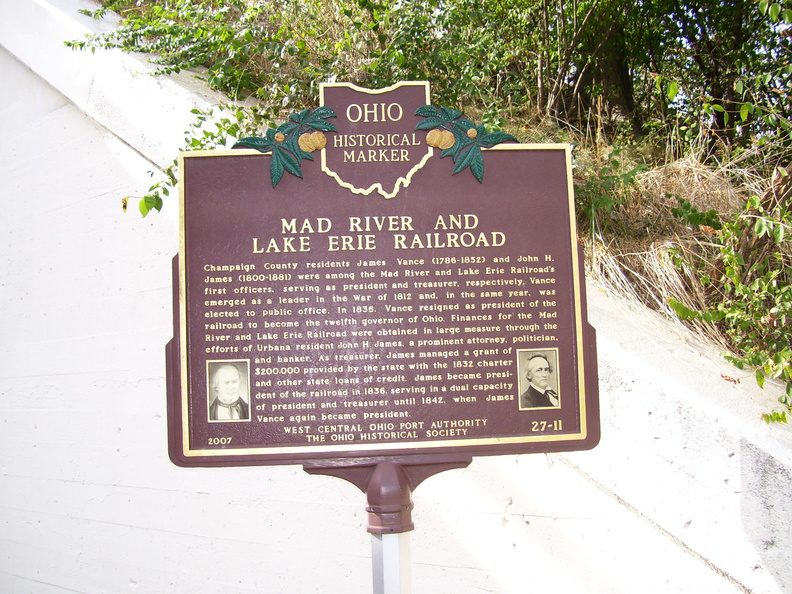
Champaign County residents Joseph Vance (1786-1852) and John H. James (1800-1881) were among the Mad River and Lake Erie Railroad’s first officers, serving as president and treasurer, respectively. Vance emerged as a leader in the War of 1812 and, in the same year, was elected to public office. In 1836, Vance resigned as president of […]