 Skip to content

9-18 North Olmsted-First Settlement and Schoolhouse
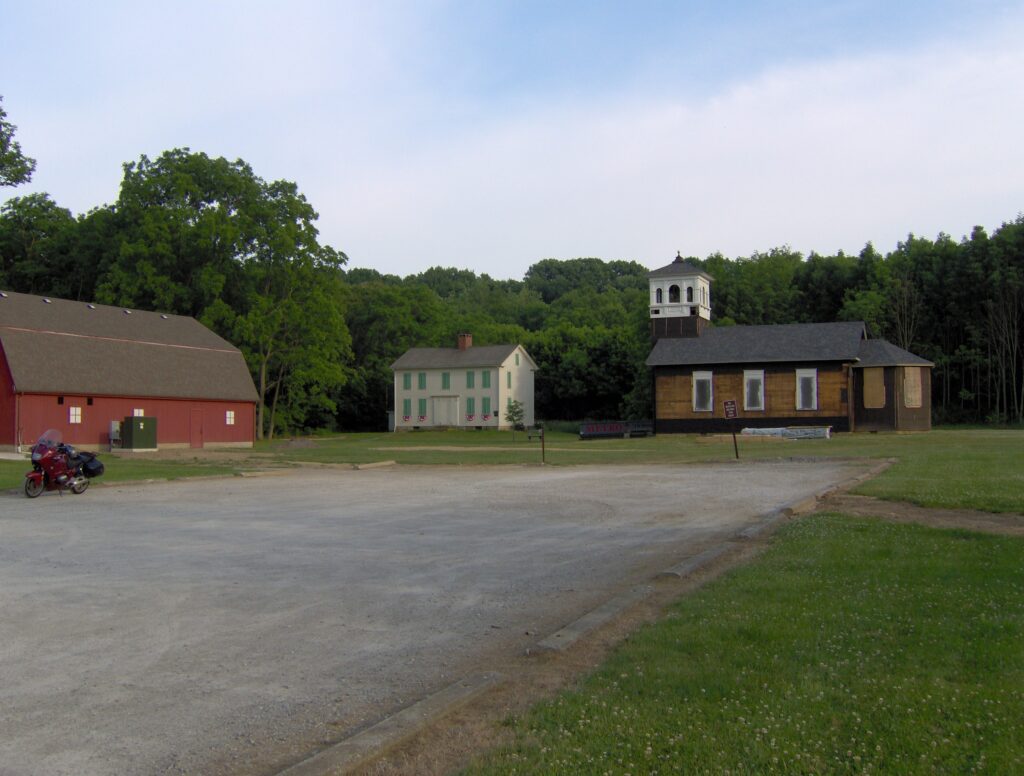
David Stearns, the first permanent settler, built a log cabin near this site on the “ridge” (Lorain Road) in 1816. Stearns was given this land by his father, Elijah, who had bought 1,002 acres from the Olmsted family. This area of North Olmsted was first called Kingston, renamed Lennox in 1823, and Olmsted in 1829. […]
8-18 Butternut Ridge Cemetery
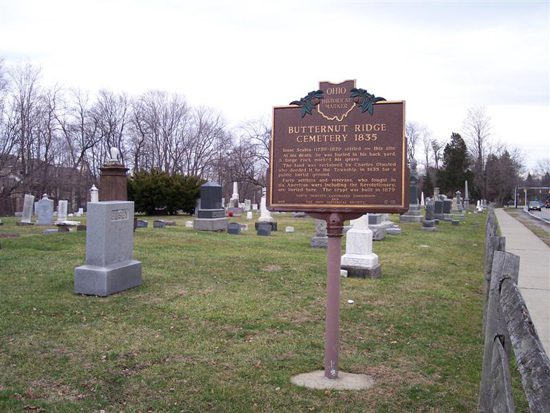
Isaac Scales (1786-1821) settled on this site. At his death, he was buried in his back yard. A large rock marked his grave. The land was reclaimed by Charles Olmsted who deeded it to the Township in 1835 for a public burial ground. Early settlers and veterans, who fought in six American wars including the […]
7-18 John W. Heisman Birth Site
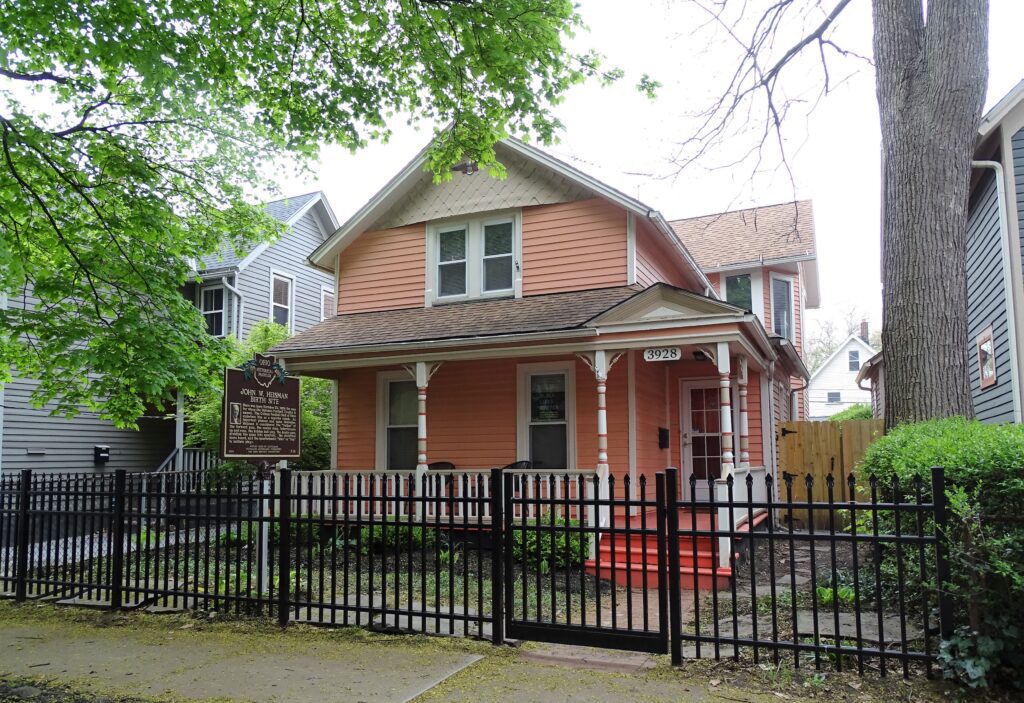
Here was born (October 23, 1869) the man for whom the Heisman Football Trophy is named. The College Football Hall of Fame enshrines him as a superior coach. An important pioneer and game innovator, Heisman is considered the “Father” of the forward pass, the center snap, interference on end runs, the hidden ball play, the […]
6-18 Old District 10 Schoolhouse
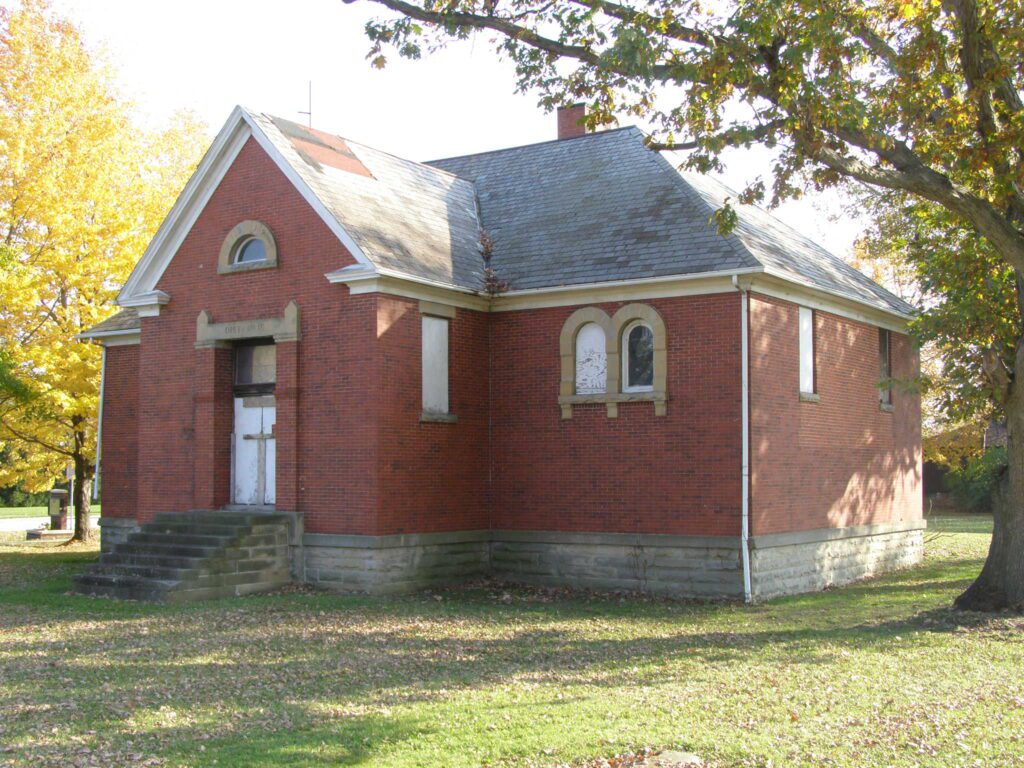
This Little Red Schoolhouse served children from Berea, Brookpark, and Middleburg township. The first mayor and council of Middleburgh Heights were elected here. During its colorful history, the schoolhouse has been a City Hall where town meetings were held, a speak-easy, a railroad way station, and a private residence.
5-18 Jack Miner
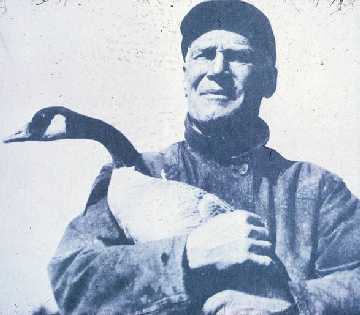
Jack Miner, noted conservationist and naturalist, was born at this site on April 10, 1865. Miner, who moved to Ontario, Canada, in 1878, achieved worldwide recognition for his pioneering studies of waterfowl migration. His work with migrating birds led to the establishment of a bird sanctuary at Kingsville, Ontario, the publication of several books, and […]
4-18 University Hall, The Samuel Mather Mansion
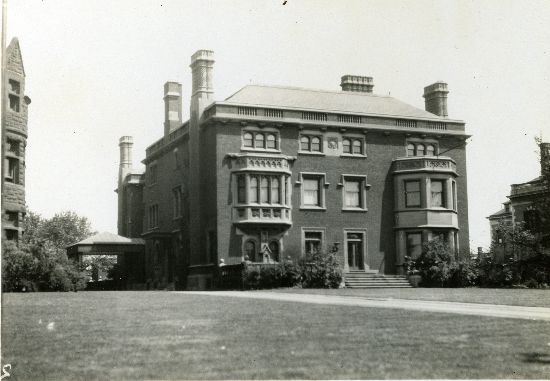
The 43-room Tudor mansion represents a fine example of stately homes in Cleveland at the turn of the century and is the last of the “Millionaire Row” homes that once lined Euclid Avenue. It was designed by Charles F. Schweinfurth, a world-renowned Cleveland architect, in 1905-06 and completed in 1910 at a cost of $1,200,000. […]
1-18 The Arcade
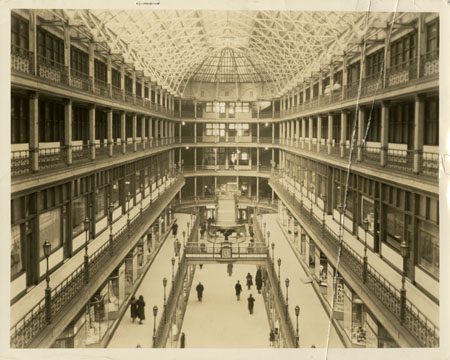
Designed by John M. Eisemann and George H. Smith as a big city mercantile center. The five-story galleries connect the ten story towers facing the city’s two main thoroughfares. Of unique architectural design and of daring construction, its exterior is Romanesque Revival, a popular Victorian style from 1875-1900.
10-17 Crestline Community Service Center, 1942-1946
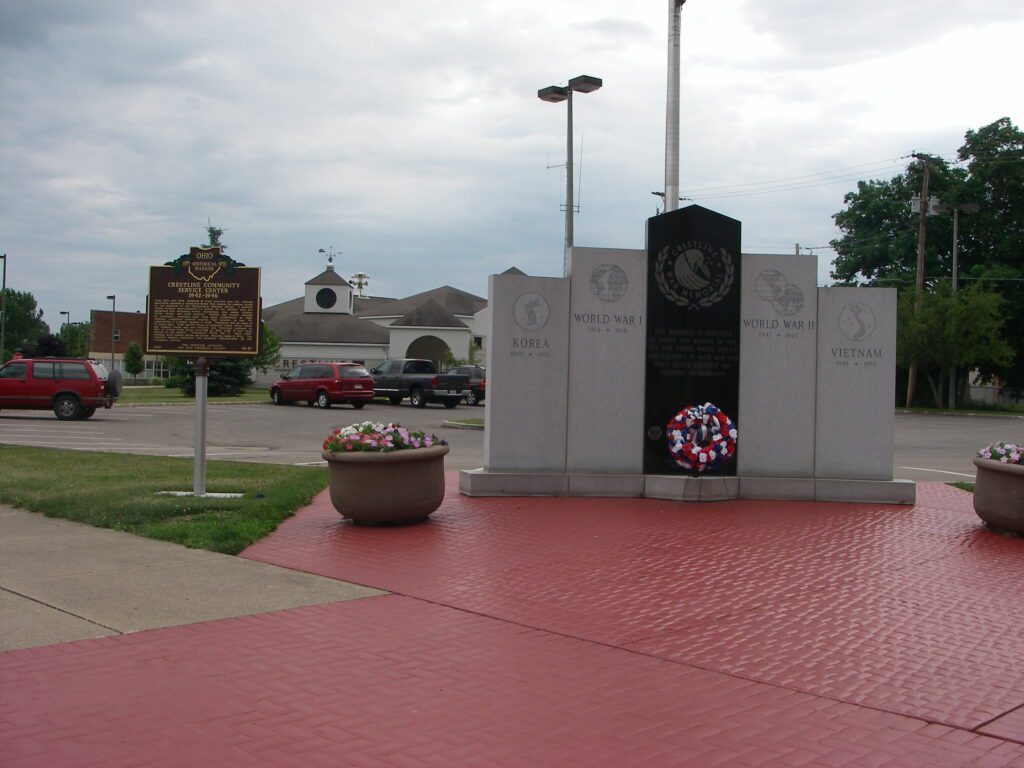
From 1942 until 1946, members of local churches and two railroad auxiliaries operated a community-based free canteen for passing troops on the platform of the Pennsylvania Railroad station. A grateful region honored approximately 1.2 million of the nation’s sons and daughters with welcoming words, sandwiches, pies, cakes, cookies, fruits, drinks, and other sundries. Staffed and […]
9-17 Big Four Depot

This Depot, dedicated on December 27, 1900, served as division headquarters for the Cleveland, Chicago, Cincinnati, and St. Louis railroad, commonly called the Big Four. Peak passenger usage occurred during and after World War I when 32 trains stopped here daily. Railway Express serviced as many as 20 trains a day into the 1950s, and […]
8-17 The Village of New Washington / The New Washington Band
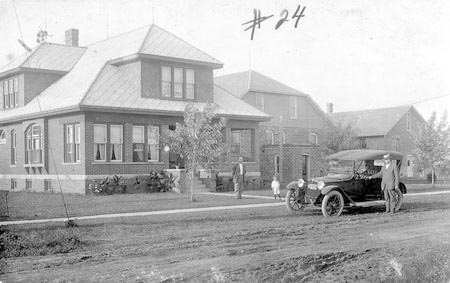
Nicknamed “Dutchtown” for the many German families that settled in this area, New Washington was platted in 1833 by George Washington Meyers, who arrived in Cranberry Township in 1826. Prominent Austrian romantic poet Nicholas Lenau (1802-1850), author of “Faust” and “Don Juan,” owned property here in the 1830s. The village incorporated in 1874, shortly following […]