 Skip to content

96-18 Olmsted Falls L.S. & M.S. Depot
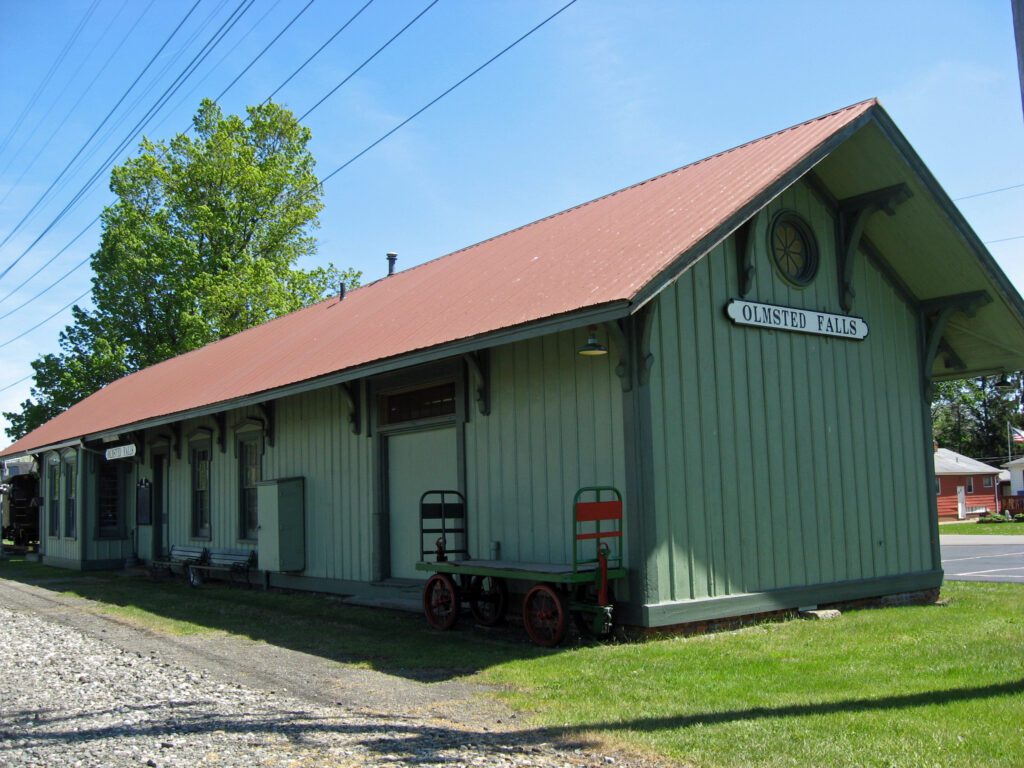
The Lakeshore and Michigan Southern Railroad built the Olmsted Falls Depot in 1876 as a part of major improvements made along the line between Cleveland and Toledo. The depot replaced a smaller flag stop station in Olmsted Falls at the Columbia Road railroad crossing. By 1909, the depot was moved from Mapleway Drive on rollers […]
95-18 John Shepherd-An American Hero, March 16, 1729-January 3, 1847 / John Shepherd-An American Hero, With Washington All the Way
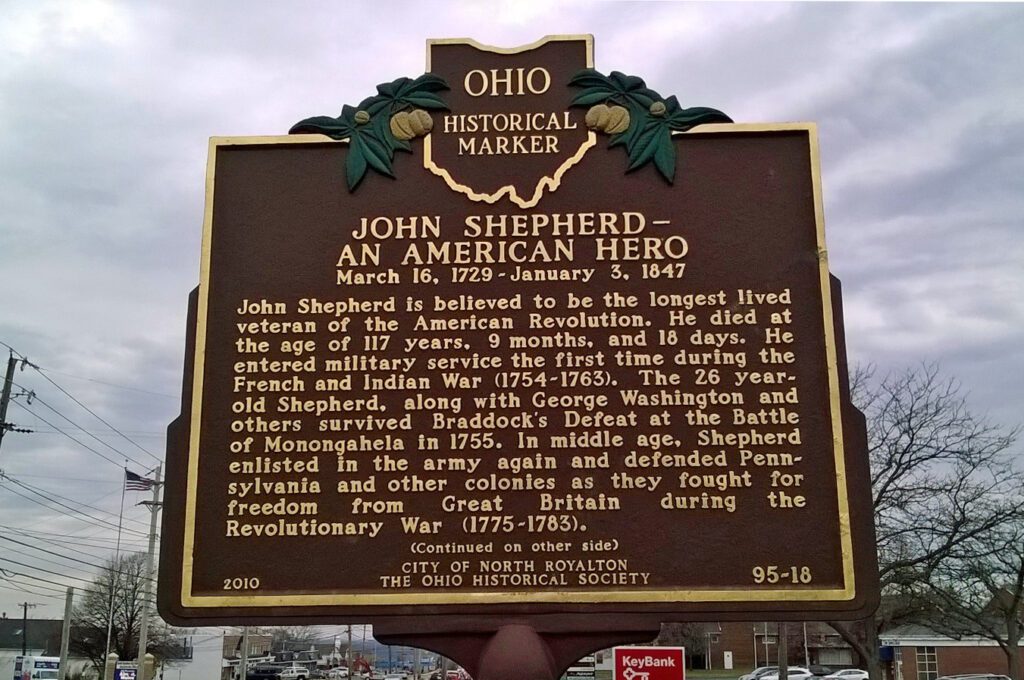
John Shepherd is believed to be the longest lived veteran of the American Revolution. He died at the age of 117 years, 9 months, and 18 days. He entered military service the first time during the French and Indian War (1754-1763). The 26 year-old Shepherd, along with George Washington and others survived Braddock’s Defeat at […]
94-18 First Universalist Church
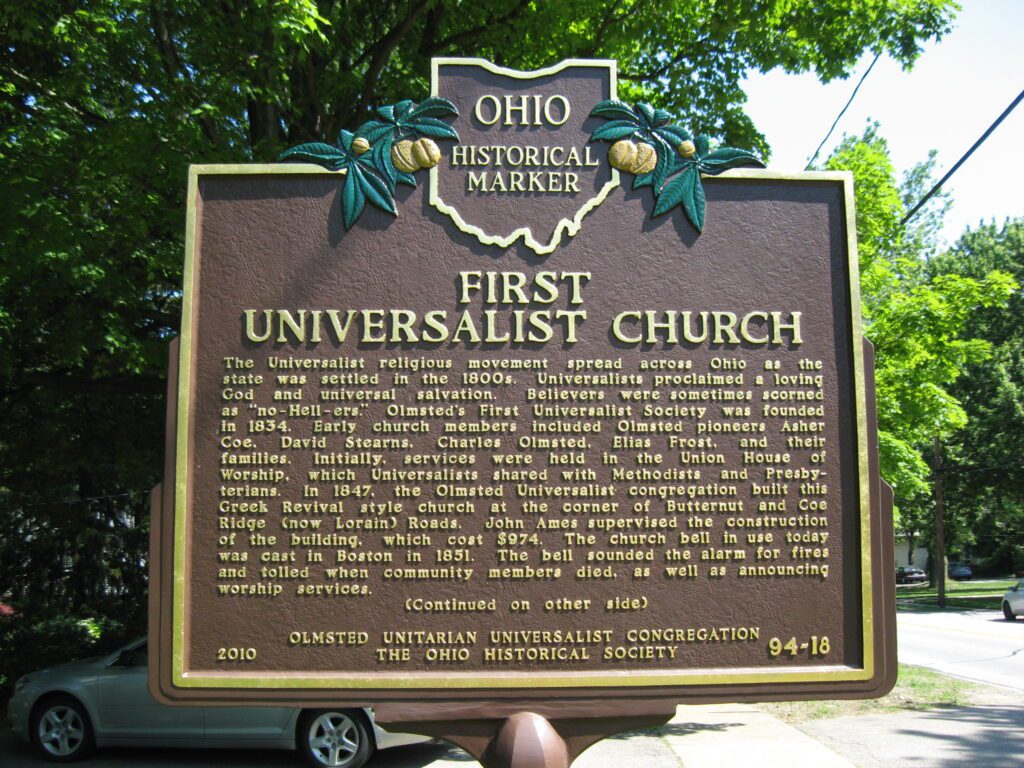
The Universalist religious movement spread across Ohio as the state was settled in the 1800s. Universalists proclaimed a loving God and universal salvation. Believers were sometimes scorned as “no-Hell-ers.” Olmsted’s First Universalist Society was founded in 1834. Early church members included Olmsted pioneers Asher Coe, David Stearns, Charles Olmsted, Elias Frost, and their families. Initially, […]
93-18 Adams Street Cemetery
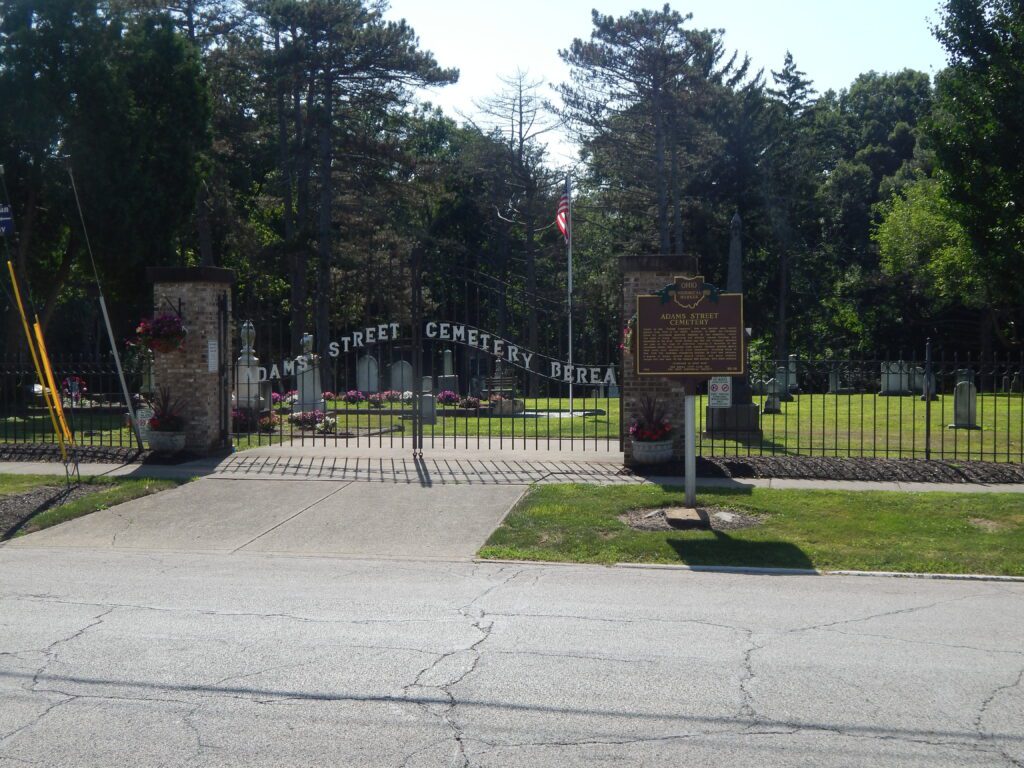
Known as the “Village Cemetery,” this was Berea’s main burial ground from 1834 to the 1880s. However, in 1886, the Cleveland Stone Co. purchased quarries adjacent to the cemetery, where Coe Lake is today. Quarrying had already caused flooding and landslides in the area. Local stories say that the company operated too near to the […]
92-18 Brecksville Township’s First Settler
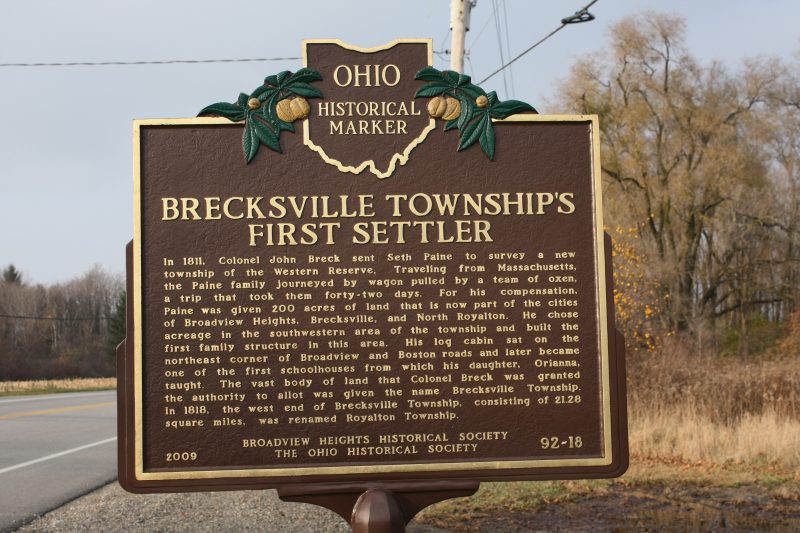
In 1811, Colonel John Breck sent Seth Paine to survey a new township of the Western Reserve. Traveling from Massachusetts, the Paine family journeyed by wagon pulled by a team of oxen, a trip that took them forty-two days. For his compensation, Paine was given 200 acres of land that is now part of the […]
91-18 Parma’s Birthplace
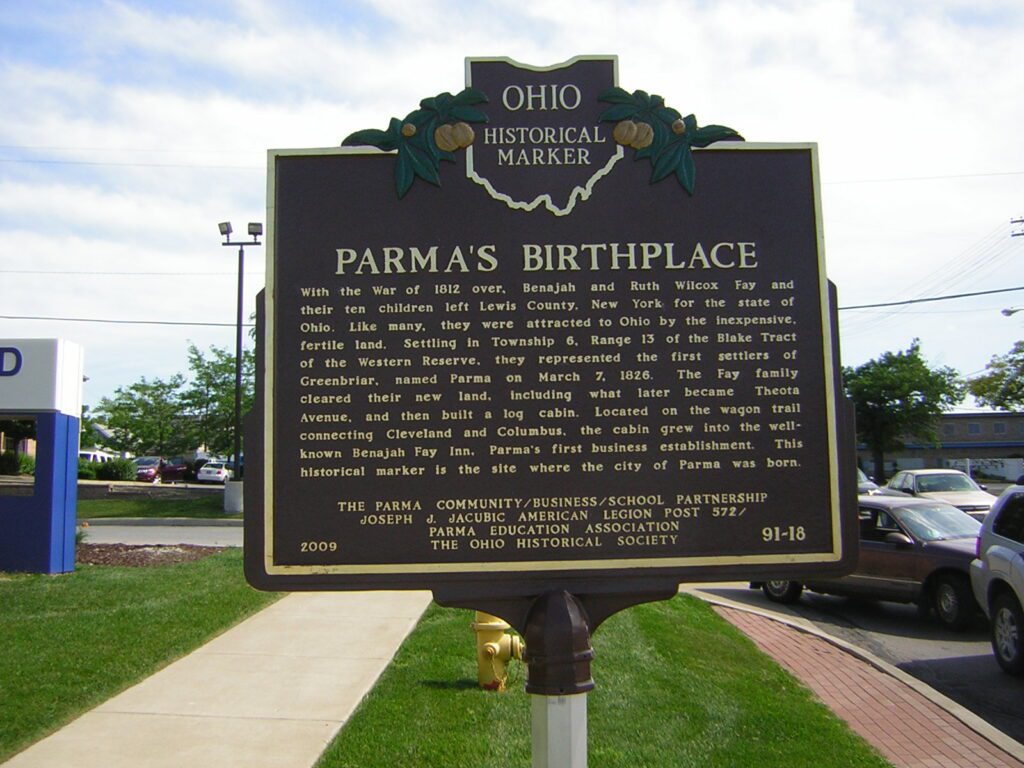
With the War of 1812 over, Benajah and Ruth Wilcox Fay and their ten children left Lewis County, New York for the state of Ohio. Like many, they were attracted to Ohio by the inexpensive, fertile land. Settling in Township 6, Range 13 of the Blake Tract of the Western Reserve, they represented the first […]
90-18 Erie Street Cemetery
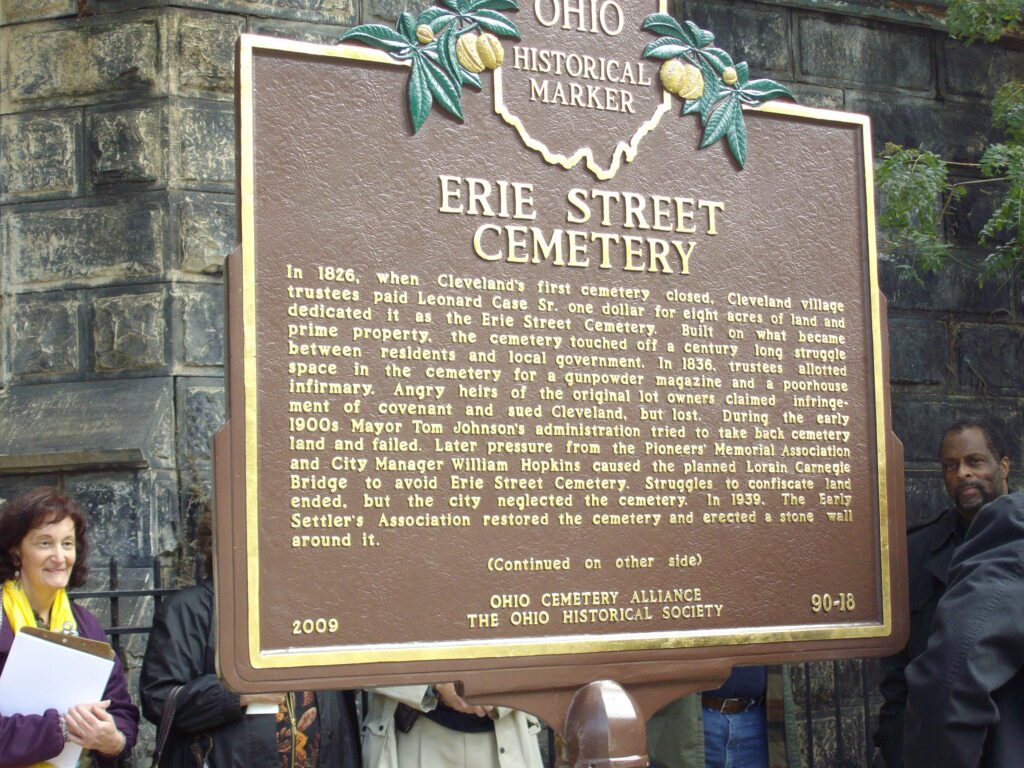
In 1826, when Cleveland’s first cemetery closed, Cleveland village trustees paid Leonard Case Sr. one dollar for eight acres of land and dedicated it as the Erie Street Cemetery. Built on what became prime property, the cemetery touched off a century long struggle between residents and local government. In 1836, trustees allotted space in the […]
89-18 Woodland Cemetery
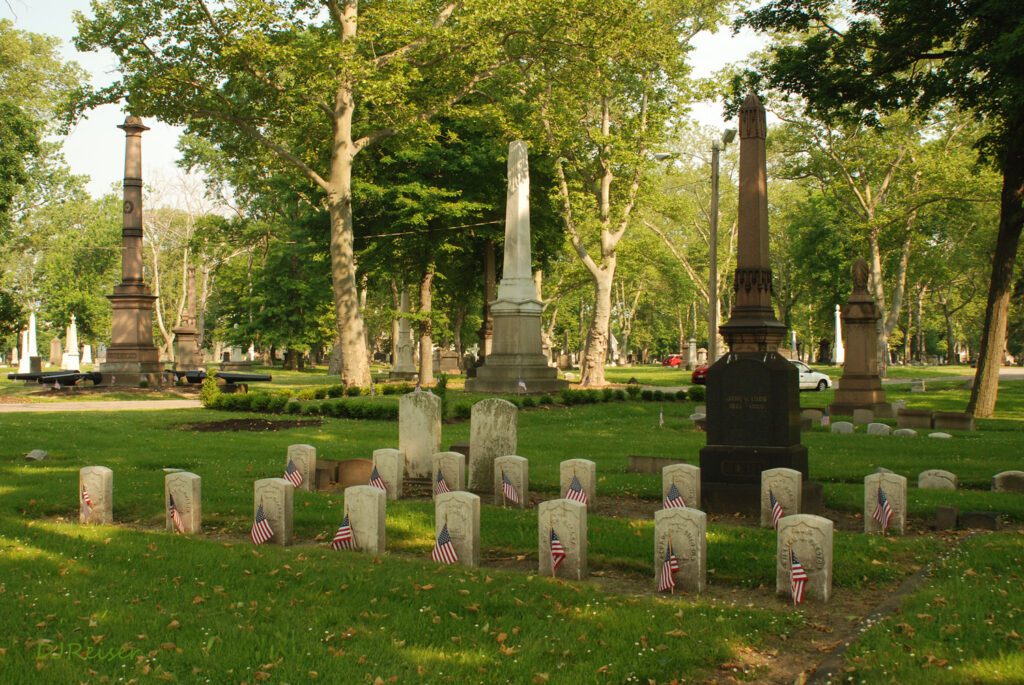
Howard Daniels, who lived from 1815-1863, was a noted architect and landscape gardener. Over the course of his life, he designed six Ohio and New York cemeteries, including Woodland that began in 1852 when he laid out 20 of its 60 acres into fashionable “rural cemetery” style. Later acreage in the cemetery adapted his curvilinear […]
88-18 Joseph Peake’s Farm
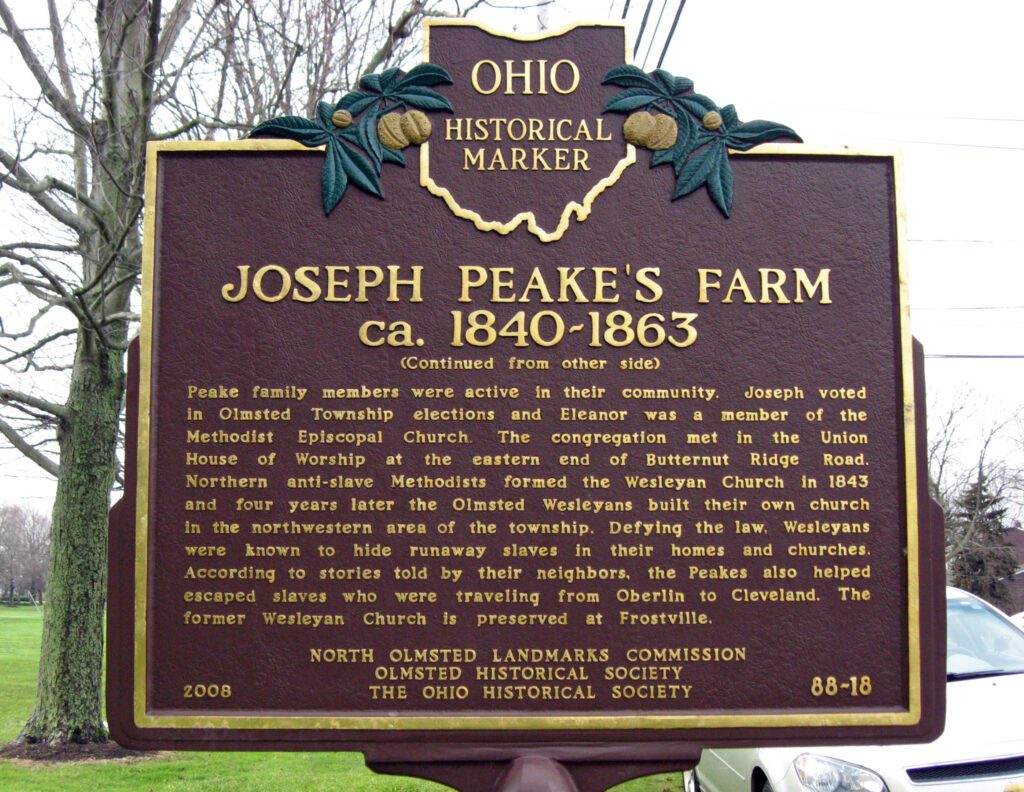
Joseph Peake was born in Pennsylvania in 1792 and came to Ohio in 1809 with his parents and brother. They were the first African Americans to settle permanently in the Cleveland area. He was the son of George Peake, a runaway slave from Maryland, who fought on the British side at the Battle of Quebec […]
87-18 The Cozad-Bates House / Anti-Slavery and Abolition

The Cozad-Bates House is one of the oldest remaining structures in Cleveland’s University Circle. The original section, built circa 1853, is the only pre-Civil War residential structure left in the neighborhood. Built by Samuel and Jane Cozad’s son, Andrew Cozad, the first section used locally made brick to form a simple two-story, one-room-deep, vernacular English-I […]