 Skip to content

8-24 David Jones: Medal of Honor Recipient
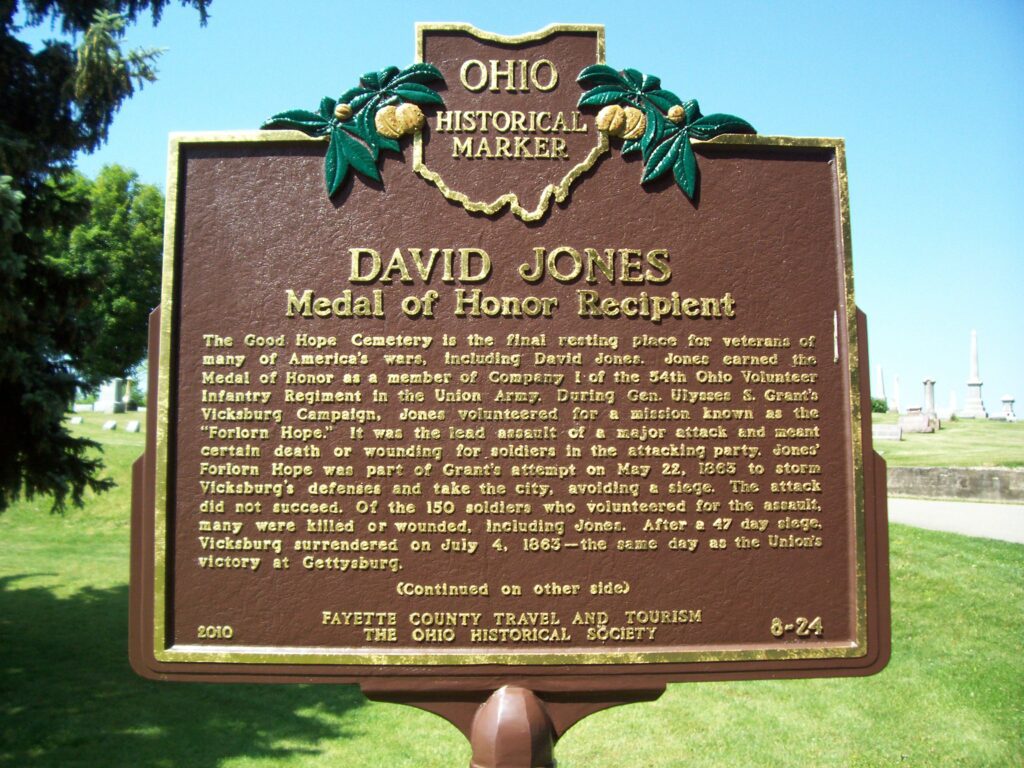
The Good Hope Cemetery is the final resting place for veterans of many of America’s wars, including David Jones. Jones earned the Medal of Honor as a member of Company I of the 54th Ohio Volunteer Infantry Regiment in the Union Army. During Gen. Ulysses S. Grant’s Vicksburg Campaign, Jones volunteered for a mission known […]
7-24 Old Washington Cemetery
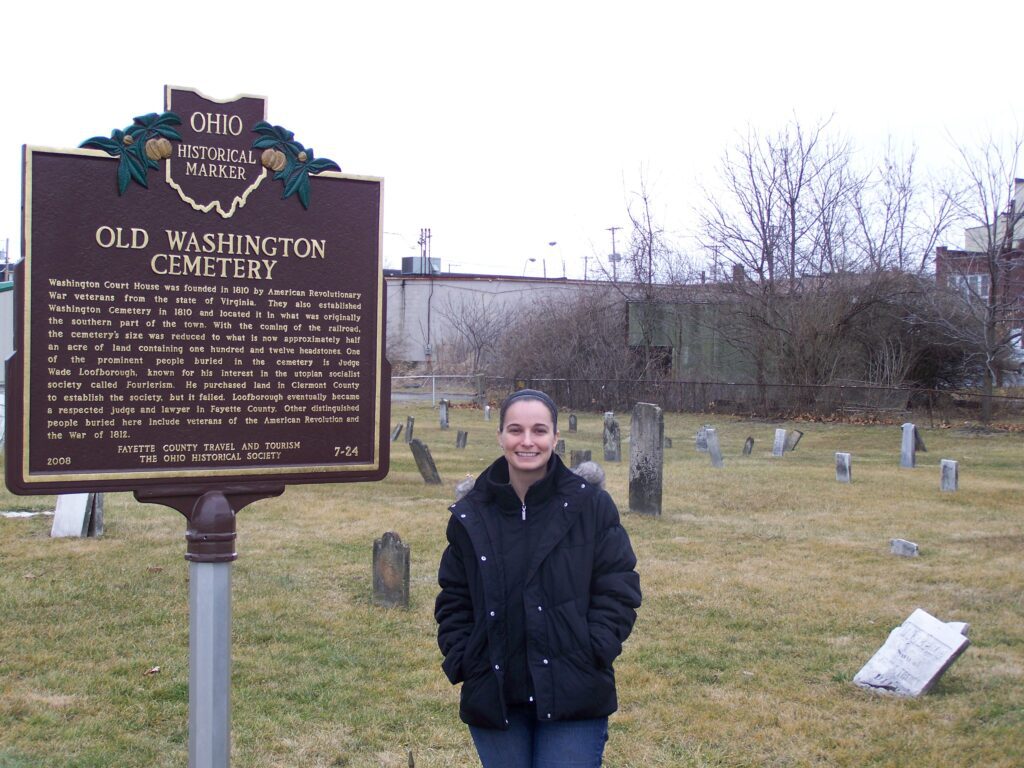
Washington Court House was founded in 1810 by American Revolutionary War veterans from the state of Virginia. They also established Washington Cemetery in 1810 and located it in what was originally the southern part of the town. With the coming of the railroad, the cemetery’s size was reduced to what is now approximately half an […]
6-24 St. Colman Church and Cemetery
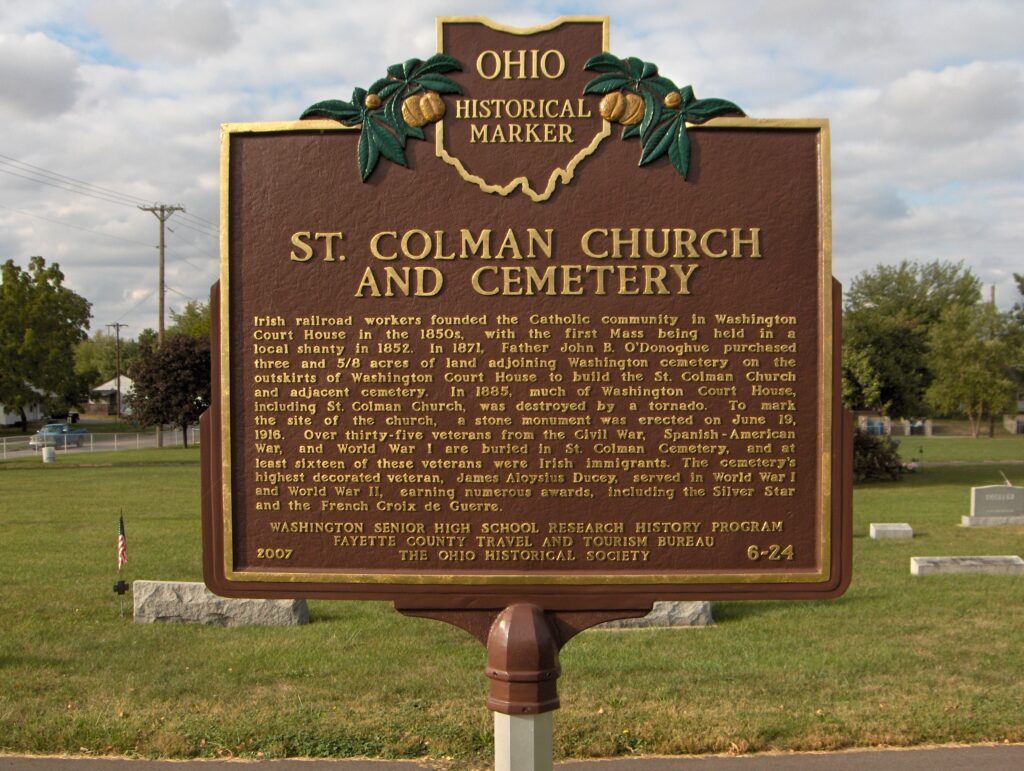
Irish railroad workers founded the Catholic community in Washington Court House in the 1850s, with the first Mass being held in a local shanty in 1852. In 1871, Father John B. O’Donoghue purchased three and 5/8 acres of land adjoining Washington cemetery on the outskirts of Washington Court House to build the St. Colman Church […]
5-24 Bloomingburg Cemetery

The Bloomingburg Presbyterian Church and cemetery were established in the northwest corner of the current cemetery grounds on March 7, 1818. Several years later it became a center for anti-slavery activity. The Reverend William Dickey, who presided over the church and other members, devoted their lives to the anti-slavery cause not only in voice but […]
4-24 Soldiers’ Row
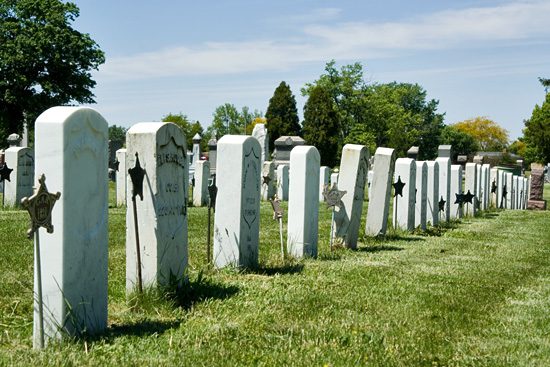
In 1884 the Ohio General Assembly authorized “the burial of the body of any honorably discharged union soldier, sailor or marine of this state who shall hereafter die without leaving means sufficient to defray funeral expenses.” Permanent government-issued headstones have been provided to veterans since the late 19th century. Between 1884 and the 1930s, Washington […]
3-36 West Settlement and Abolition Lane
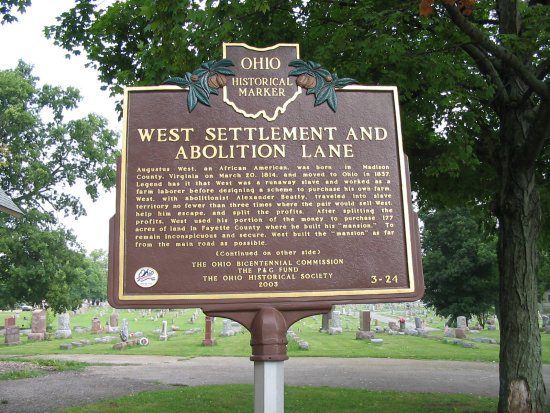
Augustus West, an African American, was born in Madison County, Virginia on March 20, 1814, and moved to Ohio in 1837. Legend has it that West was a runaway slave and worked as a farm laborer before designing a scheme to purchase his own farm. West, with abolitionist Alexander Beatty, traveled into slave territory no […]
2-24 Harry M. Daugherty

One of Ohio’s most influential politicians in the early 20th century, Washington Court House native Harry Daugherty (1860-1941) was widely known as a “President-maker” and served instrumental roles in President Warren G. Harding’s administration, culminating a long career in state and national politics. As Attorney General from 1921 to 1924, Daugherty established the first federal […]
1-24 Fayette County Court House – Archibald M. Willard Murals / Washington Court House Riot of 1894
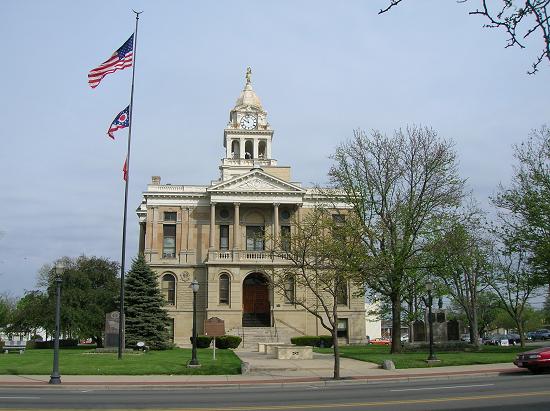
Opened on May 1, 1885, this is the third Fayette County Court House building. Ohio artist Archibald Willard, who is best known for the patriotic painting, “The Spirit of ’76,” was commissioned by the firm Cooks Brothers to do painting and fresco work for the interior walls of the courthouse. Willard did not sign his […]
15-22 (A) Ohio Veterans Home, Ohio Soldiers’ and Sailors’ Home, 1888-1979

Following the Civil War, many of Ohio’s disabled and wounded veterans found inadequate provisions for their long-term needs. In response, the Grand Army of the Republic’s Department of Ohio lobbied for a state-operated veterans’ home. In 1886 Governor Joseph B. Foraker signed a bill establishing the Ohio Soldiers’ and Sailors’ Home for honorably discharged veterans. […]
12-23 John Bright #2 Covered Bridge
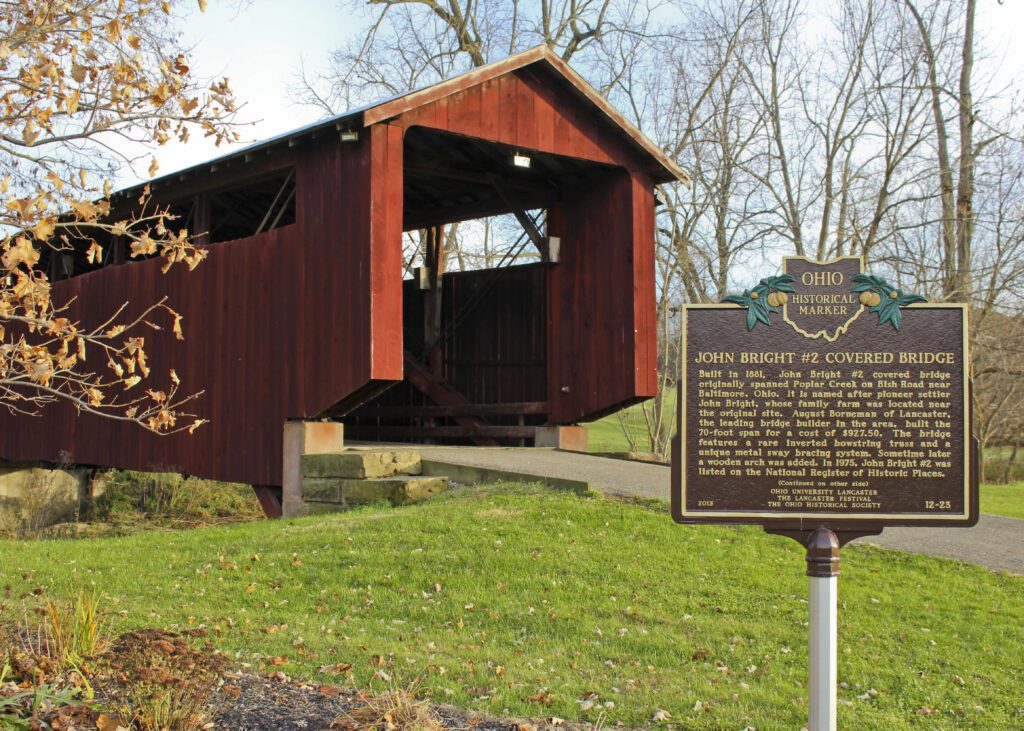
Built in 1881, John Bright #2 covered bridge originally spanned Poplar Creek on Bish Road near Baltimore, Ohio. It is named after pioneer settler John Bright, whose family farm was located near the original site. August Borneman of Lancaster, the leading bridge builder in the area, built the 70-foot span for a cost of $927.50. […]