 Skip to content

7-27 The Dunmore War 1774
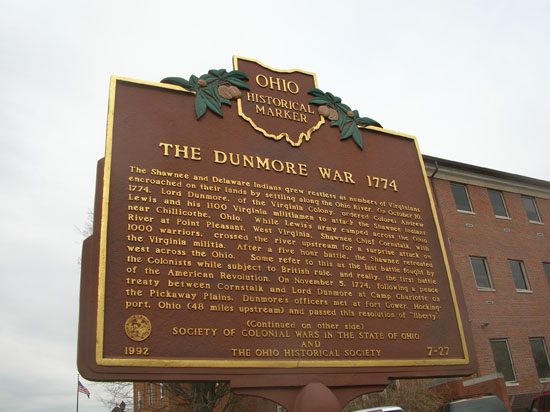
The Shawnee and Delaware Indians grew restless as numbers of Virginians encroached on their lands by settling along the Ohio River. On October 10, 1774, Lord Dunmore, of the Virginia Colony, ordered Colonel Andrew Lewis and his 1100 Virginia militiamen to attack the Shawnee Indians near Chillicothe, Ohio. While Lewis’s army camped across the Ohio […]
6-27 University of Rio Grande Founders: Nehemiah and Permelia Atwood

This historic marker is on the western boundary of the original 10 acre Rio Grande College Campus, founded and endowed by Nehemiah and Permelia Atwood. The campus was located on the southeast corner of the Atwood Farm. Construction of Atwood Hall and the Boarding Hall began in 1875. The College was organized on November 1, […]
5-27 Ewington Academy
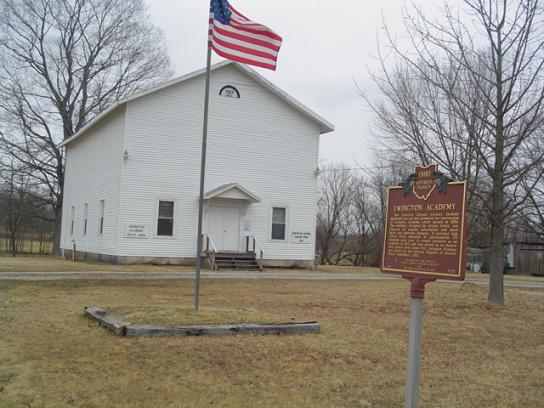
The Ewington Citizens’ Literary Institute purchased this site and sponsored the construction of Ewington Academy which opened in 1859. The building, designed by George Ewing, was financed by popular subscription with much labor and materials donated. It provided high school level education to approximately 60 students each year. It ceased operation as an academy in […]
4-27 Hon. Samuel Finley Vinton
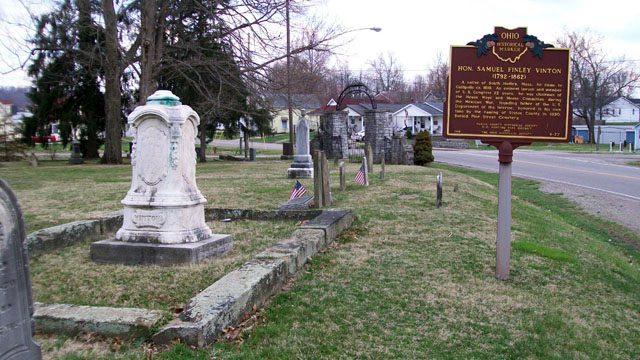
(1792-1862) A native of South Hadley, Massachusetts, he came to Gallipolis ca. 1818. An eminent lawyer and member of U.S. Congress 22 years, he was chairman of the House Ways and Means Committee during the Mexican War, founding father of the U.S. Department of the Interior, honored in his own time by the naming of […]
3-27 Stone Water Towers of the Ohio Hospital For Epileptics

These three stone water towers were erected by local craftsmen in 1892 and serviced the Ohio Hospital for Epileptics until 1950. The sandstone of the uncoursed masonry walls was quarried from the surrounding hills. The hospital facility, a former Union Hospital site during the Civil War, was the first of its kind in the United […]
2-27 Morning Dawn Lodge No. 7 Free and Accepted Masons
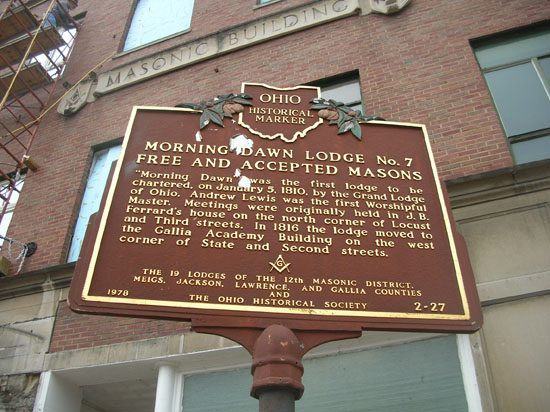
Morning Dawn was the first lodge to be chartered, on January 5, 1810, by the Grand Lodge of Ohio. Andrew Lewis was the first Worshipful Master. Meetings were originally held in J. B. Ferrard’s house on the north corner of Locust and Third Streets. In 1816 the lodge moved to the Gallia Academy building on […]
1-27 Gallipolis
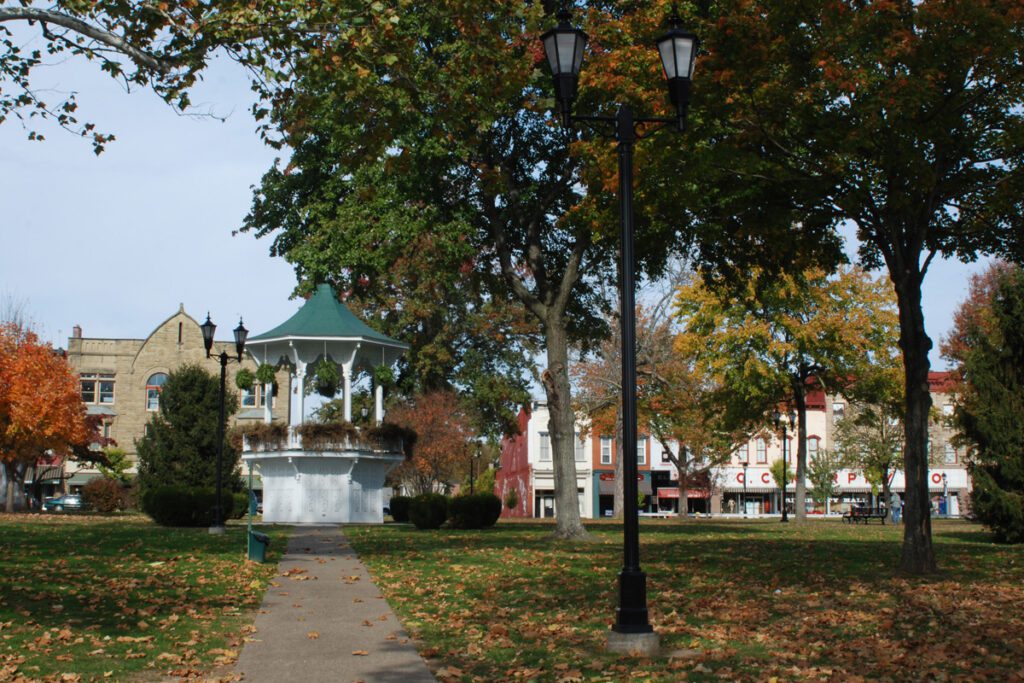
Its location and the tides of war established Gallipolis, then a town of some 3,000, as a point of strategic military importance to the Union upon the outbreak of the conflict in 1861. It was destined during the next four years to play a role without counterpart in Ohio. Here through this troop concentration area […]
5-26 Deputy Surveyor James Riley
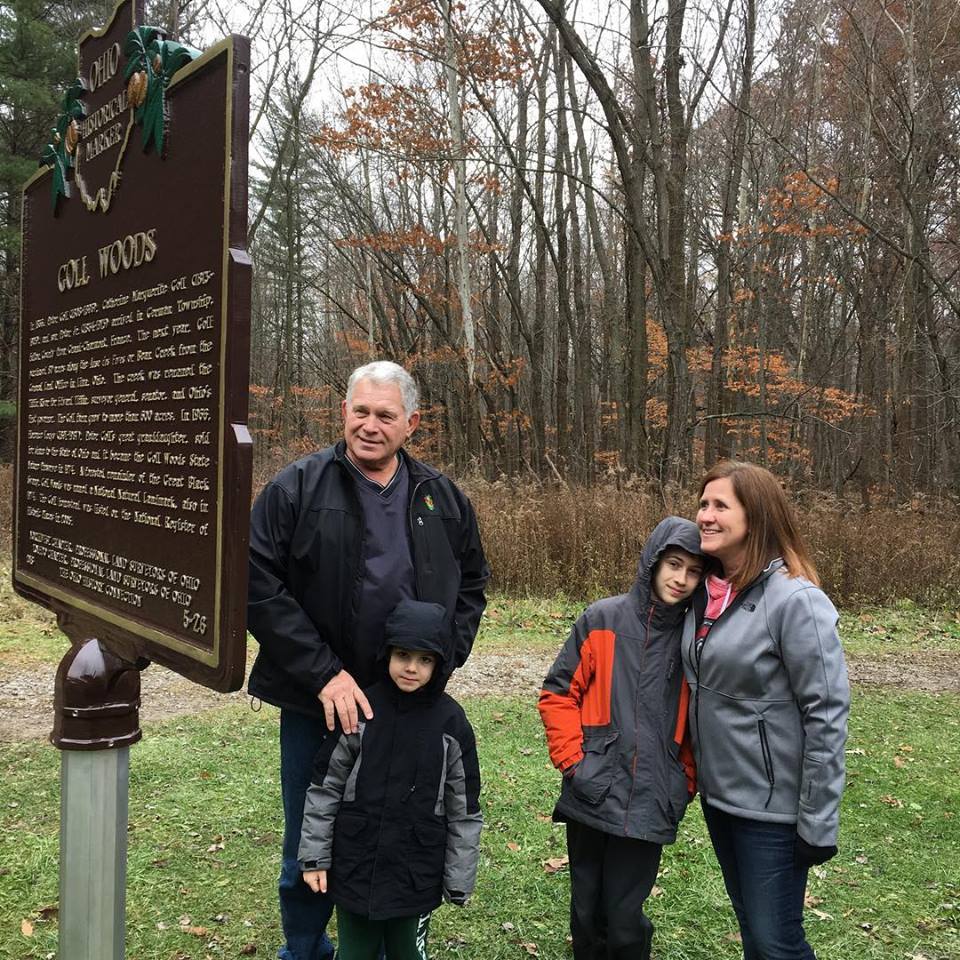
Two Deputy U.S. General Land Office Surveyors traversed Goll Woods: Benjamin Hough in 1815 and Captain James Riley in 1821. Hough (1772-1819) established the Michigan Meridian in 1815 and was county and state office holder in Ohio. Riley’s life was more tumultuous. Riley (1777-1840) captained the merchant ship Commerce, which wrecked off the Saharan coast […]
4-26 1815 Michigan Meridian / 1915 Ohio Michigan State Line Survey
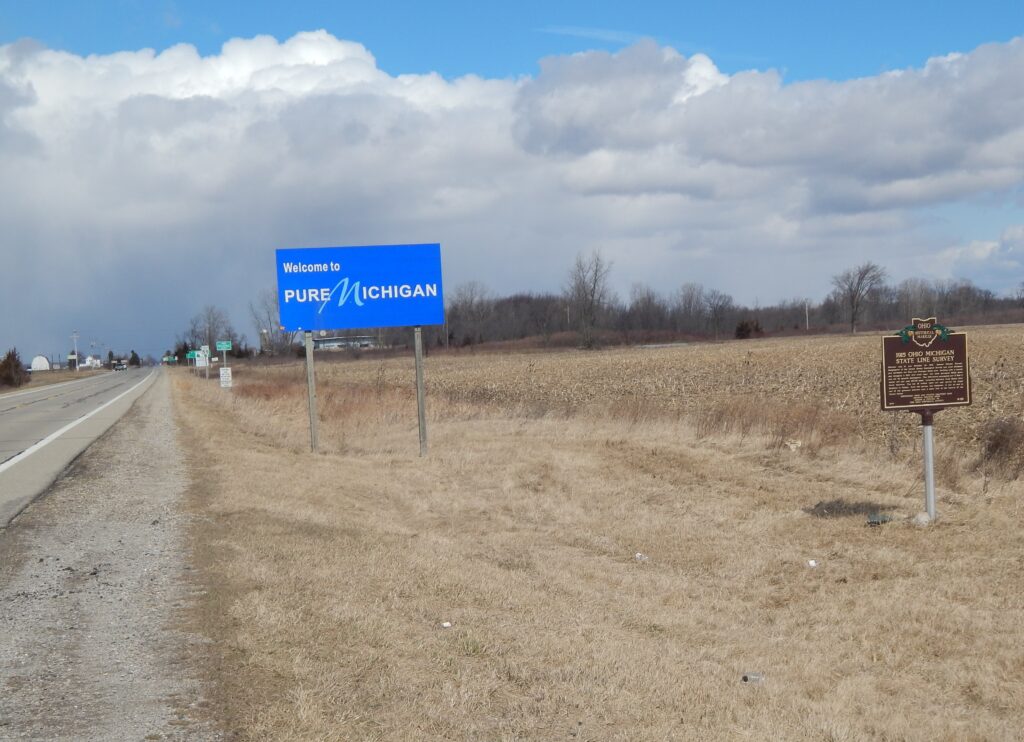
After the War of 1812, the United States Congress proposed two million acres of military bounty land for the Michigan Territory. To survey the land, the meridian had to first be established. U.S. Surveyor General Edward Tiffin created the meridian based on the western line of the Treaty of Detroit (1807). He contracted with Deputy […]
3-26 The Ohio Art Company
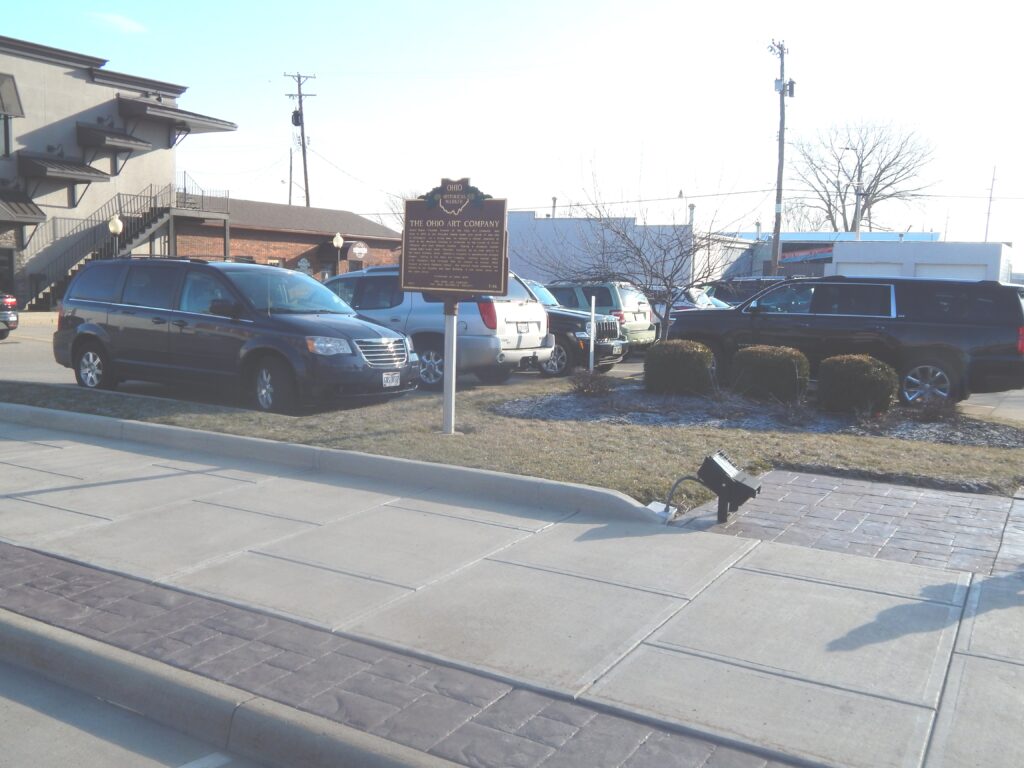
Henry Simon Winzeler, founder of The Ohio Art Company, was born in 1876 in the Winzeler family home just north of this site in Burlington. As a young man, he opened a dental practice in 1900 in the Murbach Building in Archbold on the corner of North Defiance and East Holland streets. Making a dramatic […]