 Skip to content

18-28 Hanging Rock

Near this location on May 15, 1823, the first murder trial in Geauga County concluded with the public execution of Benjamin Wright, Jr. On February 1, 1823, Wright stabbed Zophar Warner over a financial dispute, wounding him mortally. The following month, a jury found Wright guilty of murder and ordered that “he be hung by […]
17-28 Chagrin Falls & Eastern Railway – Eastern Ohio Traction Company
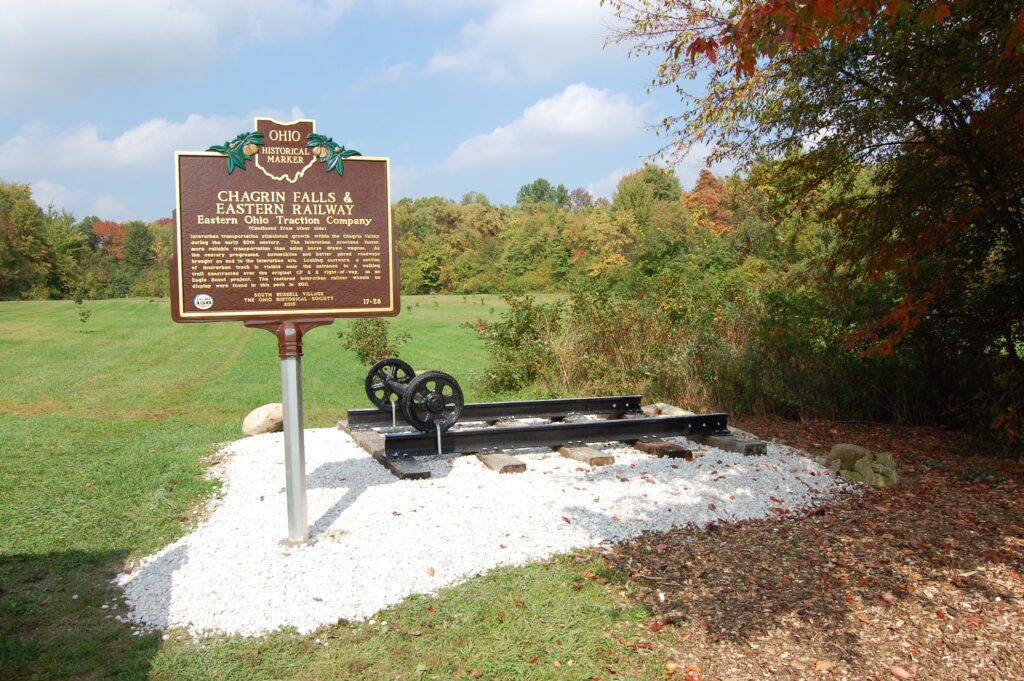
From east to west, the Chagrin Falls and Eastern Interurban Railway crossed the Muggleton Farm (now South Russell Village Park) at this location and connected the Chagrin Valley with Hiram, Garrettsville, and Middlefield. Its sister interurban, the Cleveland and Chagrin Falls Electric Railway served points west. Soon after their formation, the Everett-Moore Syndicate merged the […]
15-28 Welton Cemetery
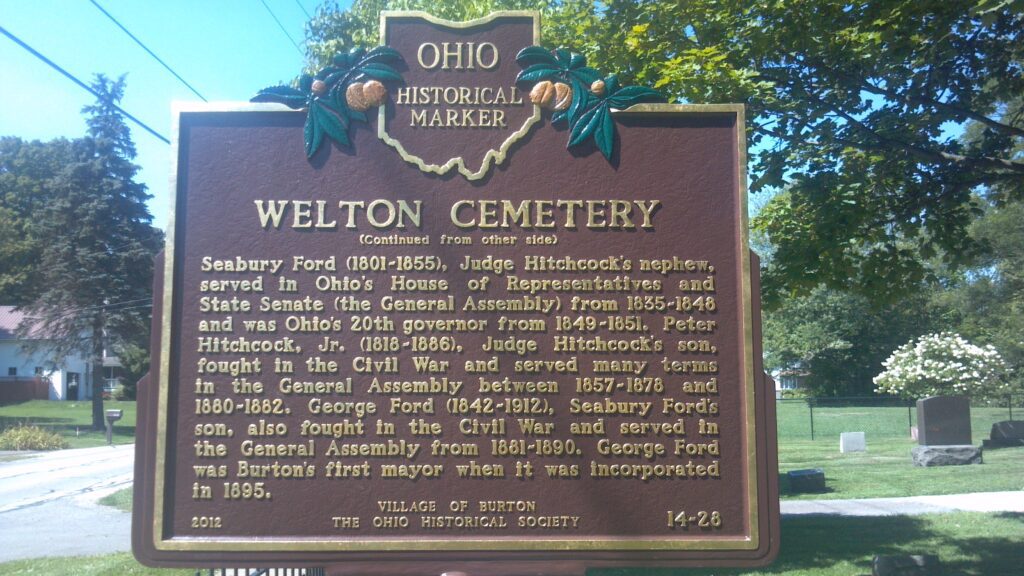
Welton Cemetery was known as Roselawn Cemetery until the early 1900s. Early settlers to the Burton area donated the land. Welton Cemetery is the burial place for veterans of the nation’s wars and for several state officials. Judge Peter Hitchcock (1781-1853) served in the War of 1812. From 1810-1852, he was elected to both houses […]
16-28 “Old” Chardon Post Office
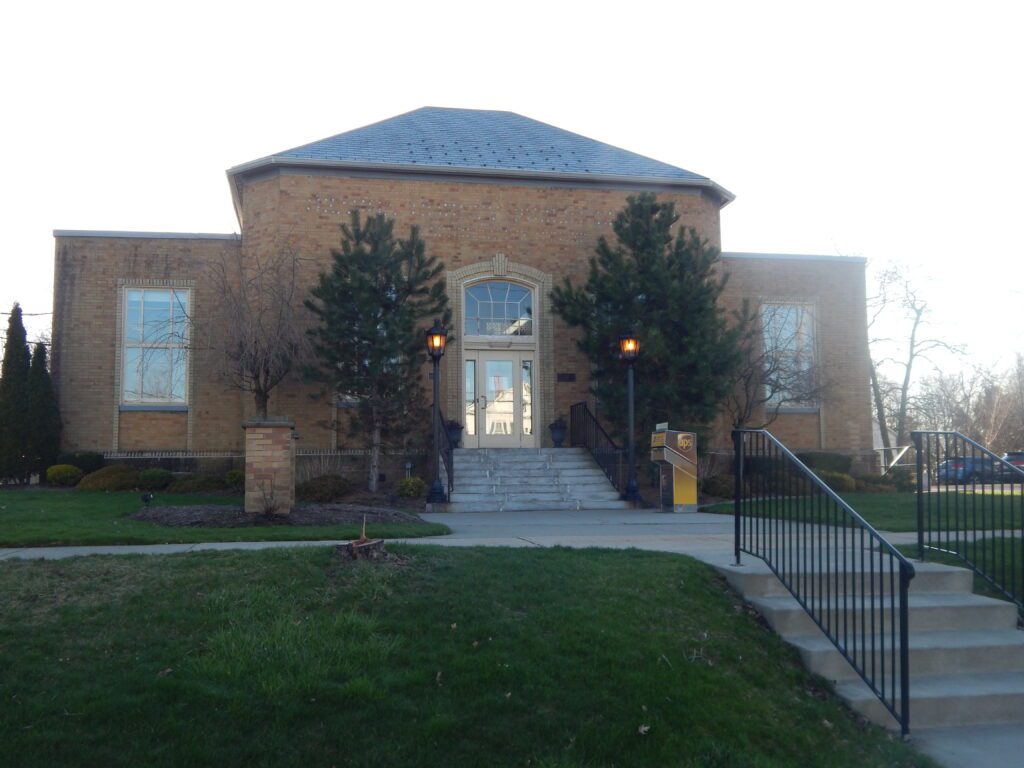
Listed on the National register of Historic Places in 1974, this building was the post office from 1940 through 1986. It is an example of the Colonial Revival style common in the 1930s and 1940s. The exterior brick work, large Palladian window, and simple design were common in the building plans for era post offices. […]
14-28 First Congregational Church of Claridon UCC
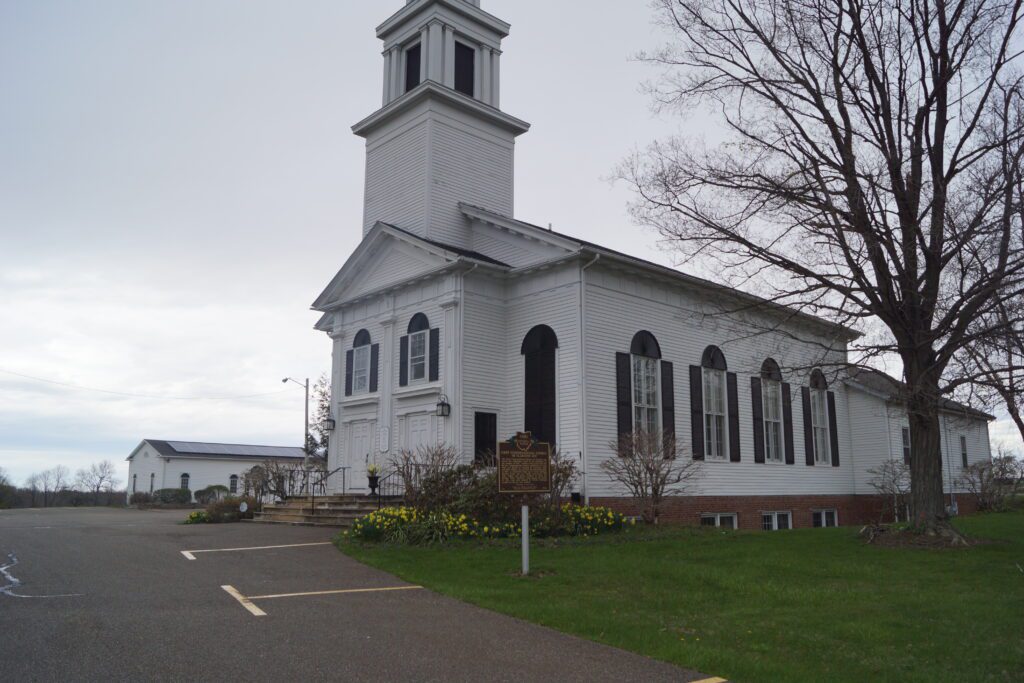
The First Congregational Church of Claridon has served the community since it was dedicated in the summer of 1832. Twenty-seven souls from the Burton Congregational Church petitioned to form their own church in Claridon in November 1827, and their request was granted the following month. In 1830, a committee made up of Cotton Kellogg, Chester […]
13-28 South Newbury Union Chapel
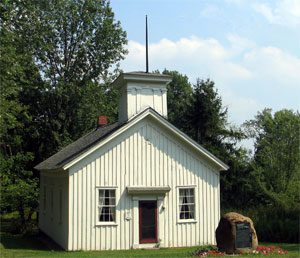
Called the “Cradle of Equal Suffrage” and “Free Speech Chapel,” Union Chapel was to be “…open and free for all denominations, but to be monopolized by no one or to the exclusion of anyone.” Built in 1858 or 1859 on land donated by Anson Matthews, the chapel reputedly exists in response to incident triggered by […]
12-28 The Second High School / The Burton Public Library
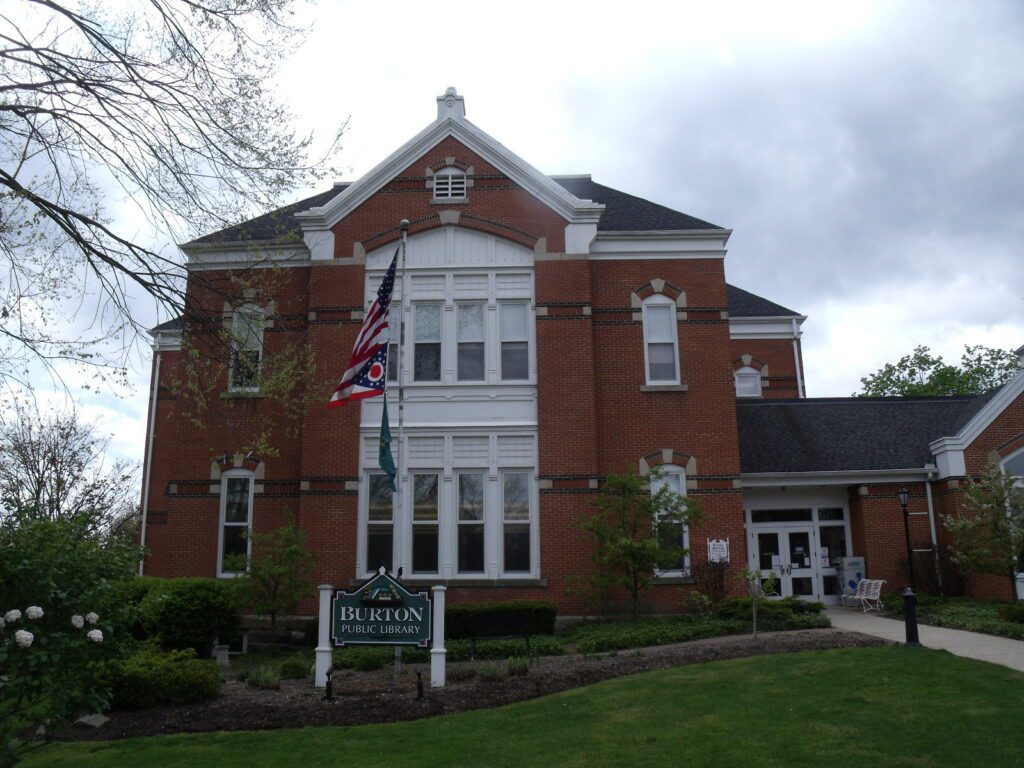
This Queen Anne style building with segmental-arched windows and steep hipped roof was Burton’s second high school. Completed in 1885 at a cost of $12,500, it is wood framed with a brick and stone exterior, modeled after an academy in River Falls, Wisconsin. Its basement and two upper floors contained 12,720 square feet of space, […]
11-28 The Burton Village Historic District
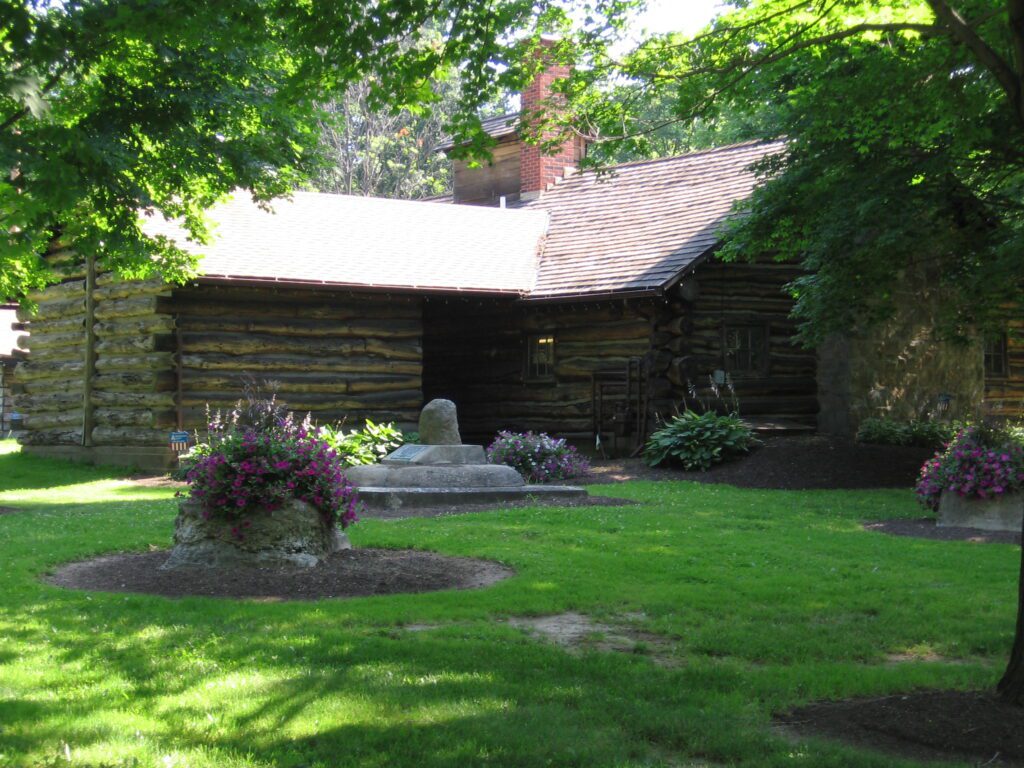
In recognition of its noteworthy representation of the history, culture, and architecture of the Western Reserve, Burton Village’s Historic District was placed on the National Register of Historic Places in 1974. The Historic District, an area of approximately 20 acres surrounding the Village Green and along streets at the north end of the Green, includes […]
10-28 Burton Congregational Church
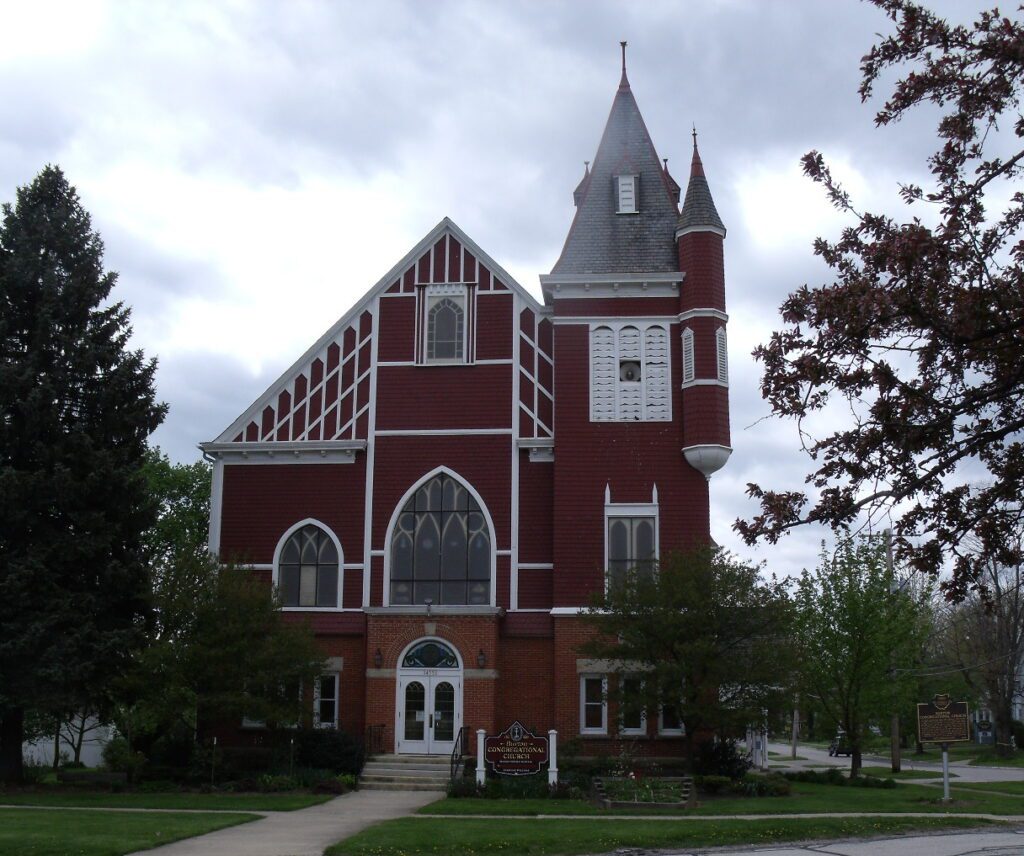
The Burton Congregational Church was organized in 1808 and met in several nearby locations before this present building was erected in 1836 at a cost of $4,000. It was originally located within the park directly opposite where it stands today, but was moved to its present location in 1850. The steeple, rising 104 feet from […]
9-28 Burton, Ohio-First Permanent Settlement in Geauga County / The Village Green
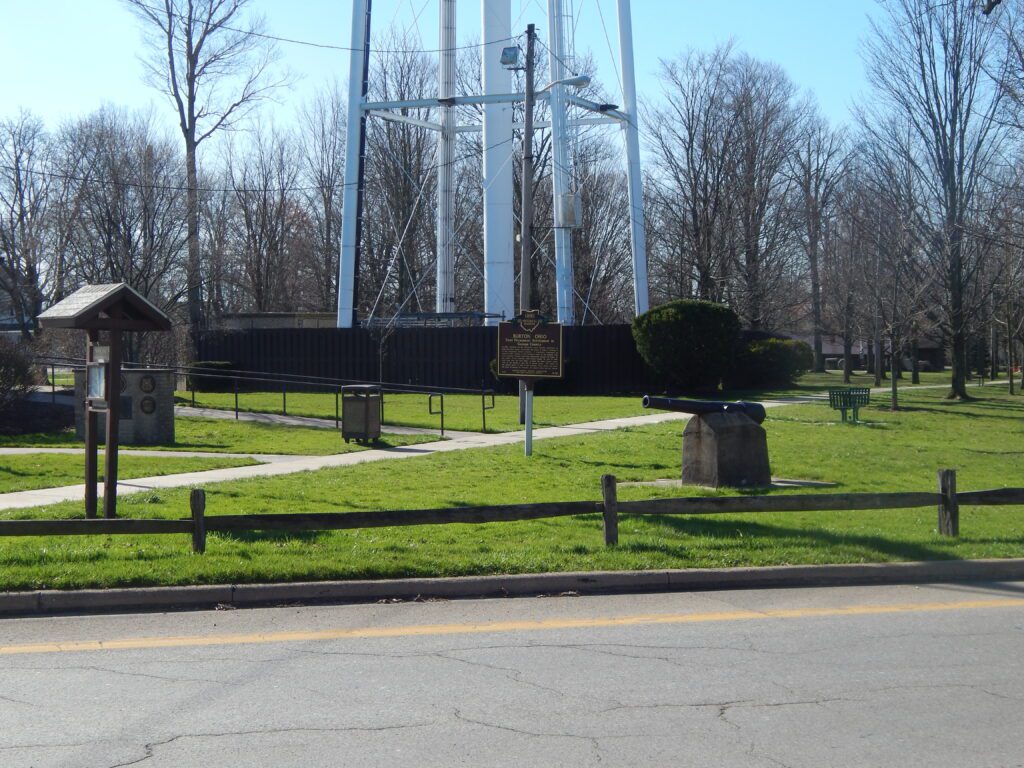
In 1796, surveyors for the Connecticut Land Company designated an area five miles square surrounding this place as Range 7, Township 7 of the Connecticut Western Reserve. A landowner’s expedition on June 15, 1798, arrived at the northwest corner of the township. One of its members, Thomas Umberfield (Umberville) brought his family to the center […]