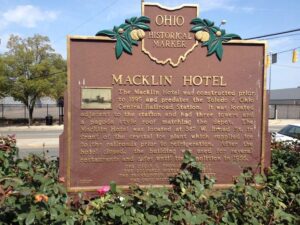
The only remaining Columbus railroad station, The Toledo & Ohio Central (T&OC) Railroad Station was constructed in 1895 and was the departure point for William McKinley when he left for Washington D.C to be sworn in as president. Designed by noted Columbus architects Joseph Warren Yost & Frank L. Packard, the pagoda style roof and tower have become Columbus icons. By 1900, the T&OC was purchased by the rival Hocking Valley Railroad and in 1911 the tracks were elevated above Broad Street. Later the New York Central Railroad gained control and used the station until 1930 when passenger service was transferred to Union Station in Columbus. Restored after the 1913 Flood and major fires in 1910 and 1975, the station was headquarters for the Central Ohio Volunteers of American from 1930 to 2003. The building was placed on the National Register of Historic Places in 1973.
Civil unrest rocked the Hough neighborhood for five nights during the summer of 1966.When the white owners of the Seventy-Niners Cafe refused to serve a Black customer a glass of water, a sign bearing a racial epithet subsequently appeared outside the bar. Decades of institutionalized racial practices that had caused Hough’s substandard and overcrowded housing, high unemployment, economic exploitation, lack of access to quality education, and systemic police harassment sparked an urban uprising in response on July 18. Angry crowds gathered outside the bar only to be confronted by the owners brandishing firearms. When the police belatedly responded, tensions escalated into targeted firebombing, looting, and vandalism. On Tuesday night, July 19, Cleveland’s Mayor Ralph Locher requested that the Ohio National Guard restore order. (Continued on other side)