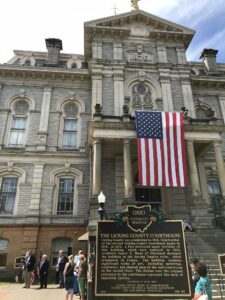
Licking County was established in 1808. Construction of the current Licking County Courthouse began in 1876. In 1879, a fire destroyed upper portions of this building, which was replaced in 1880. Architect Henry E. Myer of Cleveland designed the building in the Second Empire Style, which originated in France. The building contains significant works of art, including paintings, sculptures, and stained glass in the west courtroom on the second floor. The statues over the original entrances to the courthouse represent the ideal of impartial justice. (Continued on/from other side)
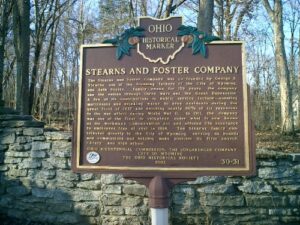
The Stearns and Foster Company was co-founded by George S. Stearns, one of the founding fathers of the City of Wyoming, and Seth Foster. Family-owned for 139 years, the company saw the nation through three wars and the Great Depression. A few of its contributions to public service include-donating mattresses and drinking water to area residents during the great flood of 1937 and devoting nearly 80% of its resources to the war effort during World War II. In 1911, the company was one of the first to volunteer under what is now known as the Workman’s Compensation Act and offered life insurance to employees free of cost in 1914. The Stearns family contributed greatly to the City of Wyoming, serving on boards and commissions and helping make possible its first church, library, and high school.
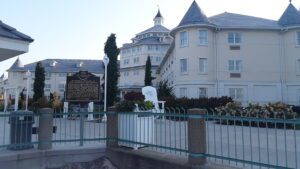
About 60 leaders of Ohio hospitals gathered at the Hotel Breakers on August 25, 1915 to form the Ohio Hospital Association (OHA), the nation’s first state hospital association. Established 15 years after the American Hospital Association, the OHA formed, in part, to address state legislation regarding hospitals and public health. Issues addressed in OHA’s first years included Ohio’s 1915 Nurse Practice Act, workers’ compensation rates, and the federal Harrison Narcotics Tax Act. A century later, OHA represents 220 hospitals and 13 health systems guided by a mission “to collaborate with member hospitals and health systems to ensure a healthy Ohio.”
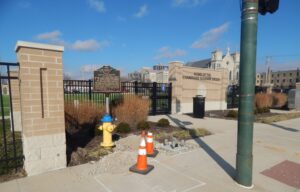
Known by the trade name Henderson’s Printing, the business was a mainstay of Dayton’s African American community for almost 60 years and became a printer of choice for everything from advertising materials, office forms, and a community publications called “housewife savers.” John William Henderson Sr. (1913–1991) purchased his first printing press and founded the business in 1941, bringing to it experience as an instructor of journalism and printing at Wilberforce University. The business’s first location was the family home at 421 Kearney St. After several moves, the business settled at 301 Washington Street in 1958.
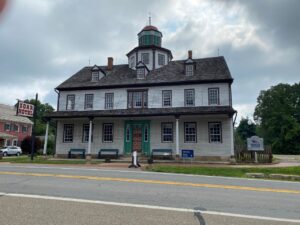
Zoar Separatists built the hotel in 1833 to accommodate overflow travelers from their original Ohio & Erie Canal inn. The hotel proved an economic boon to the Zoar community, but, by bringing the outside world into Zoar, ultimately became a source of discontent for members. During its heyday, the Zoar Hotel catered to curiosity-seekers, visiting artists, and families escaping the summer heat of nearby cities. Notable guests included Marcus Hanna and President William McKinley. The original structure was enlarged several times, including the now demolished 1892 Queen Anne addition which doubled the accommodations. By the mid-twentieth century, the hotel remained open as a popular restaurant with Rathskeller bar until closing to the public in July 1983. The exterior was restored by the Ohio History Connection in 2001-2002.
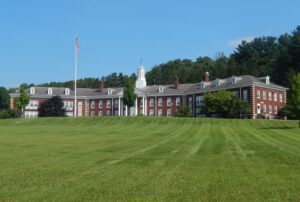
Tuberculosis, or TB, is a contagious disease that was responsible for the deaths of one out of every seven people in the U.S. in the early 20th century. The Licking County Tuberculosis Sanatorium, known as the TB San, was constructed in 1931-1932 at a cost of $250,000. The facility kept TB patients separate from the general population, controlling the spread of disease. The location provided patients with rest, fresh air, food, and exercise, the main treatments for TB in the 19th through mid-20th centuries. (Continued on other side)
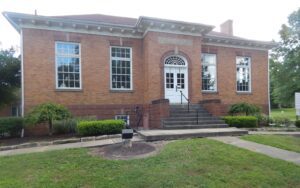
In 1912, an endowment of $6,000 from Andrew Carnegie made it possible for the Bristol Public Library to become a reality. Four years earlier, the newly organized Bristol Library Association, headed and promoted by retired Judge Norman A. Gilbert, had established a subscription book service at the Congregational Church in Bristolville with books loaned from the state library. The Bristol Board of Education appointed a six-member Library Board of Trustees and a one mill levy provided financial support. Charles C. Thayer and Son designed the building in accordance with Carnegie’s recommendations and the local trustees’ suggestions. With Judge Gilbert’s unexpected death in November 1911, Board Secretary Dr. Edward Brinkerhoff was elected president to complete the vision of Judge N. A. and Mrs. Anna Gilbert for the library. (Continued on other side)
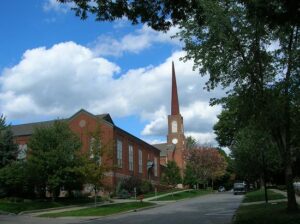
On this site, the first meetinghouse owned by the Hudson Congregational Church was dedicated March 1, 1820, twenty-one years after David Hudson first came to the Hudson area. Its members met here until they completed their sanctuary on Aurora Street in 1865. In August 1835, church members unanimously adopted a resolution declaring that slavery is”a direct violation of the law of Almighty God.” At a November 1837 prayer meeting, church member and anti-slavery leader John Brown made his first public vow to destroy slavery.