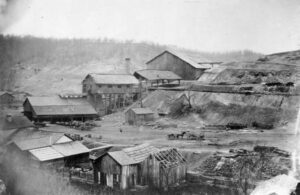
To furnish the needs of the early settlers, then to furnish ordnance for a nation at war, and finally to furnish merchant iron to the steel mills, 100 iron producing blast furnaces were built within these 1,800 square miles of the lower coal measures to become known as the Hanging Rock Region. Lawrence County, centrally located within the Region, had 23 blast furnaces constructed between 1826 and 1909.
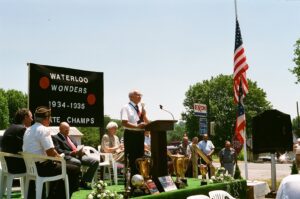
Waterloo was home to the legendary Waterloo Wonders. Coach Magellan Hariston and his Wonder Five captured consecutive Ohio state high school Class B basketball championships in 1934 & 1935, winning 94 out of 97 games, and defeating many Class A and college teams. The 91st Ohio House of Representatives honored the Waterloo Wonders with a resolution following their second Class B State Championship win. The Wonders, known for their colorful passing show, entertained fans with their scoring ability, defense, trick passes, and hardwood antics. Hailing from a small village with a school male enrollment of only 26, the Waterloo Wonders were considered one of the greatest basketball teams ever assembled on the Ohio high school athletic scene. After high school, four of the Wonder Five played professionally as the Waterloo Wonders, ranking among the best basketball squads in the country.
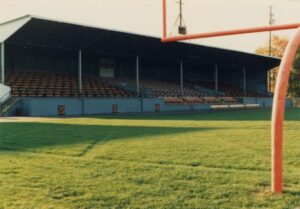
Opened in 1926, Tanks Memorial Stadium became the home of the Ironton Tanks semi-professional football team. The Tanks were formed in 1919 and through the years played other semi-professional teams as well as teams from the American Professional Football Association that became the National Football League in 1930. In twelve seasons the Tanks had a record of 85 wins, 19 losses, and 14 ties, including wins against the Chicago Bears and New York Giants. The Tanks disbanded in 1931, but five players moved on to the Portsmouth Spartans, which became the Detroit Lions, and other NFL teams picked up four other players. Tanks Memorial Stadium is one of the few remaining roofed high school football stadiums in the country.
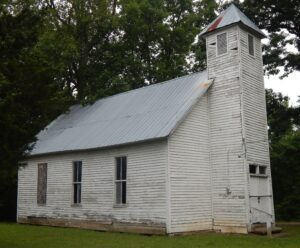
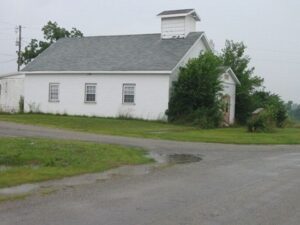
The present structure for the Macedonia Missionary Baptist Church was built in 1849 on Macedonia Ridge north of Burlington, an abolitionist sanctuary for escaped and freed slaves since 1799. It was built by the existing Baptist congregation and a group of 37 freed slaves who had arrived in Burlington from Virginia. The Baptist congregation in Macedonia had organized in 1811-1813 and practiced their faith in their homes and later in a small building with a bell tower made of sticks. The 1849 church was the religious and social focal point for the black community and became the “Mother Church” for approximately eight Baptist churches that exist in Ohio and West Virginia. The Macedonia Missionary Baptist Church was listed on the National Register of Historic Places in 1978.
Through the terms of his will, British absentee landowner Samuel Gist (c.1723-1815) freed his 350 Virginia slaves and provided funds for their relocation, the purchase of land and homes, and the establishment of schools and churches. Gist’s executors acquired over 2,000 acres of land in Ohio, including two large tracts in Scott and Eagle townships in Brown County in 1819. In 1831 and 1835, an agent of the Gist estate purchased 207 acres in Fairfield Township (now Penn Township), Highland County, and divided the acreage into thirty-one lots. The Gist Settlement in Highland County was the last to be purchased and settled. In 1857, the Ohio Legislature granted the Highland County Court of Common Pleas control over the freedmen’s trust monies. In 2003 descendants of the freed Gist slaves still inhabited part of the original settlement.
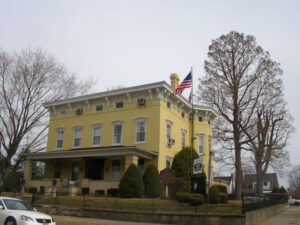
John Campbell (1818-1891), founder of Ironton, was an ironmaster and president of the Ohio Iron & Coal Company, a Presbyterian, and an abolitionist. This house and barn, which he built in 1850, became a stop on the Underground Railroad for slaves crossing the Ohio River from Kentucky. Fugitives were concealed here and furnace wagons transported the escapees northward by way of Campbell’s furnaces in Lawrence and Jackson counties.
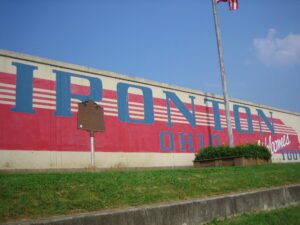
In 1849, the city of Ironton was founded by local ironmasters, railroaders, and financiers associated with the Ohio Iron and Coal Company. They saw the city as a manufacturing and shipping point for their products. As a young industrial city, Ironton prospered when river transportation facilitated the development and export of Lawrence County’s natural resources and manufactured items. The Iron Railroad Company was also established to transport pig iron and manufactured goods from nearby towns to Ironton, to awaiting steamboats on the Ohio River. Steamboats, in the form of towboats, packet boats, and showboats, traveled the river providing the city with goods, services, and entertainment. The Ironton wharf and boat landing once served the community as a gathering place to greet incoming passengers, receive mail, and hear the latest news.
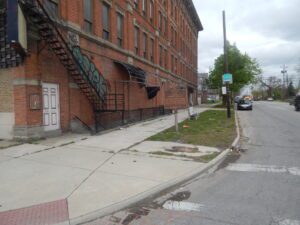
The pioneer village of Vistula is now bounded by Walnut, Champlain, Chestnut, Magnolia, and Summit streets. Established in 1833 by Benjamin F. Stickney and Edward Bissell, Vistula was merged with its rival, Port Lawrence, and in 1837 both villages were incorporated as Toledo. The Vistula Historic District, Toledo’s oldest neighborhood, was listed on the National Register of Historic Places in 1978.