

, OH
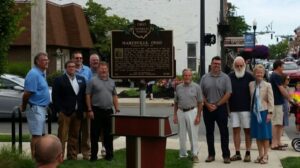
Marysville, Ohio. On August 10, 1819, Samuel W. Culbertson (1780-1840), a Zanesville lawyer, established Marysville at the convergence of Mill Creek and the road connecting Delaware to Urbana. Culbertson purchased 450 acres of land on July 10, 1817 and authorized Charles Roberts to survey the village, which originally contained 96 lots. Culbertson named the village in honor of his daughter, Mary Ellen (1810-1853), who later married US Congressman, Joshua Mathiot (1800-1849). The village was originally in Delaware County, located in part of the Virginia Military District. It was land given as bounties to soldiers from Virginia after the Revolutionary War. Union County, which included Marysville, was created in 1820, and Marysville became the county seat in 1822. (Continued on other side)
, OH
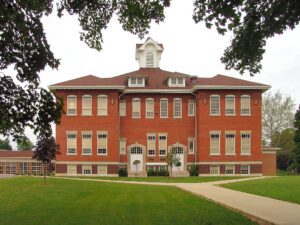
The first school in what is now Pataskala was a “subscription school” operated by Amariah Cubberly on the nearby banks of the South Fork of the Licking River in the 1820s. Subscription schools, which charged fees, were the forerunners of rural public schools in many parts of Ohio. By the 1830s several one-room public schools served the children of the area, but in 1870 the civic minded citizens of Pataskala provided a centralized building for grades one through twelve on Main Street, where the old Town Hall now stands. This school was moved to the new building on this site in 1908. When the Southwest Licking Local School District was established in 1953, Pataskala Elementary School continued in the building. Additions in 1968 and 2000 enhanced its educational capabilities. This 1908 Queen Anne architectural style building was listed on the National Register of Historical Places in 1983.
, OH
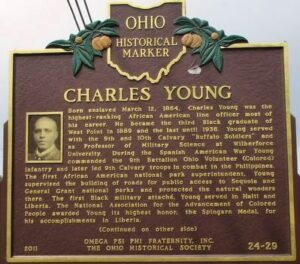
Born enslaved March 12, 1864, Charles Young was the highest-ranking African American line officer most of his career. He became the third Black graduate of West Point in 1889 and the last until 1936. Young served with the 9th and 10th Calvary “Buffalo Soldiers” and as Professor of Military Science at Wilberforce University. During the Spanish American War Young commanded the 9th Battalion Ohio Volunteer (Colored) Infantry and later led 9th Calvary troops in combat in the Philippines. The first African American national park superintendent, Young supervised the building of roads for public access to Sequoia and General Grant national parks and protected the natural wonders there. The first Black military attache, Young served in Haiti and Liberia. The National Association for the Advancement of Colored People awarded Young its highest honor, the Spingarn Medal, for his accomplishments in Liberia. (continued on other side)
, OH
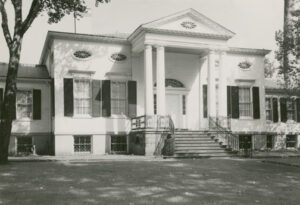
This Federal house was begun about 1820 for Martin Baum (1765-1831), one of Cincinnati’s early merchants. Art patron and abolitionist Nicholas Longworth (1782-1863) lived here for more than thirty years and commissioned the notable landscape murals in the foyer painted by African-American artist Robert S. Duncanson (1821-1872). Iron magnate David Sinton (1808-1900), the subsequent owner, bequeathed the house to his daughter Anna Sinton Taft (1852?-1931). She and her husband Charles Phelps Taft (1843-1929), older half-brother of William Howard Taft (1857-1930), who accepted his party’s nomination for president from the portico in 1908, assembled the acclaimed art collection displayed here. Bequeathed to the people of Cincinnati in 1927, the Taft Museum of Art opened to the public in 1932. It was designated a National Historic Landmark in 1973.
, OH
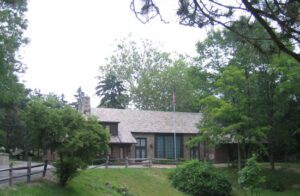
Envisioned by Fairview Village Mayor, David R. Bain, this community center was originally completed in 1937 as a project of the Works Progress Administration (WPA), a Depression-era work relief program initiated by the Federal Government in 1935. A fire destroyed the original log cabin on December 14, 1937, just four days before the planned dedication. With the support of the community, Mayor Bain turned again to the WPA for funding and labor to rebuild the structure. This cabin, constructed of bricks on the original foundation, features an 8’x12′ mural painted by artists of the WPA’s Federal Art Project and which depicts Fairview’s history through the 1930s. The new cabin was dedicated on January 15, 1940, and was named in honor of Mayor Bain in 1957, four years after his death.
, OH
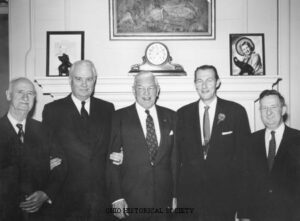
Ohio’s fifty-ninth governor, Marietta native C. William O’Neill was the only Ohioan to head all three branches of state government. An honor graduate of both Marietta High School and Marietta College, O’Neill won election to the Ohio House of Representatives in 1938, serving there until 1950 but interrupted from 1943-1946 when he was with General George Patton’s Third Army in Europe during World War II. In 1947 he became the youngest Speaker of the House in Ohio history. Elected Attorney General in 1950, he won the governorship in 1956, modernizing the highway and mental health departments during his tenure. His election to the State Supreme Court in 1960 and elevation to Chief Justice in 1970, noted by landmark judicial reforms, capped his exemplary career of public service to Ohio.
, OH
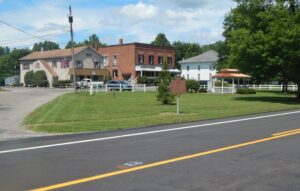
Originally called Westfield Township, Samuel Fowler purchased this area in 1798 from the Connecticut Land Company for $12,903.23 while living in Westfield, Massachusetts. His brother Abner arrived the following year to survey the land and separate it into smaller plots that could be sold to people wanting to settle here. A Revolutionary War veteran, Abner was the first to arrive here and also the first recorded death in 1806, the same year that his son Abner Fowler II married the first school teacher in Fowler Ester Jennings. In 1817, Samuel Fowler gave five acres of land to Fowler Center to be used as a park or “common” with the provision that no permanent building ever be built on it. At about the same time, the township name was changed to Fowler to honor its founding family. Agriculture was and remains the main occupation in the Fowler area.
, OH
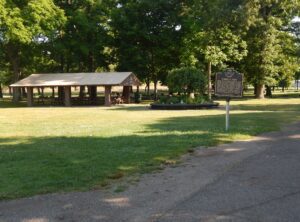
Nimisilla Park was established in 1894. Prior to its founding, the site was the location of the county fair from 1859 to 1893. Throughout its history, Nimisilla Park hosted horse races, live music, soldier reunions, and a zoo, among other events. Prominent political figures, such as Rutherford B. Hayes, James A. Garfield, William McKinley, and Eugene V. Debs, made speeches at the park. In 1918, Debs delivered a famous anti-war speech for which he was arrested and jailed. As of 2016, the park continues to serve as a gathering place for the community.