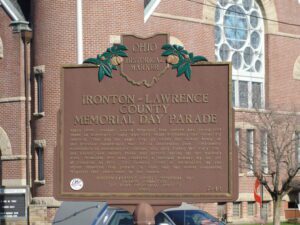
Since 1868, Ironton’s annual Memorial Day parade has recognized those in Lawrence County who died while defending our country’s freedom. This was the same year in which the Grand Army of the Republic established May 30 as Decoration Day. Originally established to commemorate soldiers who died during the Civil War, the parade now honors those who served during all the nation’s wars. Memorial Day was declared a national holiday by an act of Congress in 1971. The Ironton event is recognized as the oldest Memorial Day parade in Ohio and the oldest continuing Memorial Day observance in the nation.
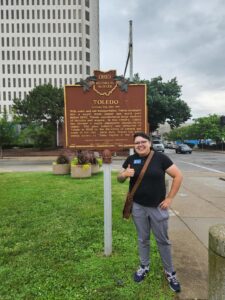
After consolidation of the villages of Fort Lawrence and Vistula, the City of Toledo was incorporated in 1837. Originally named “Toledo” in 1833, the site became part of Ohio when the “Toledo War,” a bloodless boundary conflict with Michigan, was resolved by Congress in 1836. Settlers were attracted by the commercial potential of the Maumee River, called “Miami of the Lake,” and later the Miami-Erie Canal. (Continued on other side)
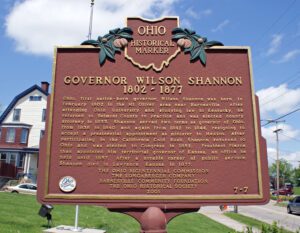
Ohio, first native-born governor, Wilson Shannon was born in February 1802 in the Mt. Olivet area near Barnesville. After attending Ohio University and studying law in Kentucky, he returned to Belmont County to practice and was elected county attorney in 1833. Shannon served two terms as governor of Ohio, from 1838 to 1840 and again from 1842 to 1844, resigning to accept a presidential appointment as minister to Mexico. After participating in the California Gold Rush, Shannon returned to Ohio and was elected to Congress in 1852. President Pierce then appointed him territorial governor of Kansas, an office he held until 1857. After a notable career of public service, Shannon died in Lawrence, Kansas, in 1877.
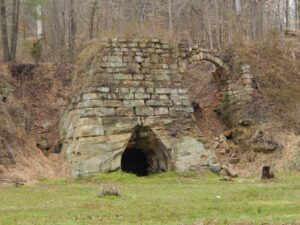
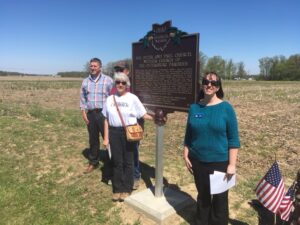
Olive Furnace in Lawrence County was one of 83 blast furnaces in the Hanging Rock iron-making region of southern Ohio and northern Kentucky. John Campbell (1808-1891), the “Father of Ironton,” and others established the furnace in 1846. The base of the furnace is carved out of rock and supported by Roman style arches. Only one of these arches remains some 170 years later. The furnace became a stop on the Underground Railroad. Conductors ushered escaping slaves through the area to points further north. The Olive Furnace was the last charcoal furnace to operate in Lawrence County. After seven decades of service, the furnace was sold and dismantled for scrap in 1915. Olive Furnace was listed on the National Register of Historic Places in 2007.
Saints Peter and Paul Church, Petersburg (1835), was the mother church for St. Joseph, Wapakoneta; St. John the Evangelist, Fryburg; St. Lawrence, Rhine; and Our Lady of the Immaculate Conception, Botkins. All were founded by German-Catholic immigrants to west-central Ohio. After the removal of the Wapakoneta Shawnee in 1832, the land became available for purchase. The 1830s and ’40s saw a wave of devout German settlers who wished to practice their faith in their new home, a desire served by missionary priests such as Father Wilhelm Horstman. Father Horstman first visited the settlement at Petersburg on May 8, 1835, presiding at Mass, baptizing, and blessing a marriage. In April 1836, immigrants John and Anna Mary Ruppert sold 40 acres of land in Pusheta Township to the trustees of the Catholic Church and a log church was built at the Petersburg site. (Continued on other side
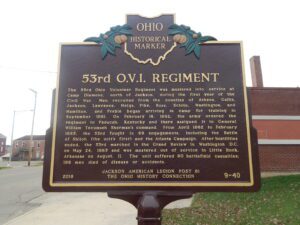
The 53rd Ohio Volunteer Regiment was mustered into service at Camp Diamond, north of Jackson, during the first year of the Civil War. Men recruited from the counties of Athens, Gallia, Jackson, Lawrence, Meigs, Pike, Ross, Scioto, Washington, and Hamilton, and Preble began arriving in camp for training in September 1861. On February 16, 1862, the army ordered the regiment to Paducah, Kentucky and there assigned it to General William Tecumseh Sherman’s command. From April 1862 to February 1865, the 53rd fought in 69 engagements, including the Battle of Shiloh (the unit’s first) and the Atlanta Campaign. After hostilities ended, the 53rd marched in the Grand Review in Washington D.C. on May 24, 1865 and was mustered out of service in Little Rock, Arkansas on August 11. The unit suffered 80 battlefield casualties; 196 men died of disease or accidents.
3201-3537 Burlington-Macedonia Road, Lawrence County Road 120
South Point
, OH
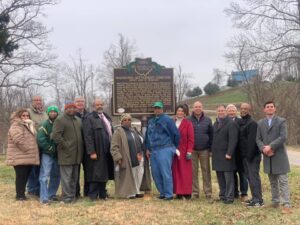
Macedonia Cemetery (circa 1840) belongs to Macedonia Church, Ohio’s first Black Church. Those buried include settlers of the Macedonia Free Black Settlement, built by free people who assisted freedom seekers along the Underground Railroad. Also interred are soldiers of the Civil War’s United States Colored Troops (USCT), most of whom served in the 5th Regiment, Ohio’s first Black Regiment (1863). The Polley family also rest here. Emancipated slaves, the family continued their freedom struggle when their children were kidnapped from Ohio and unlawfully sold into slavery. Macedonia’s extant burial grounds include this sacred site and another 1/2 mile north.
SW Corner of Sunbury Square near S. Columbus St & E. Granville St.
Sunbury
, OH
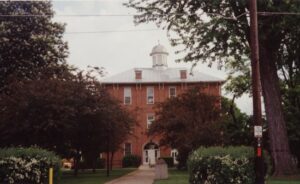
When Sunbury was platted in 1816, a town square was set aside for public use with the intention of constructing a town hall on the site. The first two stories of the Town Hall were built, as a school, in 1868 for $5,000. The Masons added the third story for $1,500 and occupied it for 91 years, until a lodge was constructed. Since 1868, the Town Hall has served Sunbury as a village office building, jail, fire station, and community library. Church services as well as Farmer’s Institutes were held in the building, and at one time it housed a bank. In 2002, the Town Hall was renovated for use as a community room and village offices.